
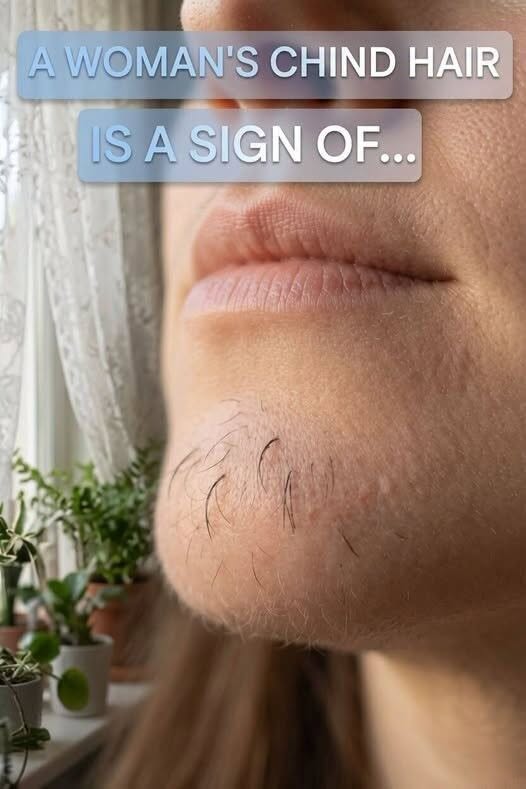
Noticing a few dark hairs on your chin can be unexpected, but it’s usually nothing to worry about. Many women develop occasional facial hairs as they age. However, if the hair becomes thicker, grows more rapidly, or starts appearing in greater amounts, it could be a sign of an underlying hormonal change….
The hormones most often linked to this type of hair growth are called androgens, including testosterone. Although commonly thought of as male hormones, women naturally produce small amounts of them as well. They play important roles in maintaining muscle mass, bone health, and libido. When androgen levels increase—or when hair follicles become more sensitive to these hormones—they can stimulate the growth of coarse, dark hair on areas such as the chin, upper lip, jawline, or chest. This condition is known as hirsutism.
One of the leading causes of hirsutism is Polycystic Ovary Syndrome (PCOS). PCOS is a hormonal disorder that often results in elevated androgen levels and insulin resistance. In addition to unwanted facial hair, women with PCOS may experience irregular menstrual cycles, acne, weight gain, difficulty losing weight, or thinning hair on the scalp.
Natural hormonal changes during menopause can also contribute to facial hair growth. As estrogen levels decline, the effects of androgens may become more noticeable, even if their levels remain relatively unchanged. As a result, many women begin noticing a few coarse chin hairs during midlife.
Sometimes there is no identifiable medical condition behind the extra hair growth. This is known as idiopathic hirsutism, where normal hormone levels are present, but the hair follicles are simply more sensitive to androgens. Family history and genetics often influence whether someone develops this type of facial hair.
Continued on next page//