
Use a banana hanger. Hanging bananas helps prevent pressure points that can cause bruising and brown spots.
Refrigerate fully ripe bananas. Once bananas reach your preferred ripeness, placing them in the refrigerator can slow further ripening. The peel will likely turn dark brown or black, but the fruit inside usually remains fresh for several more days.
Freeze overripe bananas. If bananas become too ripe to eat fresh, peel them, slice them, and freeze them. They’re perfect for smoothies, banana bread, muffins, pancakes, or homemade frozen desserts.
Store them separately from other fruit. Keeping bananas away from apples, pears, avocados, and similar fruits can help slow the ripening process.
Common Storage Mistakes
Avoid sealing bananas inside a plastic bag. Unlike wrapping only the stems, enclosing the entire fruit can trap excess moisture, increasing the risk of mold and spoilage.
It’s also best not to refrigerate bananas before they’re ripe. Cold temperatures can interrupt the normal ripening process, resulting in fruit that may not develop its full flavor or texture.
Finally, avoid piling heavy fruit on top of bananas, as bruising can speed deterioration.
The Bottom Line
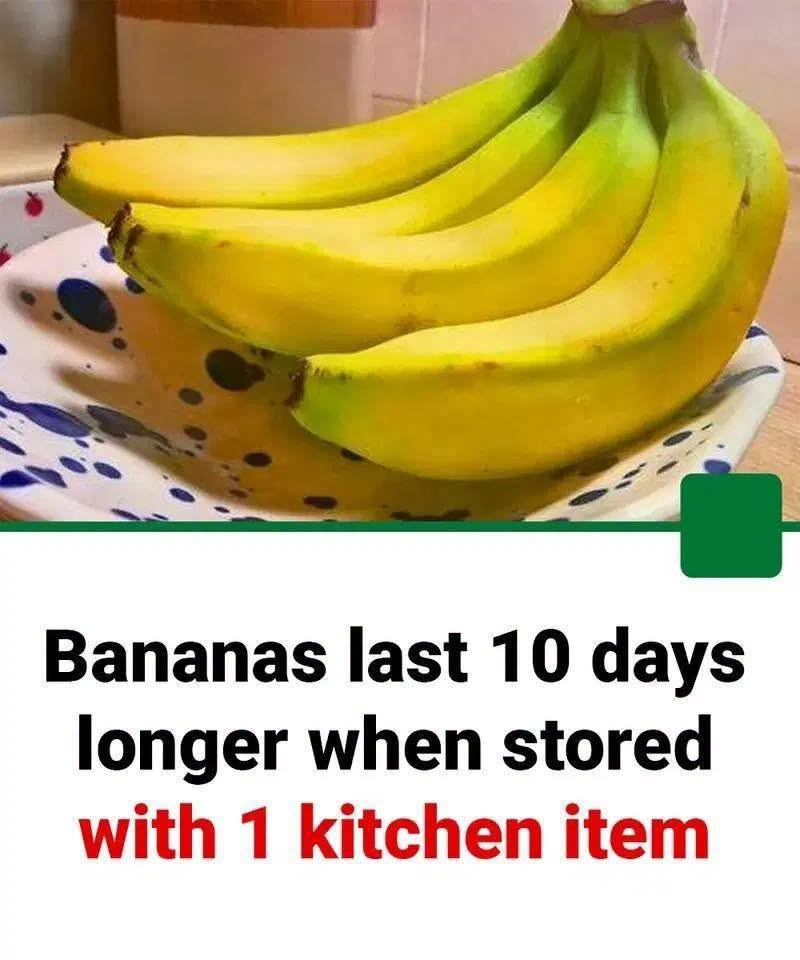
Wrapping banana stems with plastic wrap is a simple and inexpensive storage trick that may help slow ripening by reducing the release of ethylene gas. Combined with storing bananas away from other ethylene-producing fruits and minimizing bruising, this method can help extend freshness and reduce unnecessary food waste.
Although the exact amount of extra freshness varies depending on temperature, humidity, and the bananas’ stage of ripeness, these easy storage habits can help you enjoy your bananas for longer before they become overripe.
To see the complete cooking instructions, go to the next page or click the Open (>) button and don't forget to SHARE it with your friends on Facebook.