

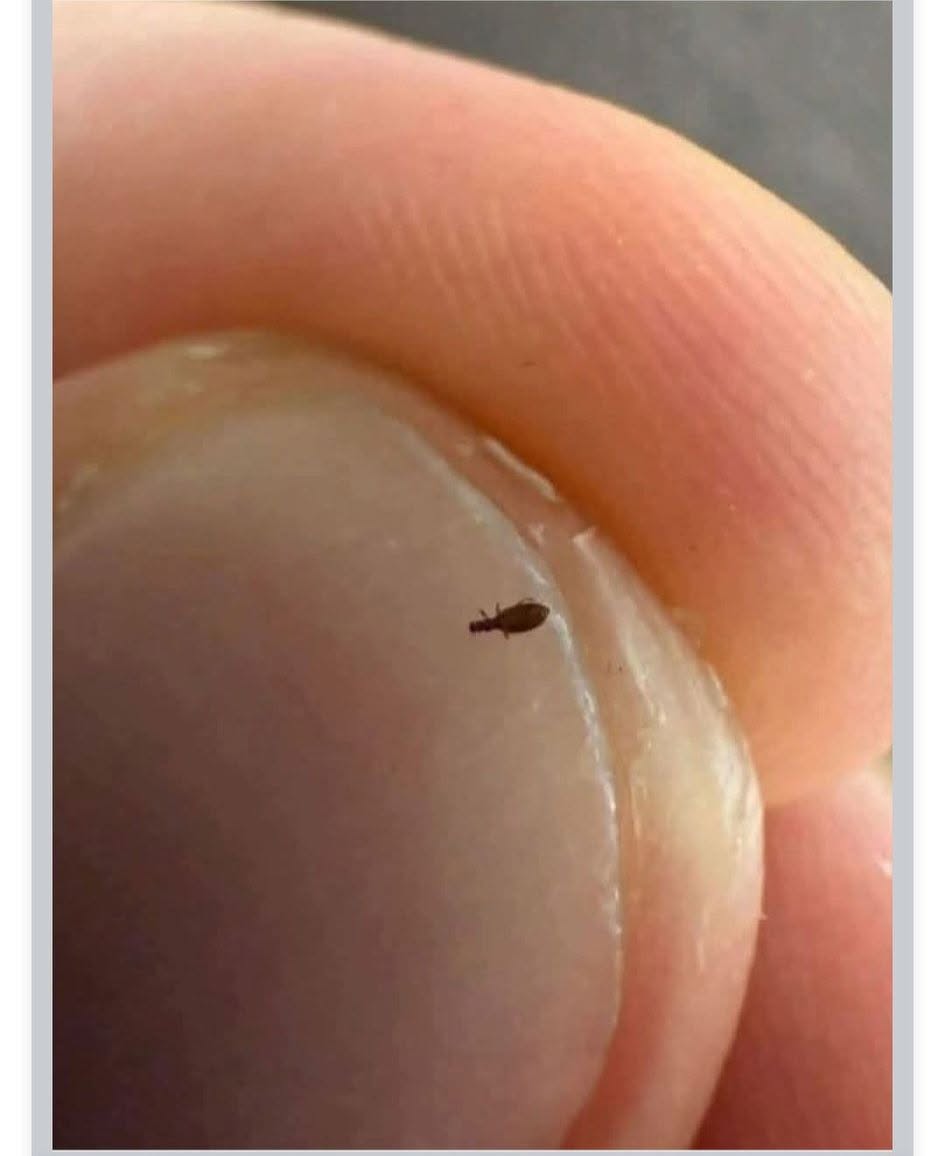
Second, consider the quantity. Was it a solitary find? A true lice infestation rarely presents as a single, isolated bug. If you only found one and no others are visible upon closer inspection, the odds are heavily in your favor that it is merely a stray intruder.
Third, consider the symptoms. Has your friend experienced persistent itching? While some people react immediately, the intense itching associated with head lice is an allergic reaction to the insect’s saliva. This reaction typically takes several days or even weeks of consistent feeding to develop. A sudden, isolated itch is more likely due to a dry scalp or a stray hair.
What Head Lice Actually Look Like
To help you confidently rule them out, it is useful to know the exact physical characteristics of head lice. Adult head lice are roughly the size of a sesame seed. They have a flat, grayish or tan body that is specifically adapted to cling tightly to hair shafts. They are slow, methodical crawlers, not fast runners.
Furthermore, their eggs, known as nits, have a very distinct appearance and behavior. Nits are firmly cemented to the base of the hair strand, close to the scalp. Unlike dandruff, lint, or loose debris, a nit will not easily flick, slide, or blow off the hair when you try to brush it away.
The Best Next Step
If you are still uncertain after this initial observational check, the most effective way to get peace of mind is to seek a second opinion. If possible, take a clear, well-lit photograph of the speck. Even a simple smartphone picture, taken with good lighting and a steady hand, will do. With a visual reference, it is often possible to provide a much more accurate and immediate identification. This simple step can help you and your friend move past the worry, eliminate the guesswork, and get back to enjoying your day with complete confidence.
