

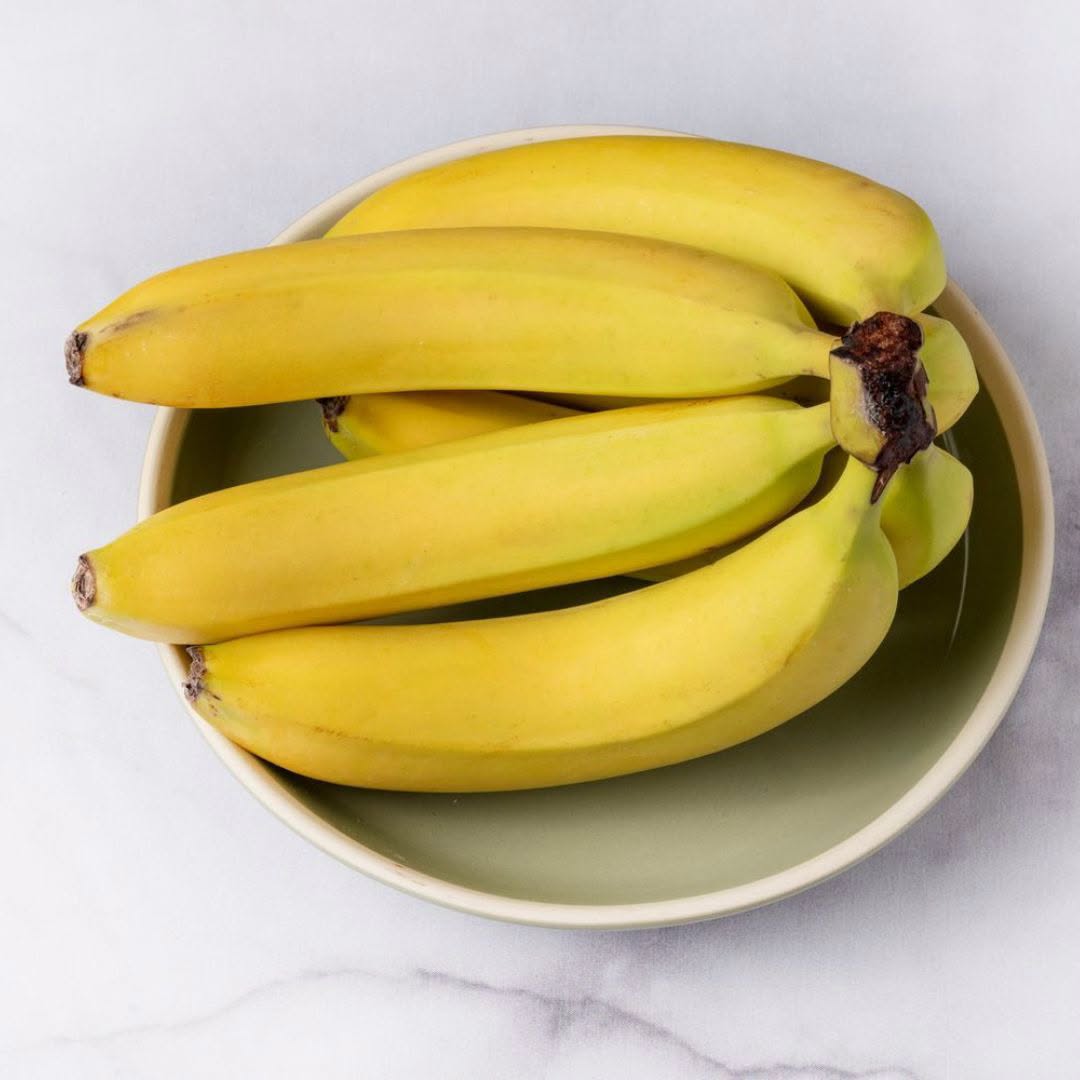
Many fruits—including apples, avocados, and tomatoes—release ethylene as they ripen. When you store bananas near other ethylene-producing fruits, you speed up the ripening process. Keeping several fruits together at room temperature can shorten their overall shelf life, including bananas, Deering explains.
To slow ripening and reduce waste, store fruits separately. Place them in different bowls, set them on opposite sides of the counter, or rotate which fruits you plan to eat each week.
Storage Tips to Slow Ripening and Extend Freshness
In addition to storing bananas away from other fruits while they ripen and refrigerating them once ripe, Deering suggests a few more strategies to slow down ripening and extend their freshness.
- Separate the bananas: Break apart the bunch to reduce ethylene buildup and encourage more even ripening. "Separating the bananas will allow them to ripen individually and possibly slow down the ripening of the bananas and decrease the likelihood of them all being ripe at the same time, although it will minimally impact the shelf-life," Deering says.
- Wrap the stems: After separating them, wrap the stems in plastic wrap or foil. This slows the release of ethylene and helps delay ripening, and extends their shelf life by a few days. "Separating the bananas and wrapping the stem will contribute to the best extension of shelf-life for bananas stored at room temperature at home and then storing them in the refrigerator once they are ripe," she says.
- Keep ripe and unripe bananas apart: Avoid storing ripe bananas next to unripe ones. Ripe bananas release more ethylene, which can speed up the ripening of greener fruit. If you regularly stock up, store new bananas separately to prevent them from ripening too quickly.
To see the complete cooking instructions, go to the next page or click the Open (>) button and don't forget to SHARE it with your friends on Facebook.