
She had broken ribs, a concussion, and injuries the doctors assured me would heal.
What concerned them more was her memory.
Emily remembered fragments.
Lights.
Noise.
Snow.
Then nothing.
The doctors said trauma sometimes did that to children.
one of them told me.
So I never pushed.
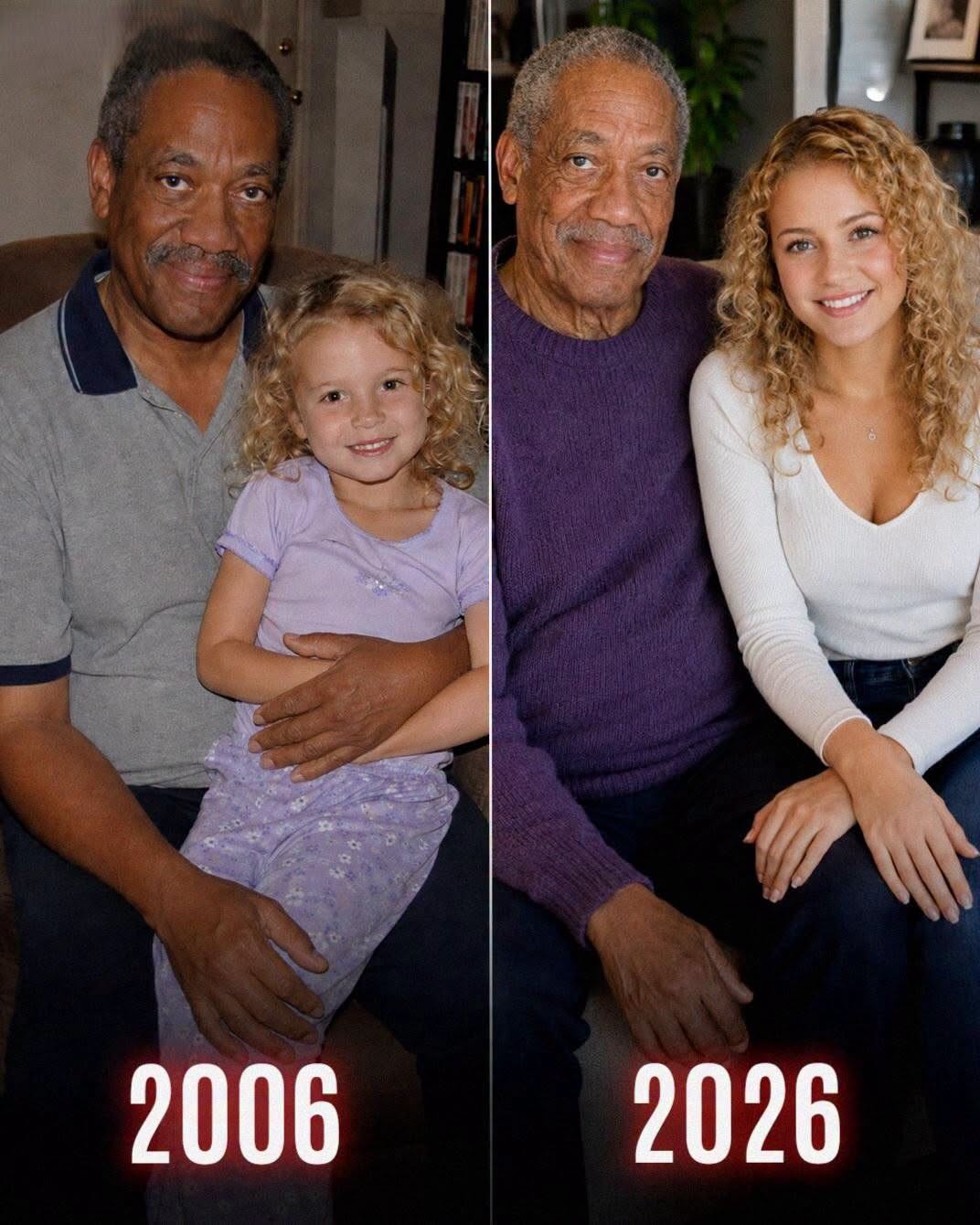
At fifty years old, I became a parent again overnight.
The pastor called Emily’s survival a miracle during the funeral.
Three closed caskets sat in front of us.
I didn’t feel particularly blessed.
But Emily needed somebody.
So I learned.
I relearned how to cook meals for a child.
I figured out how to comb little-girl hair without pulling too hard.
I sat through school concerts, parent conferences, scraped knees, fevers, birthdays and Christmas mornings.
Emily rarely complained.
That almost worried me more.
Sometimes she would stare toward the front door as though she expected her mother to walk through it.
When she eventually asked why her parents weren’t coming home, I gave her the only explanation I had.
She nodded.
For years, she never asked again.
Emily grew into an intelligent, unusually serious young woman.
She loved mystery novels and puzzles.
She noticed details other people missed.
She rarely broke rules.
Sometimes I wondered whether surviving that night had quietly aged part of her.
When she left for college, the house became unbearably quiet.
Four years after graduation, she came home again to save money.
By then, she was twenty-five and working as a paralegal for a small legal research firm downtown.
We settled into an easy routine.
Dinner around six.
Coffee afterward.
Emily telling me strange things she had learned from old court cases.
Then, a few weeks before the twentieth anniversary of the crash, something changed.
She became quieter.
Not sad exactly.
Focused.
Then the questions started.
“Grandpa, what time did Dad leave here that night?”
“Around seven.”
“Did police ever interview you afterward?”
“Not really.”
“Was anyone else supposed to be on that road?”
I stared at her.
“Why are you asking?”
She always gave some version of the same answer.
“Just curious.”
I didn’t believe her.
Then one Sunday afternoon, she arrived home early.
She didn’t remove her coat.
She walked directly into the kitchen holding a folded piece of paper.
Her hands were trembling.
We sat at the same kitchen table where she had eaten pancakes as a child and opened birthday presents as a teenager.
She pushed the paper toward me.
“I need you to read this before I explain.”
That was when I saw the words.
IT WASN’T AN ACCIDENT.
Continued on next page//
To see the complete cooking instructions, go to the next page or click the Open (>) button and don't forget to SHARE it with your friends on Facebook.