
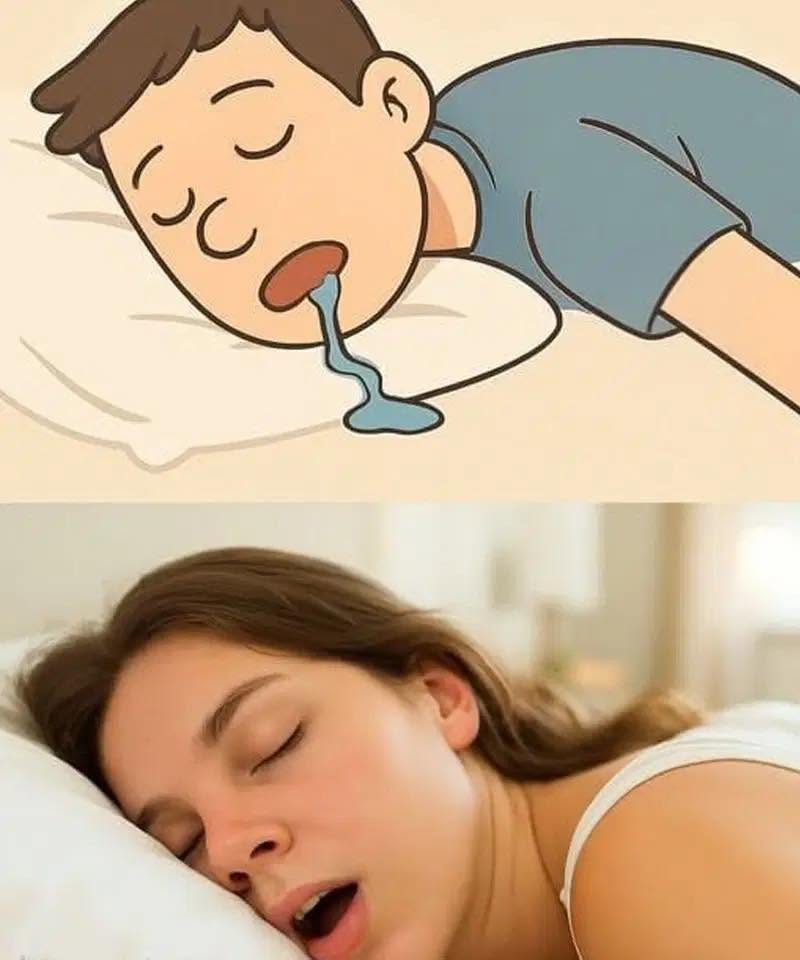
In dream interpretation or symbolic psychology, drooling could metaphorically reflect:
Desire or longing (like the phrase “mouth-watering”)
Loss of control
Vulnerability (being caught in an unguarded, childlike state)
Some people associate drooling with comfort, trust, or emotional safety, particularly in intimate or family sleeping situations.
4. Representation in Media & Pop Culture
Comedy: Drooling is often used in media to show a character is:
Sleeping deeply or snoring loudly
Daydreaming or infatuated (e.g., cartoon characters drooling over food or love interests)
Horror: In some horror or thriller narratives, unexplained drooling is used as a creepy or unnatural symptom (e.g., possession, infection).
5. Sleep Products & Consumer Trends
Growing awareness of sleep health has led to:
Pillows designed to reduce drooling (like elevated or cooling pillows)
Waterproof or absorbent pillowcases for those who drool regularly
Products like mouth tape to promote nasal breathing at night
6. Social & Relationship Dynamics
In romantic or shared living situations, drooling during sleep might:
Create self-consciousness, especially early in relationships
Be viewed as endearing, annoying, or funny depending on the dynamics
Parents often find it adorable when babies or pets drool during sleep, reinforcing emotional bonding.
7. Professional or Practical Concerns
Continued on next page//