

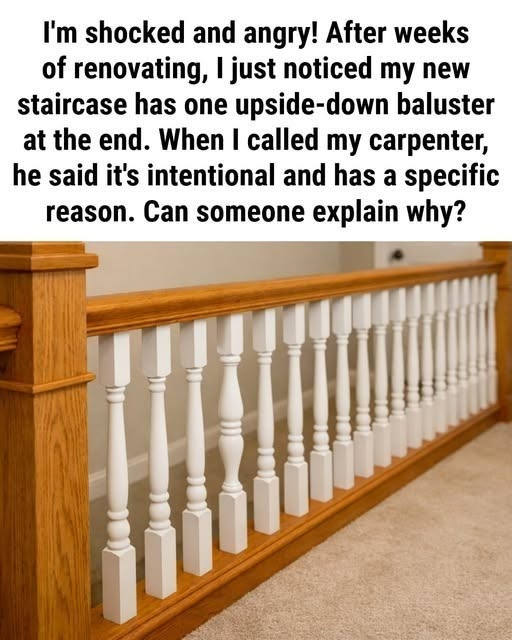
But here's the problem: There's no historical evidence that upside-down balusters in European or American staircases were part of this tradition.
-
No guild records mention it
-
No period texts describe it
-
No craftsman's journals discuss it
-
It doesn't appear in architectural manuals
What we do know is that balusters were turned on lathes, often in large batches. A turned baluster has no "top" or "bottom" until it's installed. When the time came to install them, mistakes happened. A tired craftsman might grab a piece without checking orientation.
The more likely explanation: It was a mistake. Or, in some cases, a practical decision—using a baluster with a minor flaw on the underside where it wouldn't be seen.
Why the Myth Endures
The story of the "intentional flaw" resonates because it gives us something we crave: meaning. We want old homes to have secrets. We want our imperfections to be beautiful. We want to believe that the people who came before us were wiser, more thoughtful, more connected to something larger.
And in a way, they were. But their wisdom wasn't in hiding mistakes—it was in making things so well that a minor flaw didn't matter.
What the Real Tradition Teaches Us
Even if the upside-down baluster isn't historically intentional, the spirit of the story holds value. Across cultures and centuries, craftspeople did embrace humility, imperfection, and the idea that their work was part of something larger.
The real tradition isn't about hiding a flaw. It's about:
-
Making things well – Good craftsmanship stands on its own.
-
Accepting imperfection – Materials have natural variations; hands aren't machines.
-
Finding beauty in the handmade – A slight unevenness is a mark of humanity, not failure.
-
Honoring the craft – The work itself is the legacy.
What to Make of the Upside-Down Baluster
Continued on next page//
To see the complete cooking instructions, go to the next page or click the Open (>) button and don't forget to SHARE it with your friends on Facebook.