
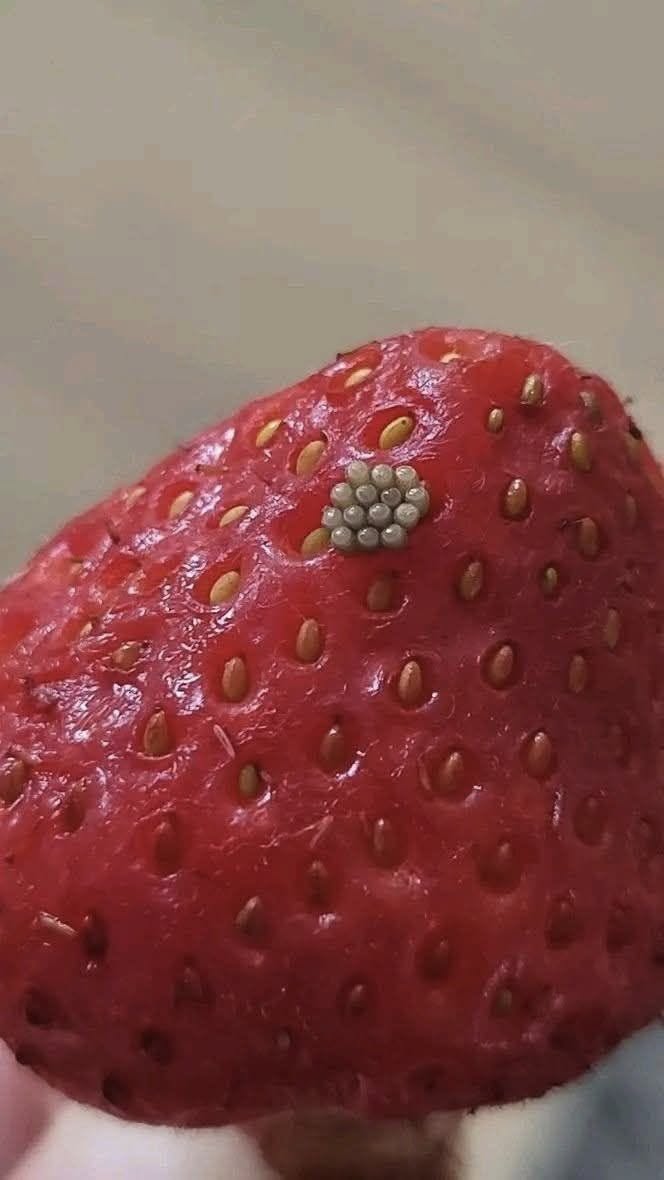
Yes, it’s unsettling. You soak your beautiful strawberries in salt water, and within minutes, tiny white specks begin to wriggle their way out. Your first instinct might be alarm. Your second might be to toss the whole container.
But here’s the reassuring truth: those tiny “worms” are completely normal, entirely harmless, and your strawberries are still perfectly safe to eat. This isn’t a sign of contamination or poor handling—it’s a glimpse into the quiet, natural world that shares our food.
Let’s walk through what you’re actually seeing, why the salt water reveals them, and how to enjoy your berries with confidence and peace of mind.
A Quiet Reality of Fresh Food
For as long as humans have harvested fruit from the earth, we’ve shared that harvest with other small creatures. In traditional farming and foraging cultures, finding an occasional insect or larva in produce wasn’t seen as a flaw—it was simply part of eating food that grew in the open world.
Today, with industrial agriculture and stringent cosmetic standards, many of us have grown accustomed to pristine, unblemished produce. But that perfection often comes at a cost: heavier pesticide use, shorter shelf life, or flavors bred for appearance over taste. The presence of tiny, natural inhabitants in your berries can actually signal something positive: minimal chemical intervention, and fruit that ripened in a living ecosystem.
This article isn’t meant to unsettle you further. It’s here to replace worry with understanding, and to help you enjoy fresh strawberries exactly as nature intended—with a little knowledge and a lot of confidence.
Why This Matters
Reduces food waste: Knowing larvae are harmless prevents tossing perfectly good fruit out of fear.
Supports informed choices: Understanding the source helps you decide how you prefer to source and clean your produce.
Promotes realistic expectations: Fresh, minimally treated food exists in a living world—and that’s okay.
Encourages gentle cleaning: Simple, effective methods let you enjoy berries without harsh chemicals.
Builds food literacy: Recognizing natural variations helps you shop, store, and prepare with greater awareness.
What Are Those Tiny White “Worms,” Really?
What Are Those Tiny White “Worms,” Really?
They’re not worms at all. They’re the larvae of the **spotted wing drosophila **(SWD)—a small vinegar fly that lays its eggs in soft, ripening fruit, especially berries like strawberries, raspberries, and blueberries.
Key facts:
The larvae are tiny (1–3 mm), white, and barely visible to the naked eye.
They develop inside the fruit as it ripens, feeding on the flesh.
They are not parasites: they cannot infect humans, survive digestion, or cause illness.
Their presence is most common in late-season berries, organic fruit, or produce grown with minimal pesticide use.
Seeing them doesn’t mean your berries are “bad.” It means they grew in a natural environment—and that’s often a good thing.
Why Salt Water Makes Them Appear
Continued on next page//