
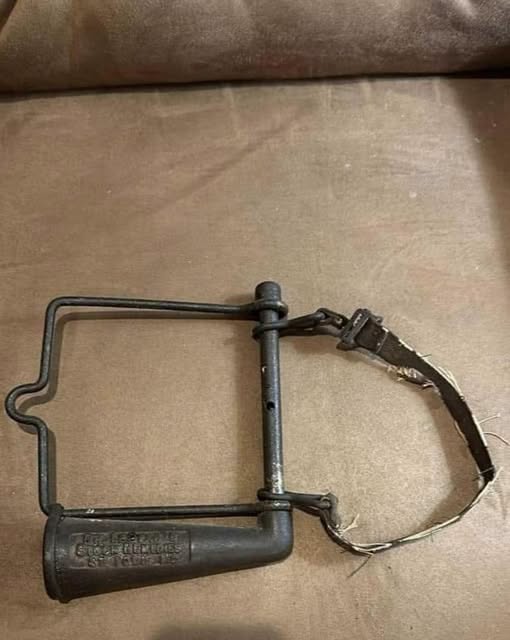
At first glance, an old brass instrument with a curved tube, cylindrical body, and unusual fittings might look like a strange piece of farm equipment. But objects like this can reveal surprisingly much about the history of animal care.
If you’ve discovered one in an old barn, farmhouse, workshop, or family collection, there’s a good chance you may be looking at an antique horse drencher—a veterinary tool once used to administer liquid or powdered treatments to horses and other large animals.
The design may seem intimidating today, but it was created to solve a very practical problem: how do you safely get medicine into a powerful animal that doesn’t necessarily want to take it?
What Was a Horse Drencher?
A horse drencher was a device used to deliver medication or other treatments directly into an animal’s mouth.
Veterinary drenching tools existed in various forms for centuries. One documented example at Michigan State University dates to around 1720 and was associated with English farrier William Gibson, who patented the design in 1718.
Later versions became more sophisticated, with examples made from materials such as brass, iron, pewter, and other metals.
The exact design varied considerably. Some were simple spoon-like instruments, while later equipment could incorporate tubes, reservoirs, plungers, or specialized bits.
So if you’ve found a brass device and are trying to identify it, the details of its construction matter.
Why Did Horses Need to Be Drenched?
One of the major reasons for administering liquid treatments was to deal with digestive problems and other illnesses.
Colic, for example, is a broad term for abdominal pain in horses and can have many different causes. Historically, treatments could include substances intended to lubricate the digestive tract or encourage movement through the intestines.
Older veterinary sources and museum collections document the use of drenching instruments for administering substances such as castor oil and other medications.
For farmers and veterinarians working before modern diagnostic and treatment methods, being able to administer a treatment to a large animal was an important practical skill.
The Ingenious Design Behind the Tool
The fascinating thing about an antique horse drencher is that its shape wasn’t arbitrary.
Its various components were designed around the physical challenges of treating a large animal.
Depending on the model, a drencher might feature:
- A metal reservoir for holding a treatment
- A long or curved delivery tube
- A plunger or pumping mechanism
- A bit or mouthpiece
- A handle, ring, or hook
- Straps or other fittings
The purpose was to allow the operator to deliver a substance into the horse’s mouth in a controlled manner.
Historical veterinary instruments demonstrate just how much ingenuity went into solving these problems before modern equipment became available. The Science Museum Group, for example, has a later horse drencher from Australia specifically catalogued for administering powdered substances.
Brass Was a Practical Material
Continued on next page//