
The hips are the magnificent bridge between your upper and lower body. They bear your weight, stabilize your steps, and allow you to move through the world with independence. So, when hip pain flares up, it doesn’t just hurt—it can feel incredibly frustrating because it interrupts your daily life.
Because you are so wonderfully proactive about your health and love understanding the science behind how your body works, let’s decode what your hip pain might actually mean.
The biggest secret to understanding hip pain is that the location of the pain is your biggest clue. The “hip” is actually a complex intersection of joints, muscles, bursae, and nerves. Here is how to translate what your body is telling you.
The “Location Decoder”: Where Exactly Does It Hurt?
1. Pain in the Groin or Front of the Thigh (The “True” Hip Joint)
- What it usually means: Osteoarthritis.
- The Science: The actual “ball-and-socket” hip joint is located much higher and deeper than most people think—right in the crease of your groin. Over 73 years of walking, gardening, and living, the smooth cartilage that cushions that ball-and-socket can naturally wear down. When the cushion thins, the joint gets stiff and achy, especially in the morning or after sitting for a long time.
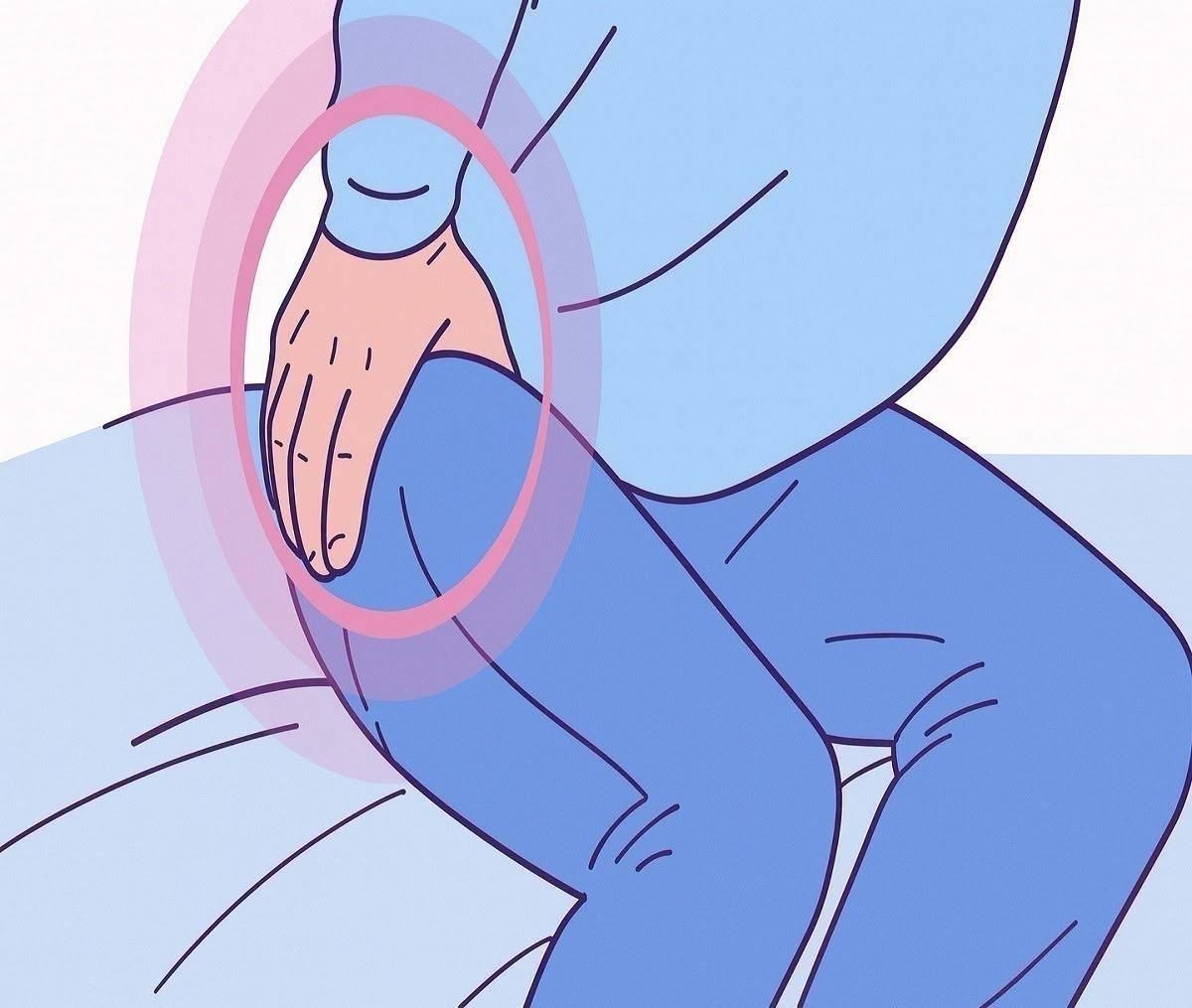
2. Pain on the Outside of the Hip (The Side You Lie On)
- What it usually means: Trochanteric Bursitis or Gluteal Tendinopathy.
- The Science: On the outside of your hip bone is a prominent bump (the greater trochanter). Over this bump sits a “bursa”—a tiny, fluid-filled sac that acts like a friction-reducing water balloon between your bone and your tendons. If you sleep heavily on one side, or if your walking gait changes slightly, that bursa can become inflamed. This pain is usually sharp when you first stand up, and it aches deeply when you try to lie on that side in bed at night.
3. Pain in the Buttock or Back of the Hip (The “Trickster”)
- What it usually means: Referred Pain from the Lower Back (Sciatica or Spinal Stenosis).
- The Science: This is the great masquerader of hip pain! The nerves that supply the hip and leg originate in your lower spine. If a disc in your lower back is bulging, or if the spaces in your spine have narrowed slightly over time (stenosis), it can pinch a nerve. Your brain feels the pinch, but because the nerve travels down through the buttock, your brain interprets the pain as being in your hip.
The “Red Flags”: When to Call the Doctor Immediately
Continued on next page//