
Seeing tiny white creatures moving in your fresh fruit can definitely be surprising. This topic has recently gained attention online, leaving many people wondering whether their favorite summer berries are still safe to eat. Here’s a closer look at what may be happening inside your strawberries, the science behind the popular “salt water test,” and how you can prepare your fruit with confidence.
What Are the Tiny White Creatures in Strawberries?
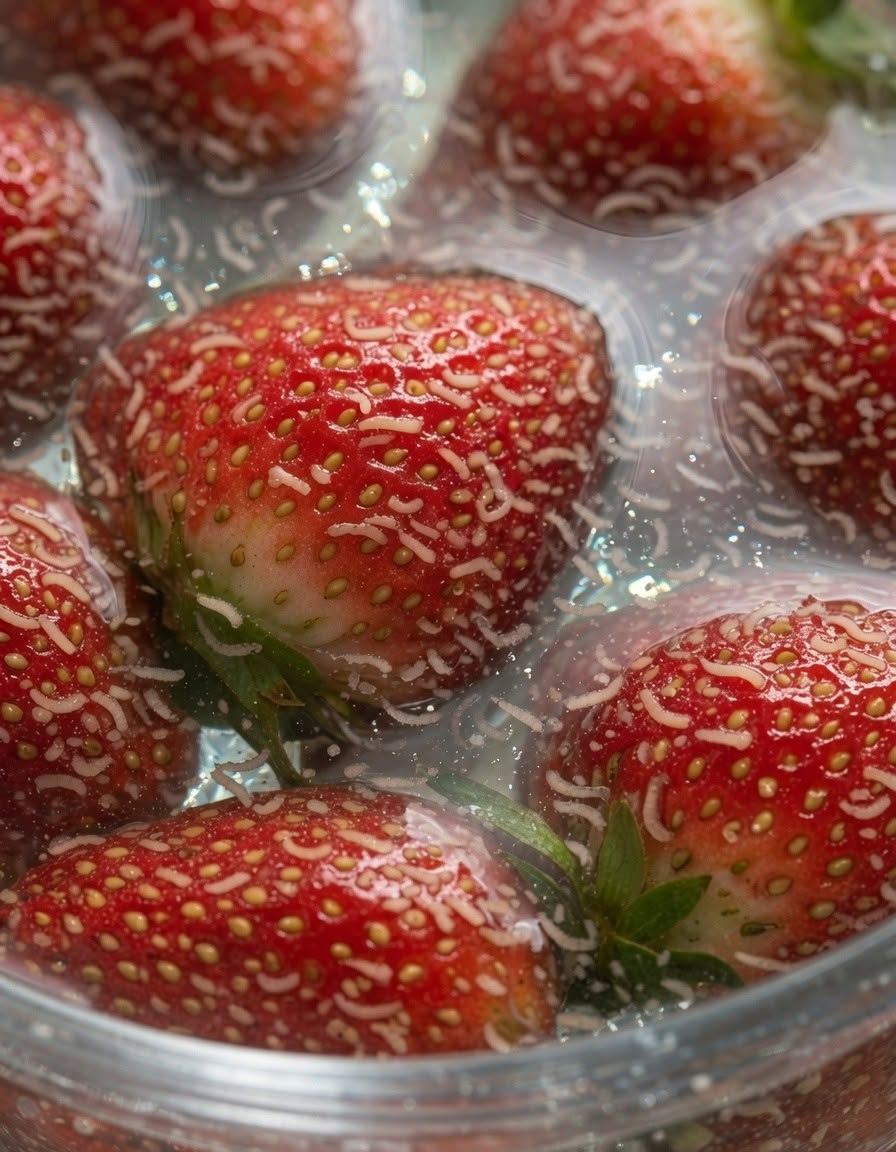
If you’ve ever placed strawberries in salt water and noticed tiny white “worms” coming out, you’re not alone. These small creatures are usually larvae (maggots) of certain fruit flies, not actual worms. They are extremely small—often about 1 to 3 millimeters long—and because they are pale and almost transparent, they can be very hard to see while they are inside the berry.
The larvae develop within the fruit because the soft, sugary interior provides an ideal food source. A female fruit fly lays her eggs just beneath the skin of the berry, and once the eggs hatch, the larvae remain inside the fruit while they feed and grow. Warm, humid conditions allow this process to happen quite quickly.
The Insect Responsible: Spotted Wing Drosophila
The insect commonly responsible for this is called the spotted wing drosophila (SWD). Unlike many fruit flies that prefer fruit that is already rotting, this species often targets healthy, ripening fruit still on the plant.
Adult SWD flies are tiny insects with red eyes and light-colored bodies. Male flies have distinct dark spots on their wings, which is where the species gets its name. Female flies have a specialized egg-laying organ that allows them to pierce the skin of firm fruit and deposit eggs inside. Because of this ability, they can affect crops such as strawberries, blueberries, cherries, and raspberries.
Why Salt Water Makes the Larvae Come Out
Many people soak fruit in salt water as a cleaning method. A common mixture is about one tablespoon of salt per cup of water. When berries are submerged, the salt changes the surrounding environment.
Through a process known as osmosis, the saltwater draws moisture away from the larvae. This creates stress for them, causing them to move out of the fruit and into the water. Once they emerge, they become visible to the naked eye.
Are These Larvae Harmful?
Continued on next page//
To see the complete cooking instructions, go to the next page or click the Open (>) button and don't forget to SHARE it with your friends on Facebook.