

You know that moment? Sun beating down. Line limp in the water. You’ve stared at that bobber so long you’re questioning life choices—Did I insult a fish in a past life? Is my bait secretly boring? I was there once, slumped over my tackle box like a man mourning a lost cause, when an old-timer with saltwater in his veins and wisdom in his wrinkles glanced over.
“You try glass rattles?” he asked.
I blinked. “Glass what?”
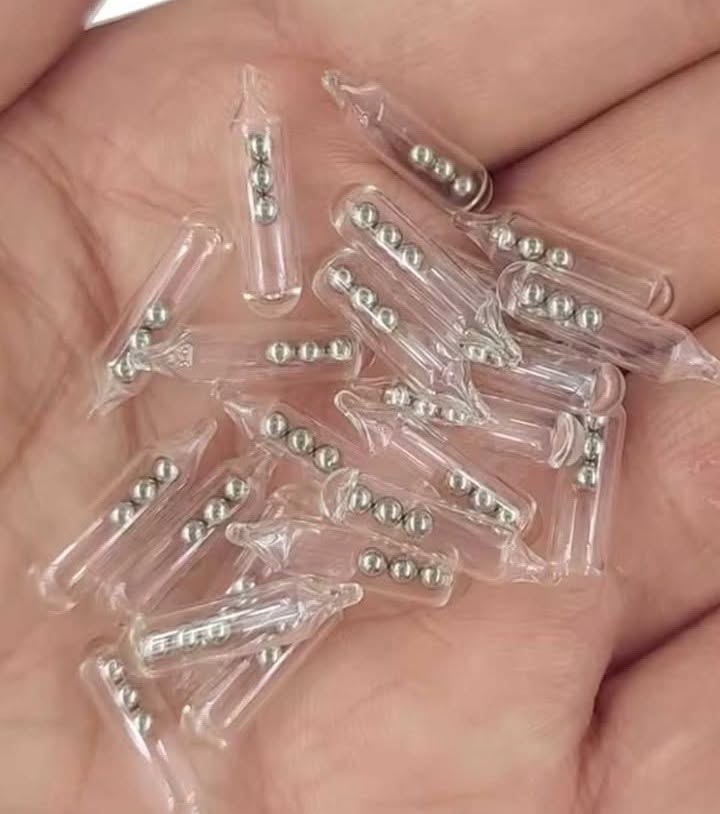
He opened his palm. Nestled there: a translucent capsule no bigger than a grain of rice, with three tiny ball bearings dancing inside. It looked like a vending machine trinket. A joke. But desperation is a powerful teacher. I took it.
And that tiny rattle changed everything.
What Are These Things? (No, Really)
They’re exactly what they sound like: sealed glass or acrylic tubes (about 8–12mm long) housing 2–3 miniature steel bearings. Shake one—click-click-click—and you’ll hear it. Underwater? That subtle vibration mimics a wounded minnow, a crayfish scrambling over rocks, or baitfish in distress.
Fish don’t just see prey—they feel it. Bass, pike, walleye—they all rely on their lateral line, a sensory system that detects vibrations in murky water, low light, or heavy cover. That faint rattle isn’t noise. It’s a dinner bell.
Think of it this way: your lure is the main course. The rattle? The pinch of salt that wakes up the whole dish.
Spotting Them in the Wild
Size: Rice grain to jellybean
Shape: Straight tube, tapered, or rounded
Contents: 2–3 silver bearings that shift when tilted
Packaging: Sold in small vials or blister packs (often labeled “fishing rattles” or “glass lure inserts”)
Pro tip: Keep them in a pill bottle or mint tin. Drop one in grass? Good luck finding it. (Ask me how I know.)
How to Rig Them Like a Pro
Continued on next page//
To see the complete cooking instructions, go to the next page or click the Open (>) button and don't forget to SHARE it with your friends on Facebook.