
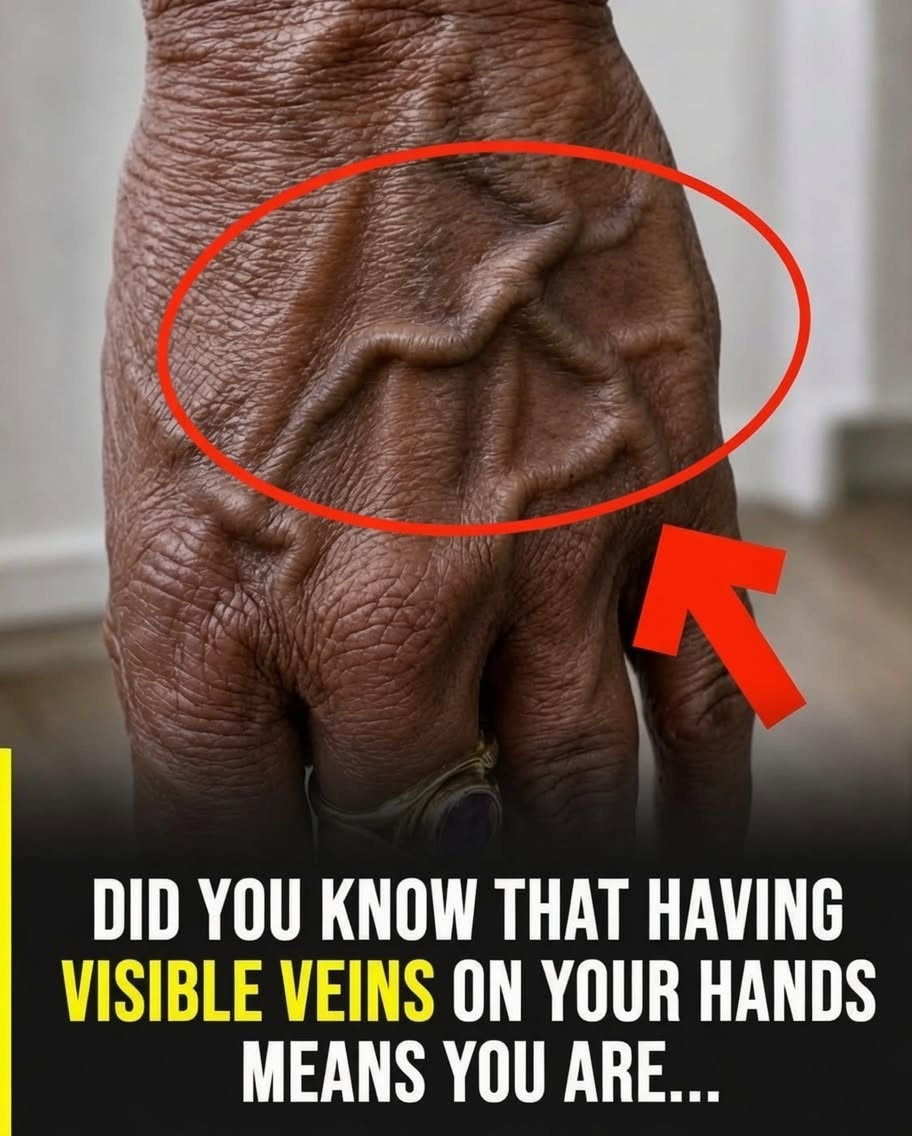
Visible veins are often misinterpreted, which can cause unnecessary worry. One of the most common misconceptions is that they always indicate a health problem. In reality, in most cases, they are simply a natural characteristic related to skin structure and individual body shape.
Another common misconception is that visible veins automatically lead to poor circulation. However, blood circulation can be perfectly efficient even when veins are visible, especially after physical exertion or in hot weather. The body naturally adapts to its environment, and these variations are normal.
It is therefore important not to draw hasty conclusions from this type of change. Observation of the body must always be placed within its overall context: age, lifestyle, physical activity, and personal characteristics all play a role.
Focusing on an isolated sign can lead to unjustified worries.
Adopt a calm approach
By adopting a more serene approach, it becomes easier to understand the body’s signals without excessive stress. Visible veins can then be perceived not as a source of anxiety, but as a natural variation in human function.
If doubt persists, consulting a healthcare professional remains the best way to gain reassurance and obtain answers tailored to your specific situation. The key is to find a balance between vigilance and peace of mind, without over-interpreting.
When should you seek medical advice?
It is recommended to consult a healthcare professional when visible veins are accompanied by unusual or persistent symptoms. Localized pain, recurring swelling, or discomfort that develops over time should be taken seriously.
The goal is not to worry unnecessarily, but to obtain informed advice in order to better understand what the body is expressing and, if necessary, to implement appropriate measures.
Listening to your body calmly and attentively often allows you to better understand its needs while preserving your serenity.