

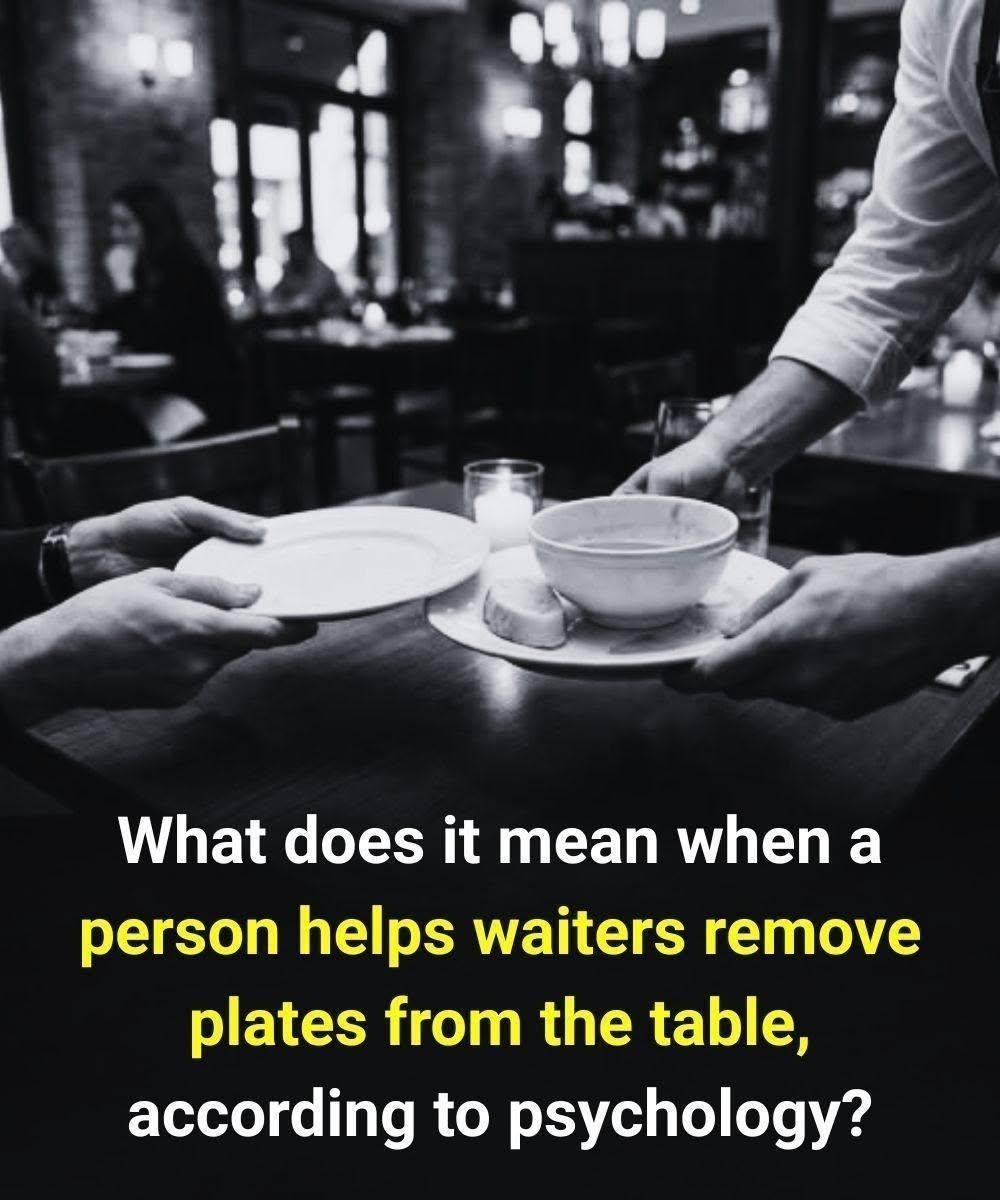
There's a quiet, universal moment that unfolds in restaurants everywhere: the meal is ending, plates are scattered, and someone at the table leans in to help clear the table. Some people stack plates without a second thought. Others pause, wondering if it's appropriate—or even welcome.
That split-second instinct? It might reveal more about your inner wiring than you realize.
Psychology suggests that introverts and extroverts often respond to this small social cue in distinctly different ways—and neither response is wrong. Understanding the "why" behind your instinct can help you move through social moments with greater self-awareness and compassion.
This isn't about labeling or judging. It's about curiosity. It's about noticing how our personalities gently shape everyday choices—and giving ourselves permission to honor the instincts that feel most authentic.
The Psychology Behind the Plate-Stacking Moment
What Research Tells Us About Personality and Helping
Studies indicate that core personality traits—like extraversion and introversion—influence how we interpret and respond to social opportunities, including moments to offer help.
Extroverts tend to have a broader attentional scope and heightened responsiveness to others' emotional states. This often makes them quicker to notice a server's need and more inclined to act. Because social interaction typically energizes them, offering assistance can feel natural, rewarding, and even joyful.
Introverts, by contrast, often prefer to minimize interaction in public settings. As one behavioral guide observes, "An introvert out on the town would like to eat or drink quietly with as little interaction with staff and fellow patrons as possible." For them, remaining seated isn't indifference—it's a conscious choice to preserve energy in an already stimulating environment.
The Restaurant as a Social Laboratory
The Restaurant as a Social Laboratory
Restaurants are uniquely charged spaces: designed for connection, yet filled with strangers, ambient noise, and unspoken social contracts. Psychology Today notes that "restaurants are made for extroverts"—densely arranged to maximize interaction, with constant demands for engagement. For introverts, this atmosphere can feel overwhelming, turning a simple gesture like clearing plates into an additional social task rather than a spontaneous act of kindness.
But here's the nuanced truth: context often outweighs personality. Research on prosocial behavior shows that situational factors—such as how busy the restaurant is, whether the server appears stressed, or prevailing cultural norms—can temporarily override personality tendencies. An introvert might happily stack plates at a quiet neighborhood café with a familiar server, yet hold back at a bustling chain restaurant. Personality isn't destiny; it's a tendency, shaped by the moment.
Why Introverts Might Hesitate (And Why That's Perfectly Okay)
Continued on next page//
To see the complete cooking instructions, go to the next page or click the Open (>) button and don't forget to SHARE it with your friends on Facebook.