

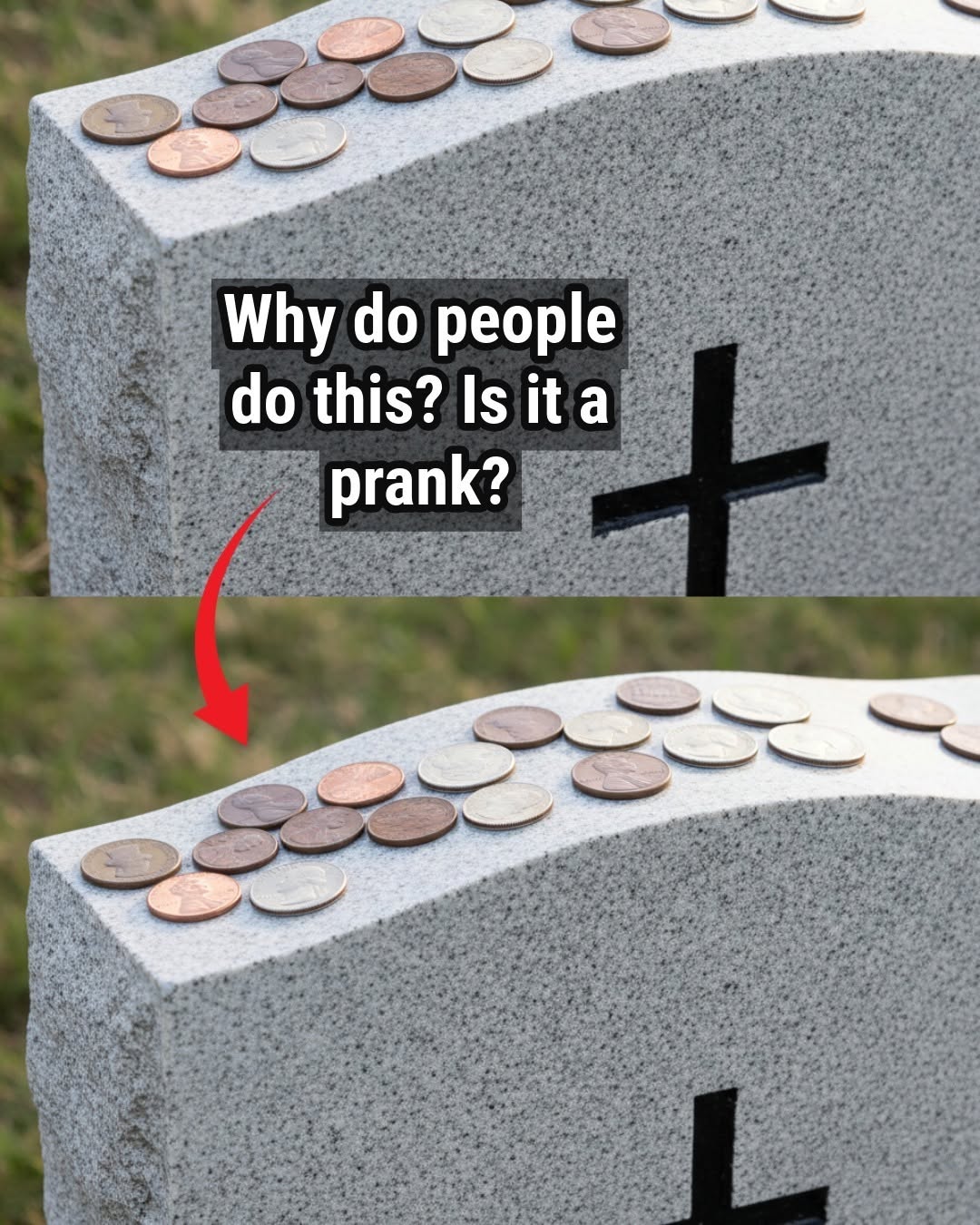
While the military custom is the most recognized today, other cultures have their own coin-related grave traditions:
- In Ireland and parts of the UK, placing a coin on a grave (especially of a child) was once believed to bring good luck or help the soul in the afterlife.
- In some Jewish traditions, visitors leave small stones instead of coins—but the intent is similar: a physical marker that says, “Someone came. Someone remembers.”
- In modern secular practice, some people leave coins simply as a personal symbol of respect, continuity, or a quiet “hello” to a loved one.
A Gesture That Speaks Without Words
In a world that often rushes past grief, leaving a coin on a grave is a quiet act of witness. It requires no speech, no ceremony—just presence. It says:
Your sacrifice mattered.
I stood here, in your honor.”
Whether rooted in ancient myth or modern brotherhood, this small token carries the weight of memory, gratitude, and human connection across time.
So the next time you see a coin gleaming on a headstone, pause. You’re looking at more than metal—you’re seeing a story, a bond, and a promise kept.
Have you ever left a coin on a grave? We’d be honored if you’d share what it meant to you in the comments below. And if this tradition moved you, consider sharing it with someone who’s served—or lost someone who did. Sometimes, the smallest gestures echo the loudest.