
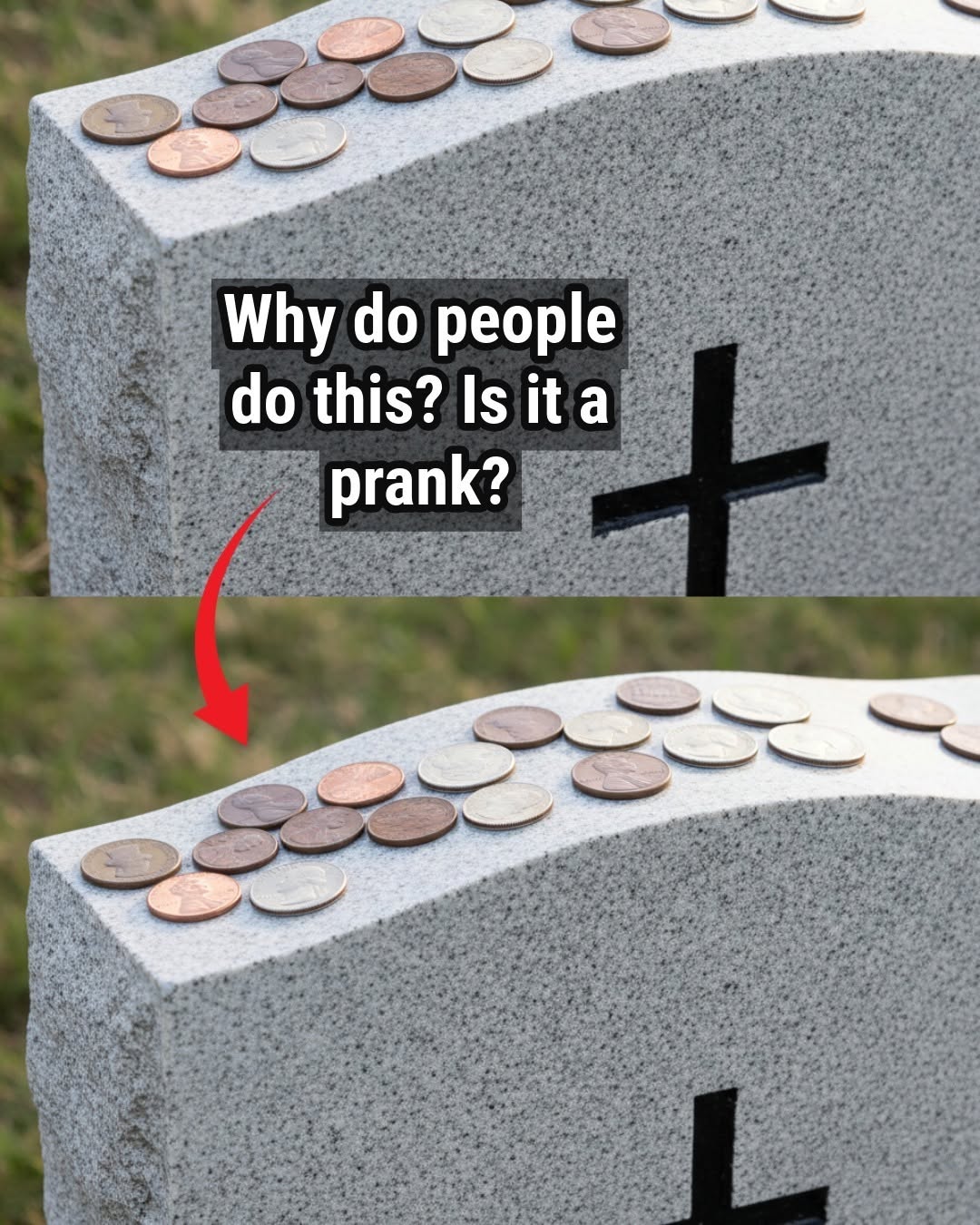
If you’ve ever visited a cemetery and noticed coins left atop a headstone, you might have wondered: What does this mean? It’s not an offering from mourners at a shrine, nor a superstitious ritual—it’s a deeply respectful, centuries-old custom with roots in military honor, camaraderie, and silent gratitude.
Today, this practice is most commonly associated with visits to the graves of fallen service members, but its origins stretch back even further—to ancient battlefields, Roman roads, and the quiet language of remembrance.
Let’s explore the history, meaning, and unspoken messages behind this poignant gesture.
The Military Tradition: A Silent “I Was Here”
In the United States and other nations, leaving a coin on a veteran’s grave is a widely recognized sign that someone has visited to pay their respects. Each coin carries an unspoken message:
- Penny – “I visited.”
- Nickel – “We trained together.”
- Dime – “We served together.”
- Quarter – “I was with them when they died.”
This tradition became especially common during the Vietnam War, when political divides made direct contact with the families of fallen soldiers difficult or emotionally fraught. Leaving a coin was a discreet, respectful way for comrades to say, “I remember. I honor them. I was here.”
The coins are later collected by cemetery caretakers or veterans’ organizations and often used to help cover burial costs or support veteran causes—turning remembrance into tangible support.
Ancient Roots: From Greek Myth to Roman Roads
The practice predates modern militaries by thousands of years. In ancient Greece and Rome, it was customary to place a coin—often an obol—on the eyes or in the mouth of the deceased.
Why?
According to myth, the soul needed to pay Charon, the ferryman of the underworld, to cross the River Styx into the afterlife. Without a coin, the spirit might be left to wander the shores for 100 years.
While this burial rite faded in most cultures, the symbolic act of leaving a coin as a token of passage, honor, or remembrance endured in various forms across Europe and the Mediterranean.
Beyond the Military: Other Meanings Around the World
Continued on next page//
To see the complete cooking instructions, go to the next page or click the Open (>) button and don't forget to SHARE it with your friends on Facebook.