
Fifteen years can erase a person from a family photo, but it cannot erase paperwork.
That was the first lesson I learned after Ruth Yazzie helped me disappear legally instead of foolishly. She did not hide me in a dramatic way. She taught me patience. She helped me contact a victims’ advocate in Flagstaff, who connected me with a legal aid attorney named Marisol Grant. Marisol listened without interrupting, then said, “You are not crazy. But if they control the story, they control the law.”
So I stopped screaming the truth and started collecting it.
I finished high school under supervision, using my birth name at first, then later changing it after I turned eighteen. Ruth became the closest thing I had to family. She did not smother me with pity. She gave me chores. She made me drink water before I cried. She taught me that survival was not beautiful. It was repetitive, boring, stubborn work.
I went to community college, then Arizona State, then law school at Georgetown on scholarships and debt. I studied criminal procedure like scripture. I learned how lies moved through systems: police reports, insurance claims, custody filings, probate courts, charity boards. Lies were rarely loud. Most of them wore clean shirts and used polite language.
My family, meanwhile, became famous for grief.
Linda started a foundation called Bring Erin Home, raising money for “runaway prevention” and “family reunification.” Richard became the grieving stepfather in local interviews, his voice shaking at exactly the right moments. Brooke, who had once filmed my humiliation, edited herself into a documentary about trauma and forgiveness. Mason grew up into a smiling real estate developer who used my missing-person story at charity dinners.
They built businesses on my disappearance.
I built a case.
At twenty-nine, I joined the FBI. I did not investigate my family at first. I was too close to it, and I knew that. I worked financial crimes. Fraud. Wire transfers. Shell nonprofits. False invoices. Quiet theft committed by people who thought prison was for desperate men, not polished ones.
Then a report crossed my desk with a name I had not spoken aloud in years: Richard Hale.
His company had received federal grant money through a nonprofit partner. That nonprofit was connected to Linda’s foundation. The foundation had paid consulting fees to Brooke’s media company. Mason’s development firm had received “community housing” funds, then built luxury rentals instead.
It was all connected.
I disclosed my conflict. I expected to be removed.
Instead, my supervisor, Deputy Assistant Director Calvin Price, studied me carefully and said, “You don’t get to touch witness interviews alone. You don’t make unilateral decisions. But nobody knows their history better than you.”
The investigation took eleven months.
Subpoenas opened bank accounts. Bank accounts opened emails. Emails opened fear.
And fear made people talk.
A former bookkeeper admitted Linda had known I was alive years earlier. A retired sheriff’s deputy admitted Richard had pressured him to ignore my statement. Brooke’s raw footage still existed in an old storage drive. Mason had joked in a text message that “dead Erin paid better than live Erin.”
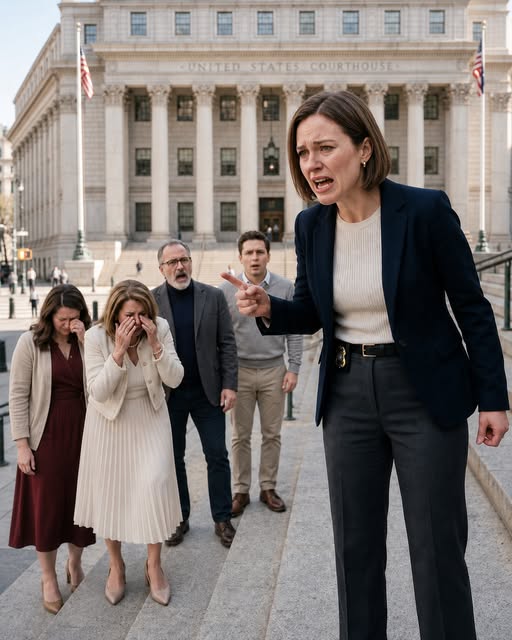
When federal agents knocked on their doors, they thought it was about money.
Then they saw me standing behind the lead prosecutor.
My mother’s face collapsed first.
Richard went pale.
Brooke whispered, “No.”
Mason stared like he had seen a ghost, but I was not dead, and that was what terrified them most.
Read more on the next page >>
To see the complete cooking instructions, go to the next page or click the Open (>) button and don't forget to SHARE it with your friends on Facebook.