

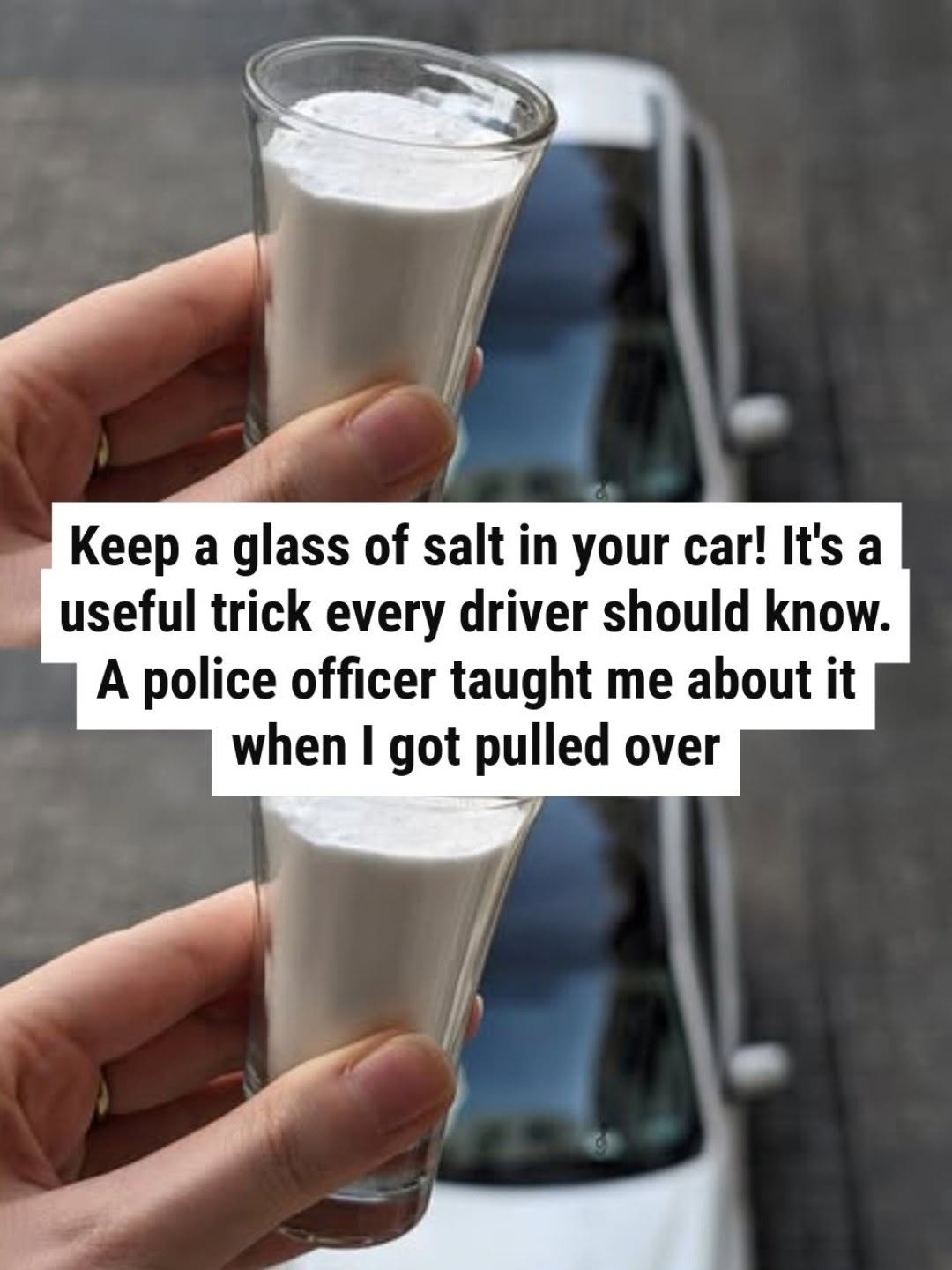
You’ve probably seen the viral post: “Put 1 glass of salt in your car—it absorbs moisture, prevents foggy windows, and stops ice from forming!” It sounds like a miracle: a cheap, natural solution to winter driving woes using one humble kitchen staple.
But here’s the reality: while salt can absorb moisture, putting a glass of it in your car is largely ineffective—and could even cause problems. Let’s separate myth from science and share what actually works to keep your car dry, safe, and fog-free.
The Claim: What the Viral Post Says
- Salt absorbs humidity from the air
- Prevents foggy windows
- Stops ice from forming on the inside
- Works like a natural dehumidifier
It sounds plausible—after all, salt is hygroscopic (it attracts water). But in practice? A bowl of salt won’t cut it.
The Science: Why It Doesn’t Work Well
- Too Slow, Too Weak
-
A cup of table salt has minimal surface area to pull meaningful moisture from the air. In a car’s enclosed space, humidity builds quickly from breath, wet boots, and snow—and salt simply can’t keep up.
- It Saturates Fast
Once salt absorbs water, it dissolves into a brine puddle—often within hours in a damp car. Now you’ve got a salty, corrosive liquid near your seats or floor mats, which can:- Stain upholstery
- Corrode metal parts
- Smell unpleasant as it traps odors
- Does Nothing for Foggy Windows
Fog forms when warm, moist air hits cold glass. Salt in a cup won’t stop this—it’s not circulating air or reducing interior humidity effectively. - Zero Impact on Ice
Salt lowers the freezing point of liquid water—but it won’t prevent frost or ice from forming on cold surfaces inside your car.
What Actually Works to Reduce Car Moisture
Continued on next page//
To see the complete cooking instructions, go to the next page or click the Open (>) button and don't forget to SHARE it with your friends on Facebook.

How to Get Your Peace Lily to Flower More: 7 Expert Tips for Lush Blooms All Year

12 Nasty Habits You Might Develop in Old Age (That Everyone Notices—But No One Mentions)

Over 200 People Are Killed By The “World’s Deadliest Food” Every Year, But Almost 500 Million People Still Eat It

What Is Paprika Made Of? The Truth Behind the Spice That Shocked the Internet

Why are some window bars curved at the bottom