
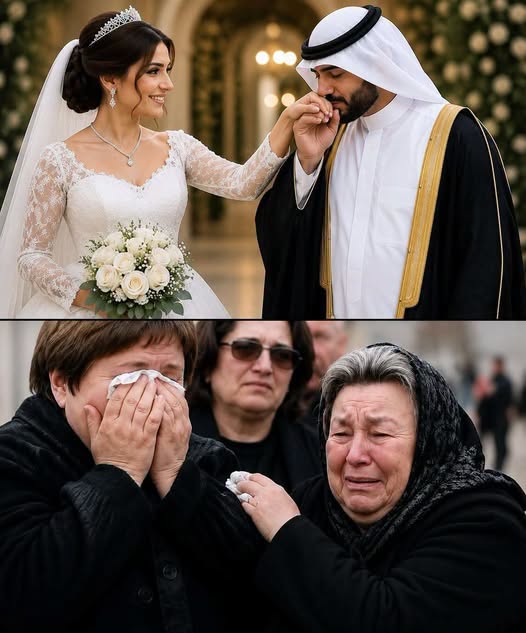
The days that followed were a fractured sequence of rituals and administrative finalities. As an architect, Sarah was trained to view the world in terms of structural integrity, yet she found herself unable to process the collapse of her own reality. The inheritance was substantial—a home that felt like a museum of a life unlived, shares in a company that now seemed like a collection of cold, inanimate assets, and a financial trust that was, in truth, a weight she did not know how to carry. She returned to London, but the city felt alien, a landscape of glass and steel that no longer resonated with the vibrant, human blueprint she had been sketching with Rashid. The money was a paradox; it provided every comfort, yet it emphasized the singular, irreplaceable void left by his absence. For a long time, she simply existed in the margins of her own life, haunted by the memory of a wedding dress still hanging in a wardrobe and the unread messages on a phone that would never again light up with his name.
Grief, she discovered, was not a linear progression but a recurring topography of sudden, steep inclines and unexpected valleys. She began to walk through the parks of London, observing the way people interacted, the way they held onto one another as if they had all the time in the world. She realized that her architectural training had taught her how to build for the future, but Rashid’s death had forced her to confront the absolute fragility of the present. She could not bring him back, but she could begin to construct a different kind of monument—one not made of stone or mortar, but of the values he had championed. She looked at the trust and saw not a fortune, but a tool for continuity. She began to research the charities he had supported in secret, the small, quiet acts of philanthropy that had defined his character far more than his business success ever had.
Continued on next page//