
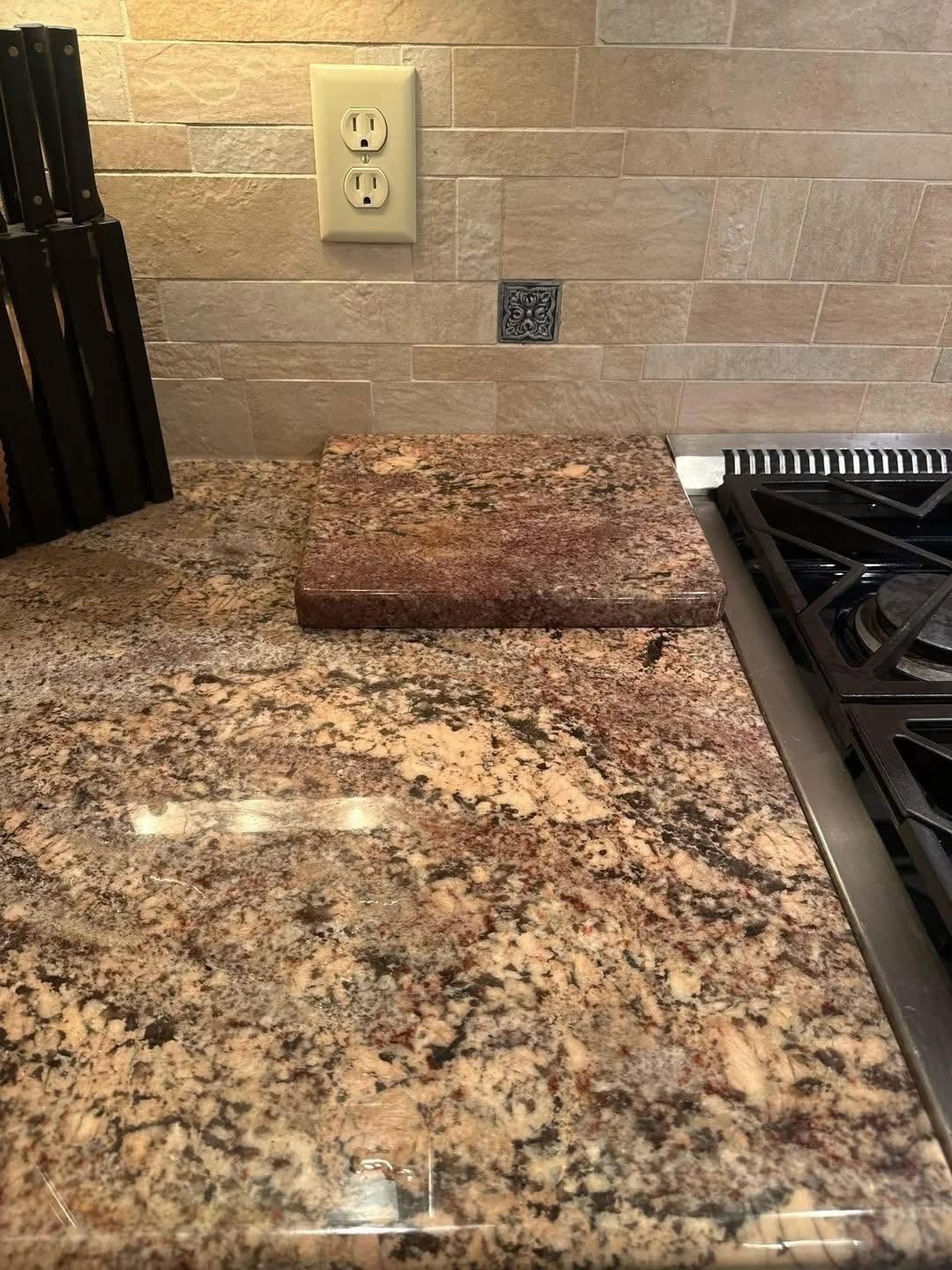
If you've inherited one of these slabs (or want to buy one), here's how to put it to work.
For Pie and Biscuit Dough:
Step 1: Place the granite slab in the refrigerator or freezer for 20-30 minutes before you plan to roll dough. (Or store it permanently in a cool cabinet.)
Step 2: Lightly flour the surface.
Step 3: Place your chilled dough in the center.
Step 4: Roll out as usual. The cold stone will keep the butter solid, resulting in flakier, more tender crusts.
Step 5: Wipe clean with a damp cloth. Do not submerge in water (stone can crack). Do not use soap (it can absorb into the stone). A simple wipe is sufficient.
For Chocolate and Candy Making:
Tempering chocolate requires consistent, cool temperatures. A granite slab provides the perfect surface for spreading melted chocolate, allowing it to cool evenly.
How to use: Pour tempered chocolate onto the cool granite. Spread with a spatula. Let it set. The stone absorbs heat from the chocolate, helping it crystallize properly.
For Serving Cheese and Charcuterie:
The same property that keeps dough cool also keeps cheese from sweating. A granite slab makes an elegant, functional cheese board.
How to use: Remove the slab from the refrigerator. Arrange cheese, meats, olives, and nuts directly on the stone. Serve. The slab will keep everything cool for the duration of your gathering.
For Preventing Sticking:
Any dough or sticky mixture (candy, caramel, marzipan) benefits from a cool, smooth surface. The granite won't absorb moisture or oil, and it won't stick (with proper flouring).
Why Granite Is Better Than Marble (For This Purpose)
Both granite and marble are natural stones. Both stay cool. But there's a reason grandmothers preferred granite.
Granite is harder and less porous: It won't stain as easily as marble (acidic ingredients like lemon juice or vinegar can etch marble). It won't scratch as easily. It's more durable for everyday use.
Granite is less likely to chip: Marble is softer. Dropping a heavy rolling pin on marble can cause a chip. Granite can take more abuse.
Granite is more affordable: Marble slabs are often more expensive. Granite was (and is) the practical choice.
The exception: Some European traditions prefer marble for pastry work. Both work. Granite was simply more common in American kitchens.
How to Identify a True Granite Heat Pad
Not every loose piece of stone in your kitchen is a heat pad. Here's what to look for.
Size: Typically 12x16 inches or 10x14 inches. Large enough for a standard pie crust. Small enough to fit in a cabinet.
Thickness: About ½ to 1 inch thick. Thinner slabs can crack. Thicker slabs are heavy and harder to store.
Edges: Usually unfinished (not polished on the sides). Sometimes slightly beveled. The top surface is polished smooth.
Back: Often rough or unfinished (the side that faced down on the counter). Sometimes has felt or rubber feet to prevent slipping.
Weight: Heavy. A granite slab weighs several pounds. If it's lightweight, it's not granite.
Label: Sometimes marked with a brand (like "Granite Ware" or "Marble Pastry Board"). Sometimes unmarked.
Where to Buy a Granite Heat Pad Today
If you don't have a family heirloom tucked away, you can still buy one.
Kitchen supply stores: Many carry marble or granite pastry boards. Look for "pastry slab" or "pastry stone."
Home goods stores: TJ Maxx, HomeGoods, and similar stores often have them in the kitchen section.
Online: Amazon, Etsy, and specialty baking sites sell granite and marble pastry boards. Expect to pay $30-60 for a quality slab.
Stone fabricators: Your local countertop fabricator may have remnants. Ask for a 12x16 polished piece of granite. They can smooth the edges for you. This is often the most affordable option.
How to Care for Your Granite Slab
Continued on next page//
To see the complete cooking instructions, go to the next page or click the Open (>) button and don't forget to SHARE it with your friends on Facebook.