

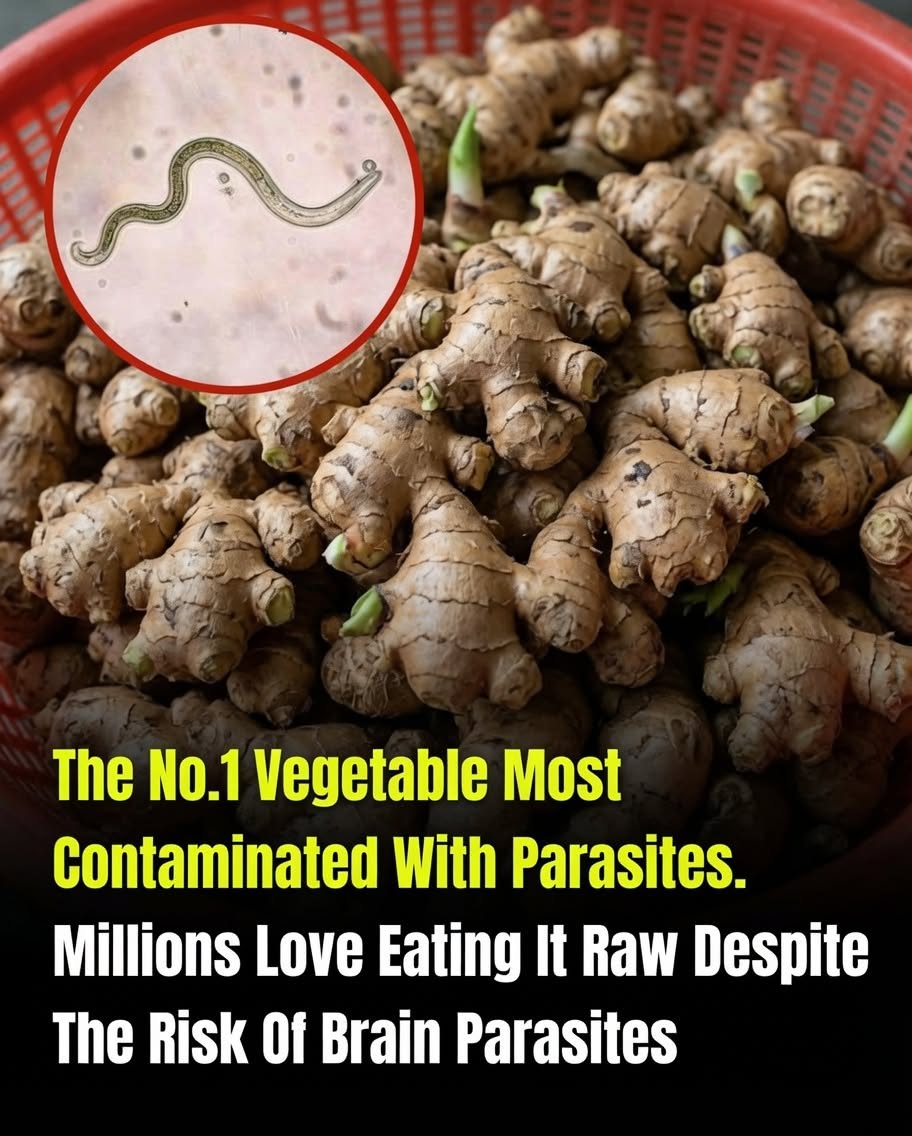
Raw ginger is healthy, but poor hygiene may increase contamination risks.
Fresh ginger is one of the world’s most popular ingredients, valued for its distinctive flavor and its long history in traditional medicine. Many people enjoy eating it raw, adding it to juices, salads, sushi, or herbal drinks. Recently, however, alarming social media posts have claimed that ginger is “the number one vegetable contaminated with parasites” and that eating it raw could lead to dangerous brain infections.
While contaminated produce can occasionally carry harmful organisms, the reality is more nuanced. Understanding the actual risks—and how to prepare ginger safely—is the best way to enjoy its health benefits without unnecessary worry.
Ginger grows underground, which naturally exposes it to soil, moisture, insects, and microorganisms. Like many root vegetables, it can become contaminated during cultivation, harvesting, transportation, or storage if proper hygiene practices are not followed. Contamination may involve bacteria, parasites, fungi, or pesticide residues. However, this does not mean that every piece of ginger contains parasites or that ginger is uniquely dangerous compared with other fresh produce.
Parasites that infect humans generally enter the body through contaminated food, water, or poor sanitation rather than through the vegetable itself. If irrigation water is contaminated with human or animal waste, parasite eggs or larvae may attach to the surface of vegetables, including ginger, carrots, radishes, and leafy greens. Thorough washing greatly reduces this risk.
Continued on next page//