

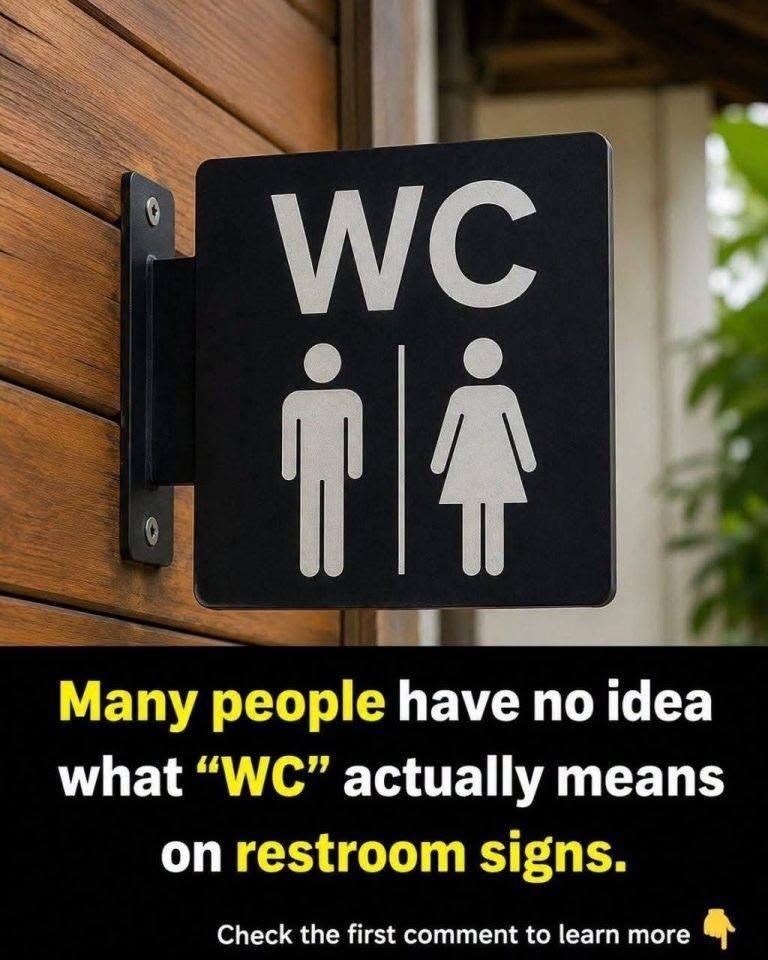
A few reasons “WC” has stuck around on signs specifically, even in places where nobody says it out loud in conversation:
- It’s language-neutral. Unlike “restroom,” “bathroom,” “toilet,” or “loo,” which vary widely between English-speaking countries alone, “WC” is recognized across many European languages without needing translation.
- It’s compact. Two letters fit easily on small signage, doors, and maps — especially useful in train stations, airports, and tourist areas with international visitors.
- It’s become an international symbol, similar to how “P” universally signals parking. Travelers learn to recognize it even without knowing its literal meaning.
-
Fun Fact
While “water closet” sounds distinctly British, some of the earliest flush toilet designs are credited to Sir John Harington, who built one for Queen Elizabeth I in 1596 — though it would take nearly 300 more years before flush toilets, and the term “water closet,” became common in households.
So next time you spot a “WC” sign abroad, you’ll know exactly what those two letters are quietly telling you: this is a room with a working flush toilet, a phrase born from a time when that was genuinely worth advertising.