
Sometimes the culprit isn’t the washing machine at all.
A zipper from another garment can catch on a shirt and pull the fabric during washing or wearing.
Bras, hooks, Velcro, metal buttons, and other fasteners can cause similar problems.
Try This
Before putting clothes in the washer, close zippers and fasten hooks.
Turn garments with delicate fabrics inside out.
When possible, wash fragile items separately from clothing with rough hardware.
A few extra seconds of preparation can prevent a surprising amount of damage.
5. Moths and Other Fabric Pests
Of course, insects can cause holes in clothing—but they’re not always the explanation.
Certain clothes moth larvae can damage natural fibers such as wool and other animal-based materials.
If you suspect fabric pests, look for additional clues rather than focusing on one hole.
You might notice:
- Multiple irregular holes
- Damage to stored clothing
- Shed larval skins
- Webbing or debris in dark storage areas
- Damage to wool, cashmere, fur, or other susceptible materials
Closets and drawers that remain dark and undisturbed can provide favorable conditions for fabric pests.
6. Carpet Beetles
Carpet beetle larvae can also damage natural fabrics.
They’re attracted to materials containing animal fibers and can sometimes be found in closets, under furniture, or in areas where lint and hair accumulate.
If clothing damage continues despite changes to your laundry routine, inspect storage areas as well.
Regular vacuuming can help remove lint, hair, and other material that larvae may feed on.
7. Rough Furniture and Hardware
A tiny snag can happen during ordinary activities.
A rough chair edge, exposed screw, damaged countertop, backpack strap, or even a sharp edge on a desk can catch fabric.
The damage may be so subtle that you don’t notice it happening.
If the holes consistently appear in the same area of your clothing, think about what that part of your body repeatedly comes into contact with.
The location of the hole is often a clue.
Why Are the Holes Often Near the Bottom of Shirts?
This is one of the most useful clues.
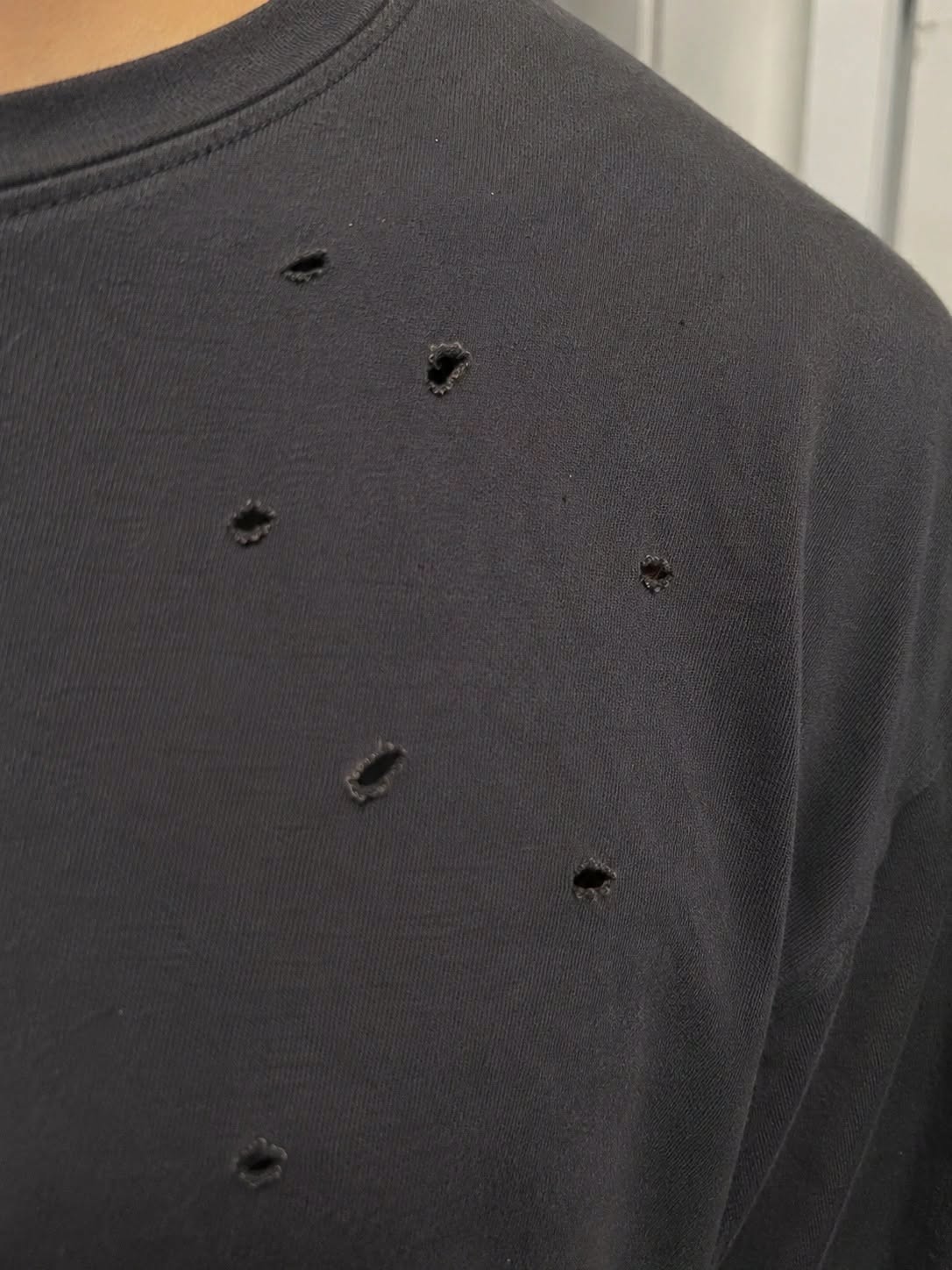
Small holes around the lower front of T-shirts are frequently associated with repeated contact between the fabric and surfaces such as countertops or desks.
The shirt gets caught between your body and the edge of the surface. Repeated movement creates friction, gradually weakening the fibers.
That explains why someone might have several shirts with tiny holes in almost exactly the same place.
If your shirts are developing holes in a consistent location, look for a consistent source of friction before assuming you have an insect problem.
How I Reduce Clothing Damage
You don’t need to completely change your lifestyle to protect your clothes.
A few small habits can make a noticeable difference.
Wear an Apron for Kitchen Tasks
An apron isn’t just for keeping food stains off your clothes.
It can also create a protective layer between your shirt and the edge of a counter.
Be Careful With Countertops
If you notice your shirt rubbing against the countertop every time you prepare food, try standing slightly farther back.
It sounds insignificant, but repeated friction adds up.
Wash Delicate Clothing More Gently
Use the gentlest appropriate cycle for delicate fabrics.
Laundry bags can be particularly useful for thin shirts, lingerie, and other easily snagged garments.
Don’t Overfill the Washer
A tightly packed machine gives clothing less room to move freely and can increase mechanical stress.
Follow the manufacturer’s recommendations for load size.
Inspect Your Laundry Equipment
If new holes appear frequently, run your hand carefully around accessible areas of the washer drum and dryer where fabric could potentially catch.
Don’t reach into moving or powered equipment. If you find a damaged component, have it repaired rather than continuing to use the machine.
Rotate Your Favorite Clothes
Wearing the same few shirts repeatedly naturally puts more stress on them.
Rotating your wardrobe gives individual garments a break and can help extend their useful life.
How to Tell Whether It’s Friction or Insects
Continued on next page//