

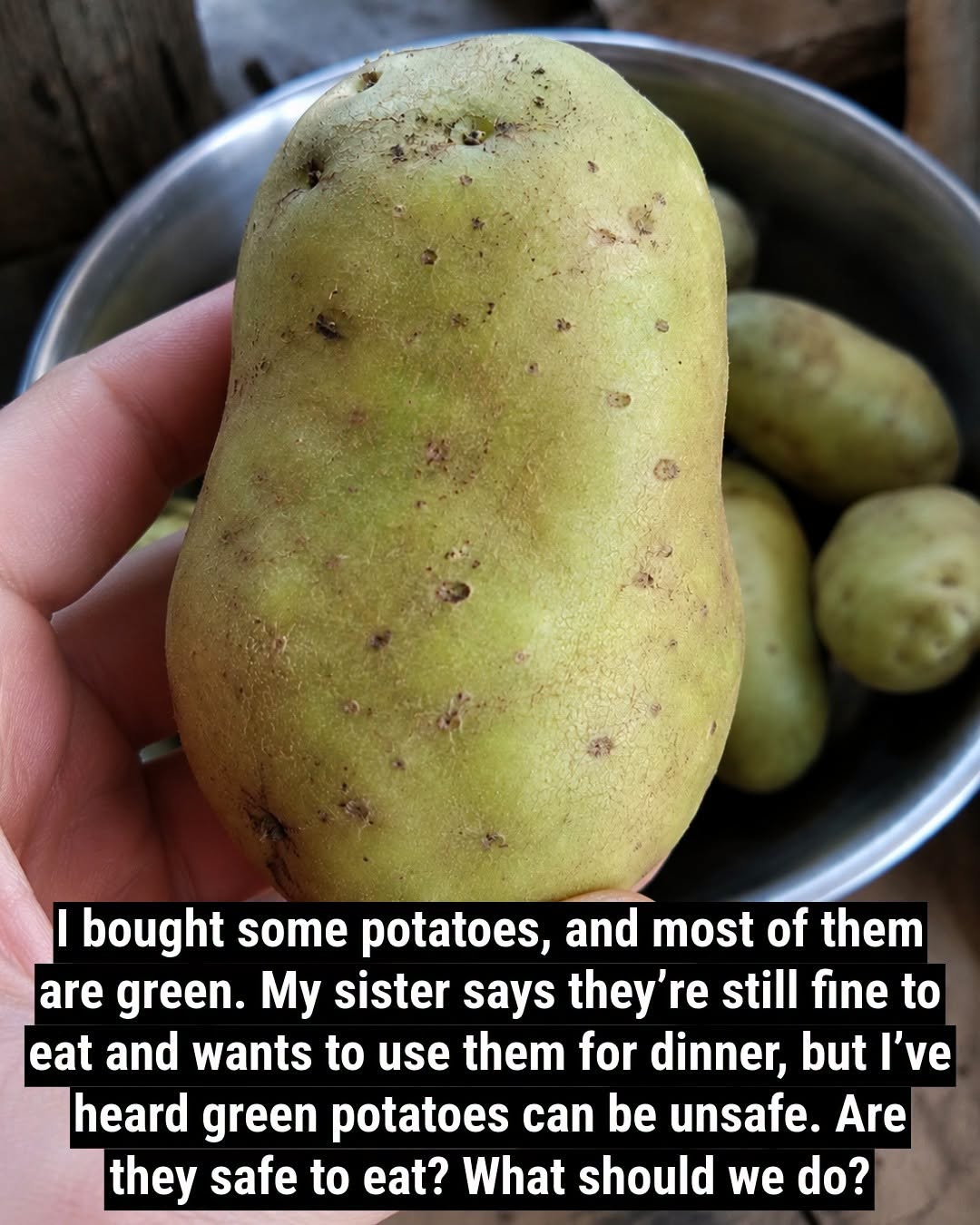
Oh, my dear friend, I know that moment of hesitation perfectly! You reach into your pantry for a potato to make a comforting mash or a hearty stew, and you notice a distinct green tint on the skin. It’s natural to pause and wonder, "Is this safe? Did I store them wrong? Do I have to throw the whole bag away?"
At 73, living alone out here in my cozy farmhouse, I’ve learned that the best approach to our kitchen mysteries is through gentle, informed observation. Between keeping a watchful eye on my circulation, monitoring those sudden, unexplained purple blotches on my arms, and doing everything I can to keep my daily routines peaceful, I know one thing for certain: letting food anxiety spike our stress is the absolute last thing our bodies need.
So, I put the kettle on, brewed a soothing cup of my favorite chamomile tea, and looked into the actual "kitchen science" behind this common occurrence.
Grab your favorite cozy sweater, and let’s separate the panic from the practical facts so you can navigate your pantry with absolute confidence!
The "Kitchen Science" Reality: Why Potatoes Turn Green
First, take a deep breath. The green color itself is actually harmless! Here is the beautiful, practical truth behind what is happening:
- The Harmless Green (Chlorophyll): When potatoes are exposed to light (either in the grocery store, in transit, or on your kitchen counter), they naturally produce chlorophyll, the same pigment that makes plants green. Chlorophyll is completely safe to eat.
- The Real Concern (Solanine): The trouble is that light exposure also triggers the potato to produce solanine, a natural glycoalkaloid toxin. The plant creates this to protect itself from pests and sunlight. Solanine is what gives the green area a slightly bitter taste, and in large enough quantities, it can cause an upset stomach.
Can We Still Eat Them? (The Practical Guide)
The answer is: It depends on how green they are! You don't necessarily have to throw the whole bag away. Here is my gentle, no-fuss rule of thumb:
Slightly Green: If the potato is firm and only has a few small green patches, it is perfectly safe to eat if you prepare it correctly. Simply take a sharp vegetable peeler and peel away the skin deeply, removing all traces of the green layer. Also, cut away any "eyes" or small sprouts, as solanine concentrates in these areas. Once the green is completely gone, the potato is safe to cook and enjoy.
Very Green, Soft, or Bitter: If the potato is extensively green, feels soft or shriveled, or tastes noticeably bitter after you cook it, do not eat it. Solanine is not destroyed by normal cooking temperatures (boiling, baking, or frying will not eliminate it). When in doubt, the safest and most peaceful choice is to compost it.
