
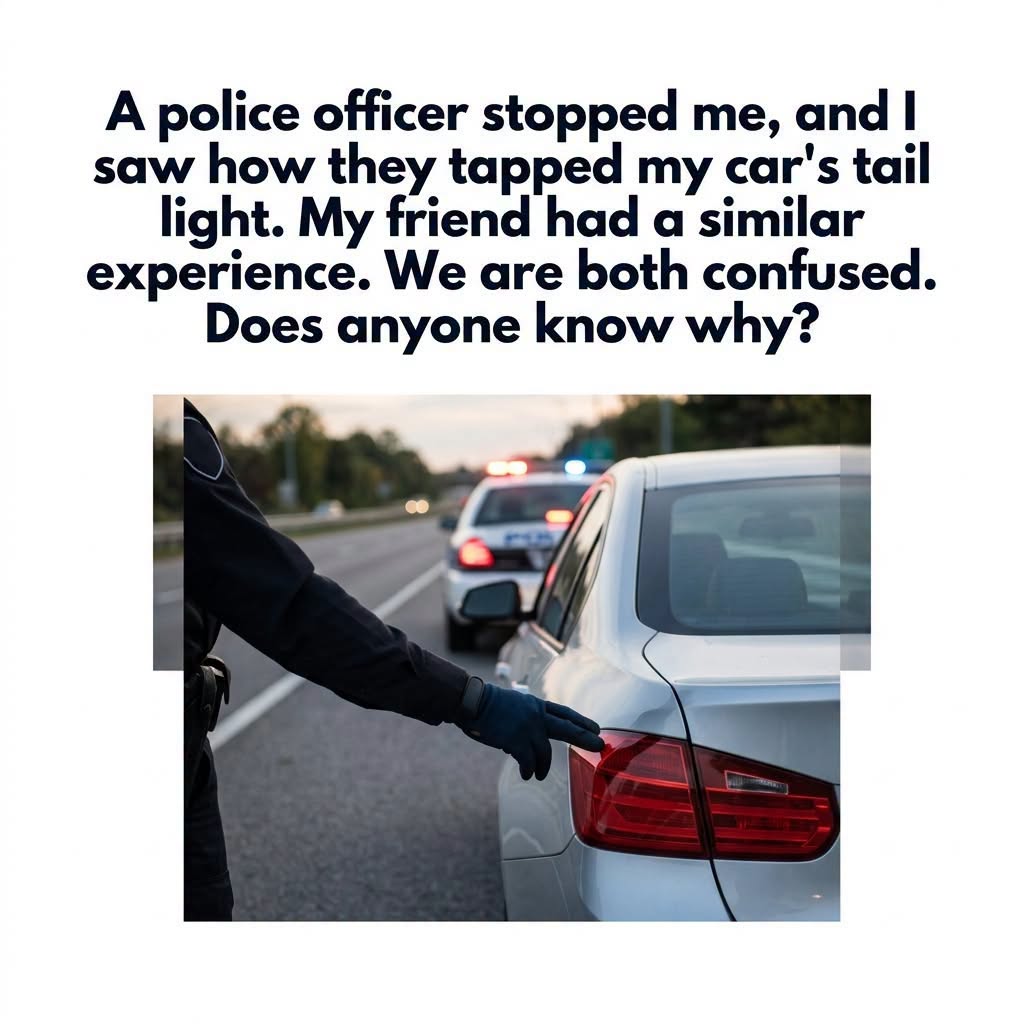
Why Police Officers Tap Your Car's Tail Light When Stopping You in Traffic: The Surprising Safety Reason Behind This Common Practice

Frequently Asked Questions
Q: Do all police officers tap tail lights?
A: No. Practices vary by department, training, and individual preference. Some officers do it routinely; others never do.
A: No. Practices vary by department, training, and individual preference. Some officers do it routinely; others never do.
Q: Will my fingerprint be taken if I tap my own tail light?
A: No. Law enforcement fingerprint analysis requires specific procedures, tools, and legal justification. A casual touch won't trigger an investigation.
A: No. Law enforcement fingerprint analysis requires specific procedures, tools, and legal justification. A casual touch won't trigger an investigation.
Q: Can I refuse to let an officer tap my car?
A: You generally cannot control an officer's safety protocols during a lawful stop. However, you have the right to remain silent and to ask if you are free to leave.
A: You generally cannot control an officer's safety protocols during a lawful stop. However, you have the right to remain silent and to ask if you are free to leave.
Q: Does tapping the tail light damage the car?
A: No. The tap is gentle and designed not to cause damage. It's a light touch, not a strike.
A: No. The tap is gentle and designed not to cause damage. It's a light touch, not a strike.
Q: What if the officer doesn't tap my tail light?
A: That doesn't mean anything is wrong. Officers use many safety tactics; the tail-light tap is just one option among many.
A: That doesn't mean anything is wrong. Officers use many safety tactics; the tail-light tap is just one option among many.
Q: Can the fingerprint actually be used in court?
A: Yes, if properly collected and documented. However, it's typically one piece of evidence among many (video, testimony, reports).
A: Yes, if properly collected and documented. However, it's typically one piece of evidence among many (video, testimony, reports).
Q: Do officers tap other parts of the car?
A: Sometimes. Officers may also touch the trunk lid, door frame, or window—any surface that could hold forensic evidence.
A: Sometimes. Officers may also touch the trunk lid, door frame, or window—any surface that could hold forensic evidence.
Q: Is this practice taught in police academies?
A: It has been included in some training programs, particularly in past decades. Modern curricula emphasize a broader range of safety tactics.
A: It has been included in some training programs, particularly in past decades. Modern curricula emphasize a broader range of safety tactics.
Q: Should I be worried if an officer taps my tail light?
A: No. It's a standard safety practice, not a sign of suspicion or escalation. Stay calm, follow instructions, and ask questions politely if you're unsure.
A: No. It's a standard safety practice, not a sign of suspicion or escalation. Stay calm, follow instructions, and ask questions politely if you're unsure.
Q: What if I notice the officer didn't tap my tail light?
A: Don't read into it. Officers adapt their approach based on the situation, environment, and their training. Absence of the tap doesn't indicate anything about your stop.
A: Don't read into it. Officers adapt their approach based on the situation, environment, and their training. Absence of the tap doesn't indicate anything about your stop.
A Compassionate Closing Thought
If you're reading this because you've been pulled over and wondered about that little tap—or because you're simply curious about the hidden layers of everyday interactions—please know:
Curiosity is healthy. Asking "why" about the world around you shows engagement, not suspicion.
Safety is shared. Officers use tactics to protect themselves—and, indirectly, the public. Understanding these practices can reduce fear and build trust.
Context matters. A small action like a tail-light tap is part of a much larger picture: training, policy, technology, and human judgment.
You have rights. During any traffic stop, you have the right to be treated with respect, to ask clarifying questions, and to remain silent. Knowledge empowers.
Safety is shared. Officers use tactics to protect themselves—and, indirectly, the public. Understanding these practices can reduce fear and build trust.
Context matters. A small action like a tail-light tap is part of a much larger picture: training, policy, technology, and human judgment.
You have rights. During any traffic stop, you have the right to be treated with respect, to ask clarifying questions, and to remain silent. Knowledge empowers.
That gentle tap on your tail light isn't about mistrust.
It's about preparation.
It's about accountability.
It's about the quiet, often unseen work that goes into keeping everyone safe.
It's about accountability.
It's about the quiet, often unseen work that goes into keeping everyone safe.
However you feel about traffic stops—or about the small rituals that accompany them—may you move through them with awareness, calm, and the understanding that both officers and drivers are human, doing their best in complex moments.
And if you ever wonder why an officer does something you don't understand?
It's okay to ask.
Politely.
Clearly.
With respect.
Politely.
Clearly.
With respect.
Because communication—on both sides—is the truest path to safety.
Have you ever noticed an officer tap a tail light during a stop? Did you know why they do it? Share your experiences and questions respectfully in the comments below.