
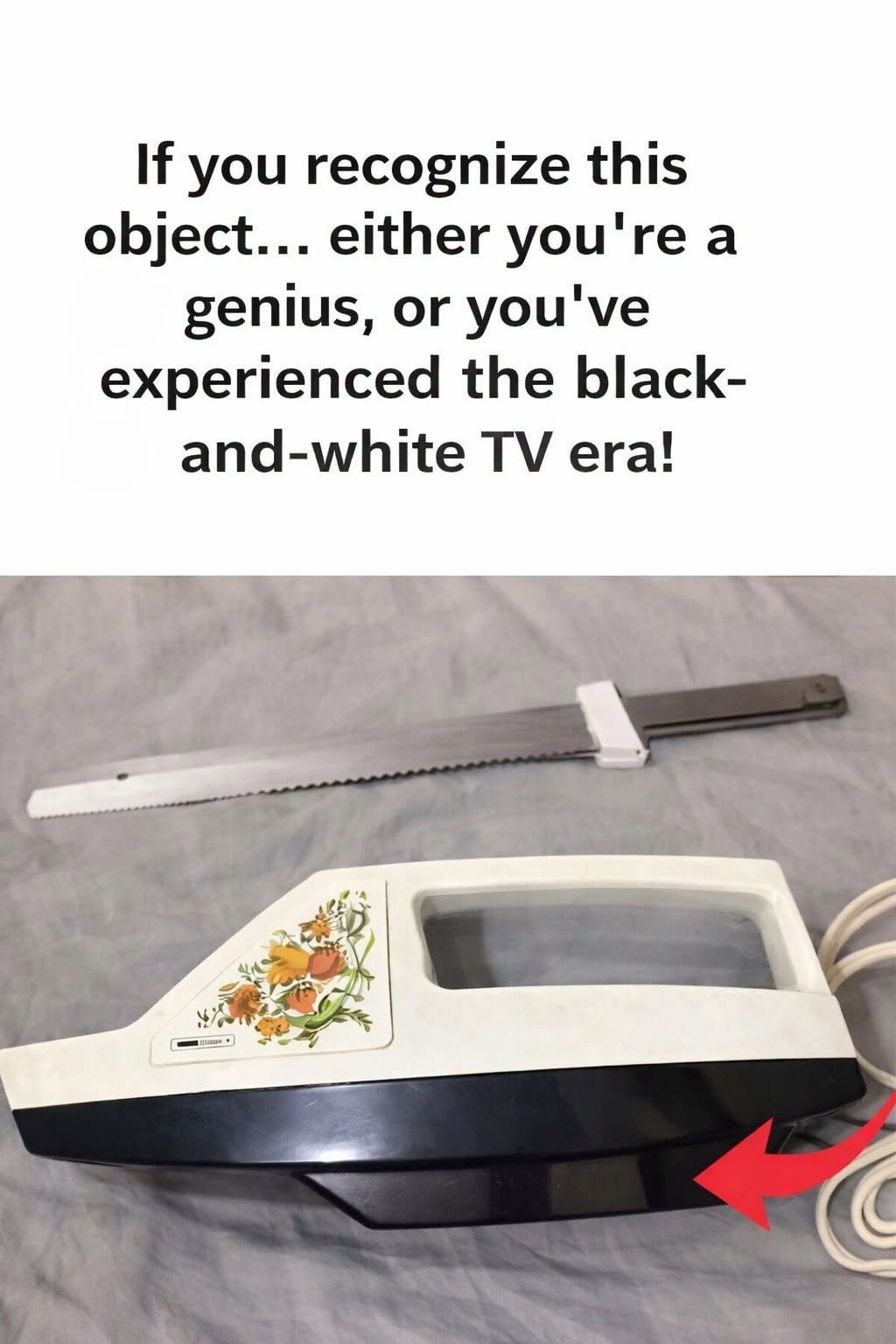
The popularity of the electric carving knife wasn’t accidental.
During the mid-20th century, households embraced appliances that promised to save time and simplify everyday tasks. Companies introduced a wide variety of electric kitchen products designed to make cooking easier and more enjoyable.
The carving knife fit perfectly into this trend.
It offered several practical advantages:
- Faster carving of large cuts of meat.
- More even slices for serving guests.
- Reduced hand fatigue.
- Better control compared to some traditional carving methods.
- A modern appearance that reflected the latest home technology.
For families who frequently hosted holiday dinners, these benefits made the appliance feel like a worthwhile investment.
A Familiar Sound That Brings Back Memories
Ask someone who grew up in the 1960s, 1970s, or early 1980s about the electric carving knife, and many will immediately remember its distinctive sound.
The steady buzzing often signaled that everyone should gather around the table because dinner was almost ready.
That sound became connected with warm kitchens, festive decorations, family conversations, and recipes that had been passed down through generations.
For many people, nostalgia isn’t only about the food—it includes the sights, sounds, and traditions that surrounded those meals.
The electric carving knife became part of that experience.
Built to Last
Unlike many inexpensive modern appliances designed for short-term use, older electric carving knives were often built with durability in mind.
Many featured sturdy motors, strong handles, and removable stainless-steel blades that could withstand years of regular use.
As a result, it’s not unusual to find vintage models that still function decades after they were originally purchased.
Some families continue using the same electric carving knife they received as a wedding gift many years ago, proving that quality craftsmanship often stands the test of time.
A Favorite Among Collectors
Today, electric carving knives have become popular collectibles for people who enjoy vintage kitchen appliances.
Collectors appreciate their retro styling, colorful packaging, and connection to mid-century home design.
Secondhand stores, flea markets, estate sales, and antique shops frequently have these appliances available, sometimes complete with their original boxes, instruction manuals, and accessories.
Certain models from well-known manufacturers have become especially desirable among collectors interested in preserving pieces of everyday household history.
Even people who no longer use them often enjoy displaying them as reminders of an earlier era.
How Kitchen Technology Has Changed
Continued on next page//
To see the complete cooking instructions, go to the next page or click the Open (>) button and don't forget to SHARE it with your friends on Facebook.