

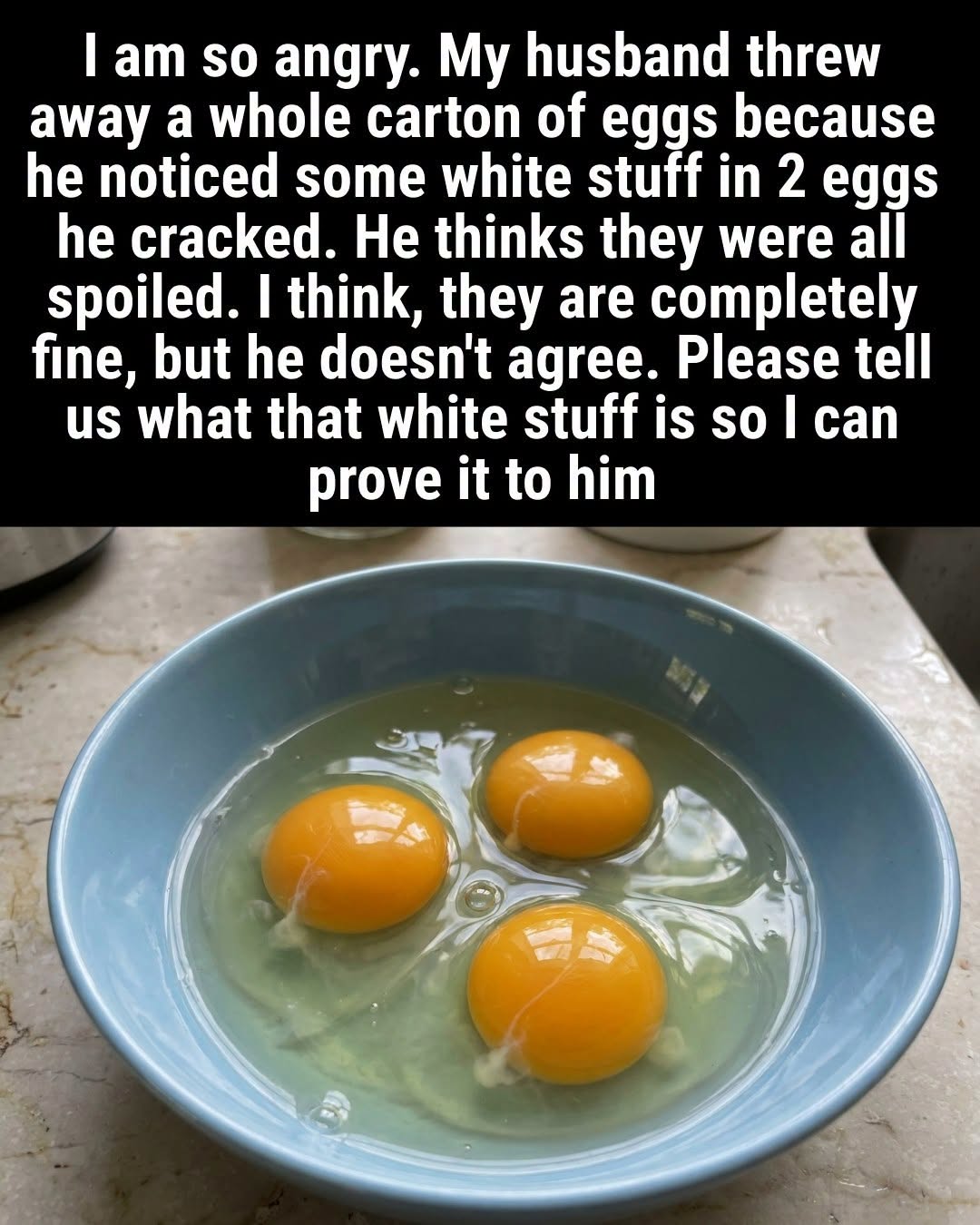
Oh, my dear friend, I know exactly the moment of hesitation you’re talking about! You crack a beautiful, fresh egg into your skillet or mixing bowl, and there they are—those mysterious, twisted white strings clinging to the yolk. It is so easy to wonder, "Is this a defect? Is it a baby chick? Should I fish it out?"
At 73, living alone in my cozy farmhouse, I have made it my personal mission to be the absolute best, calmest advocate for my own health and kitchen. Between keeping a watchful eye on my circulation, monitoring those sudden, unexplained purple blotches on my arms, and doing everything I can to stay proactive about my wellness, I know one thing for certain: understanding our food takes away the fear and replaces it with confidence.
So, I put the kettle on, brewed a soothing cup of my favorite chamomile tea, and looked into the actual "kitchen science" behind those little white strands.
Grab your favorite cozy apron, and let’s separate the myth from the practical, science-backed reality so you can cook with absolute peace of mind!
The "Kitchen Science" Reality: What Are Those White Strings?
First, take a deep breath. Those white, stringy bits are completely normal, perfectly safe, and actually a wonderful sign!
They are called chalazae (pronounced kuh-LAY-zee). Here is the beautiful, practical truth behind them:
- Nature’s Anchor: The chalazae are twisted strands of egg white protein. Their sole job is to anchor the yolk in the center of the egg, keeping it suspended and preventing it from bumping into the shell and breaking.
- A Sign of Freshness: Believe it or not, those white strings are actually a good thing! In a very fresh egg, the chalazae are thick, prominent, and tightly coiled. As an egg ages, these strands gradually break down and disappear. So, if you see them, you know you have a wonderfully fresh egg!
- Not a Baby Chick: A common old wives' tale is that these are the beginnings of a chick embryo. This is entirely false! An embryo would look like a small, distinct bullseye on the yolk, not a twisted white string.
The Health Connection: Why This Matters for Your Wellness
Continued on next page//
To see the complete cooking instructions, go to the next page or click the Open (>) button and don't forget to SHARE it with your friends on Facebook.

My nana swears by this DIY weed killer recipe. Here’s how it works
Can You Identify This Vintage Kitchen Gadget? Most People Under 40 Have Never Used One
A Look Back: The Surprising History Behind the Cast Iron Spoon Bullet Mold

The “Cleanliness Paradox”: Why Showering Less Might Actually Be the Key to Healthier Skin After 65

When an elderly person goes through a delicate stage, these 4 changes may appear and deserve attention.