
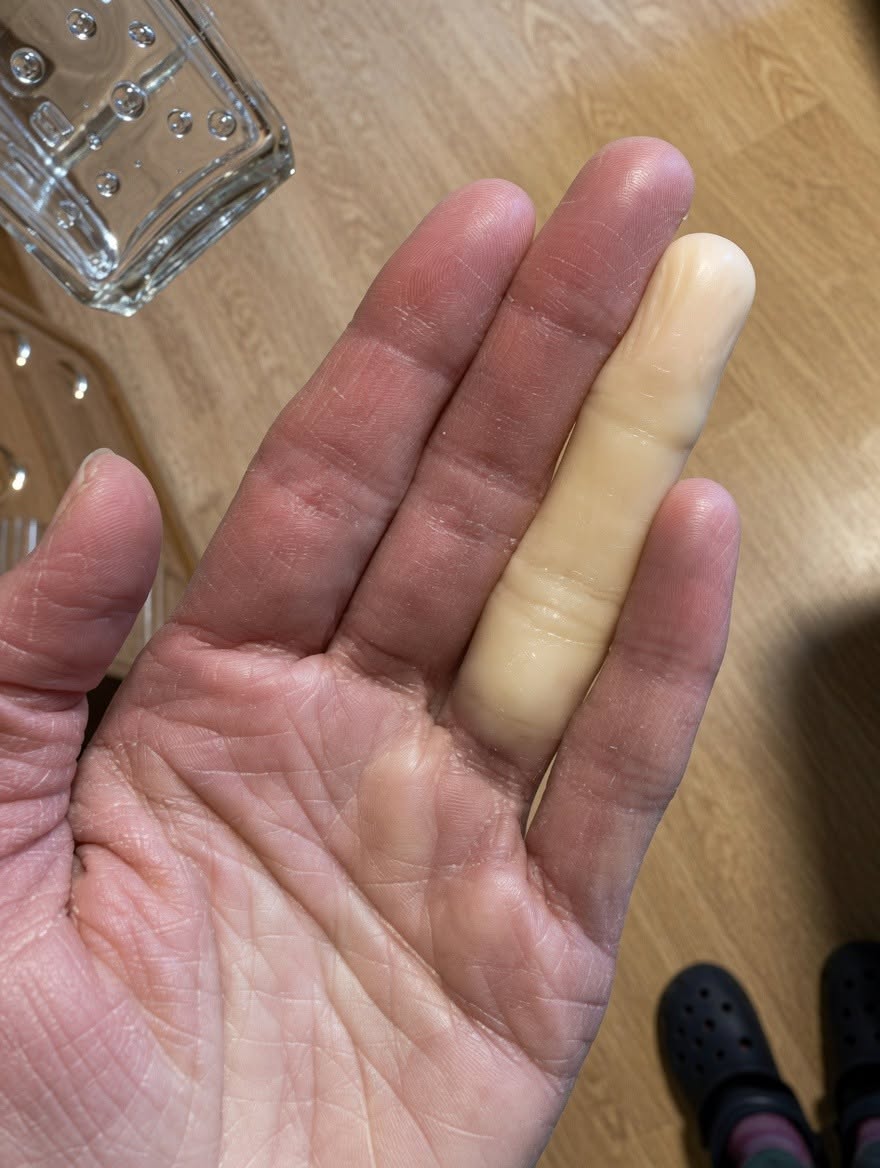
Waking up to discover one of your fingers has turned completely stark white, looking almost bloodless compared to the rest of your hand, can be a startling experience. This visual phenomenon is frequently shared across social media platforms, often accompanied by cautionary captions about sleeping in cold rooms, leaving the air conditioning blasting overnight, or unintentionally resting heavy pressure on an arm or hand during deep sleep.
When your body’s natural response to environmental shifts—such as a drop in bedroom temperature or physical compression—overreacts, it can temporarily alter the way blood circulates to your outermost extremities. Understanding why this happens, how overnight habits influence your circulation, and what steps you can take to maintain comfortable warmth and blood flow throughout the night is essential for proactive wellness.
1. Understanding Temporary Microvascular Spasms in Extremities
When an extremity like a single finger or toe loses its typical pinkish hue and turns pale or white, it is generally due to a localized event known as a vasospasm. This occurs when the tiny, delicate blood vessels that supply blood flow directly beneath your skin suddenly narrow or constrict significantly.
The Mechanism Behind the Sudden Color Shift
Under normal conditions, your body dynamically regulates its internal core temperature by adjusting the diameter of peripheral blood vessels. When your surroundings cool down, the nervous system signals these vessels to constrict slightly, conserving vital heat for your internal organs.
However, for a significant portion of the population, these small blood vessels are extra-sensitive. When triggered by a sudden chill or prolonged exposure to a cool draft, the vessels can experience an overactive contraction. This dramatic narrowing limits the volume of blood traveling through the area, resulting in:
-
The White Phase: The tissue turns pale or white as localized blood flow becomes highly restricted.
-
The Blue Phase: The area may sometimes transition to a bluish tint due to a temporary lack of fresh oxygen in the local tissue.
-
The Red Phase: As the area gradually rewarms and the spasm relaxes, blood rushes back into the vessels, frequently causing a bright red flush accompanied by a warm, tingling, or prickly sensation.
Primary vs. Secondary Peripheral Vascular Sensitivity
This pattern of vascular reactivity is widely recognized within health and wellness contexts under the umbrella of peripheral sensitivity or specific vascular phenomena. It is generally categorized into two main forms:
| Type | General Characteristics | Typical Triggers |
| Primary Sensitivity | Occurs independently without any underlying health complications. It is incredibly common, completely harmless for the vast majority, and often runs in families. | Mild drops in temperature, damp weather, stepping into an air-conditioned room, holding a cold beverage, or experiencing sudden emotional stress. |
| Secondary Sensitivity | Less common; happens as a secondary reaction linked to an underlying systemic condition or occupational factor. | Long-term use of heavy vibrating tools, specific pharmaceutical side effects, or prior deep-tissue cold injuries. |
2. Nighttime Triggers: Why This Manifests During Sleep
Many individuals notice this distinctive color change specifically upon waking in the morning or during the middle of the night. Sleep introduces a unique set of physiological and environmental variables that can act as catalysts for localized circulatory shifts.
The Impact of Low Air Conditioning and Chilly Room Environments
One of the most frequent contemporary culprits is the improper management of indoor climate control. Sleeping with an air conditioning unit set to an excessively low temperature—or positioning your bed directly beneath a continuous, downward stream of cold air—can cool the skin surface dramatically over several hours.
Because your metabolic rate naturally drops and your core body temperature lowers slightly during deep sleep cycles, your extremities become highly vulnerable to external temperature drops. A continuous chilly draft blowing over an exposed hand resting outside the blankets is often all it takes to activate a localized vascular spasm, leaving a finger looking entirely bloodless by morning.
Physical Compression and Awkward Sleep Postures
Another highly common reason for localized numbness, tingling, and paleness upon waking is physical compression. If you roll over onto your arm or tuck your hand tightly beneath your body, pillow, or partner during sleep, the sustained weight can compress both the local nerves and peripheral blood vessels.
While resting on a limb typically causes the classic “pins and needles” sensation (temporary nerve compression), it can also physically impede surface-level blood flow. When combined with a cool bedroom environment, this physical pressure makes it even easier for sensitive micro-vessels to narrow fully.
3. Practical Strategies for Maintaining Optimal Nighttime Circulation
Continued on next page//
To see the complete cooking instructions, go to the next page or click the Open (>) button and don't forget to SHARE it with your friends on Facebook.