

She shows you around in short, practical sentences. Sweep here. Dust there. Dishes in the sink. Bathroom needs attention. No need to touch the upstairs, she says, then pauses and adds, “Not yet.”
You do not ask why. When poor people are offered work, they learn early not to interrogate the strangeness of the arrangement.
The chores are, as promised, simple. The work takes under three hours. You sweep the hardwood floors, wipe down the kitchen counters, scrub a ring out of the bathtub, wash a small pile of dishes, and shake dust from curtains that might have remembered the Carter administration. Mrs. Mercer watches you from the kitchen table, drinking tea and making occasional comments that sound like criticism until you realize they are merely her natural rhythm.
At the end, you wipe your hands on your jeans and say, “All done.”
She nods slowly. “You did not steal anything.”
The sentence lands so unexpectedly that you laugh before you can stop yourself.
“No, ma’am.”
“Good. Some people do.” Then she pushes herself upright with visible effort. “Come back next Thursday.”
She does not pay you.
You stand there for a second too long, unsure whether to remind her or whether that would somehow get you labeled disrespectful and cost you the job. Before you can decide, she has already turned away and begun shuffling toward the living room.
You leave telling yourself she probably forgot. Old people forget things. That is one of the few lies the world repeats so often it starts sounding merciful.
The next Thursday you return.
This time you notice things you were too cautious to take in before. The refrigerator contains half a carton of milk, a mustard bottle, three eggs, and a bruised apple. The pantry has canned soup, saltines, and rice. The kitchen clock is fifteen minutes slow. Mrs. Mercer’s hands shake more when she reaches for her tea. There is a prescription bag on the counter from the county hospital pharmacy, folded and refolded until the paper looks exhausted.
Again you clean. Again she watches. Again you finish, and again she says nothing about money.
On your way out, you finally clear your throat and say, carefully, “Mrs. Mercer, about the pay…”
She looks at you over her glasses. “You need it badly?”
You feel heat rise to your face. Pride and hunger have never liked each other, and both are suddenly awake.
“I just counted on it.”
She studies you for a few seconds, then nods once. “Come back next week.”
That is not an answer, but it is all you get.
On the walk to the bus stop, you are furious at yourself for not insisting. You replay the moment in a loop, coming up with sharper versions of what you should have said. Rent is due in ten days. Your chemistry textbook access code expires soon. You do not have time to perform kindness for free in haunted houses at the end of alleys.
And yet the next Thursday, you go back.
Maybe it is because even unpaid hope still feels like hope. Maybe it is because she asked, in her sideways way, whether you needed the money badly, and you are embarrassed by how truthful your face must have been. Maybe it is because you were raised by a mother who cleaned motel rooms until her wrists swelled and still made soup for neighbors when they got sick. You tell yourself it is temporary. One more visit. Two at most.
By December, you are doing more than cleaning.
The change happens so gradually that you barely notice at first. One day you finish sweeping and see her struggling to lift a grocery bag from the porch, so you carry it in. The next week you realize the bag contains little more than canned beans, generic bread, and instant oatmeal, so on your way out you stop at the discount market and bring back chicken thighs and carrots with money you should not be spending. The week after that, she is moving so slowly you ask if she has eaten lunch. She says there is soup somewhere. There isn’t.
So you cook.
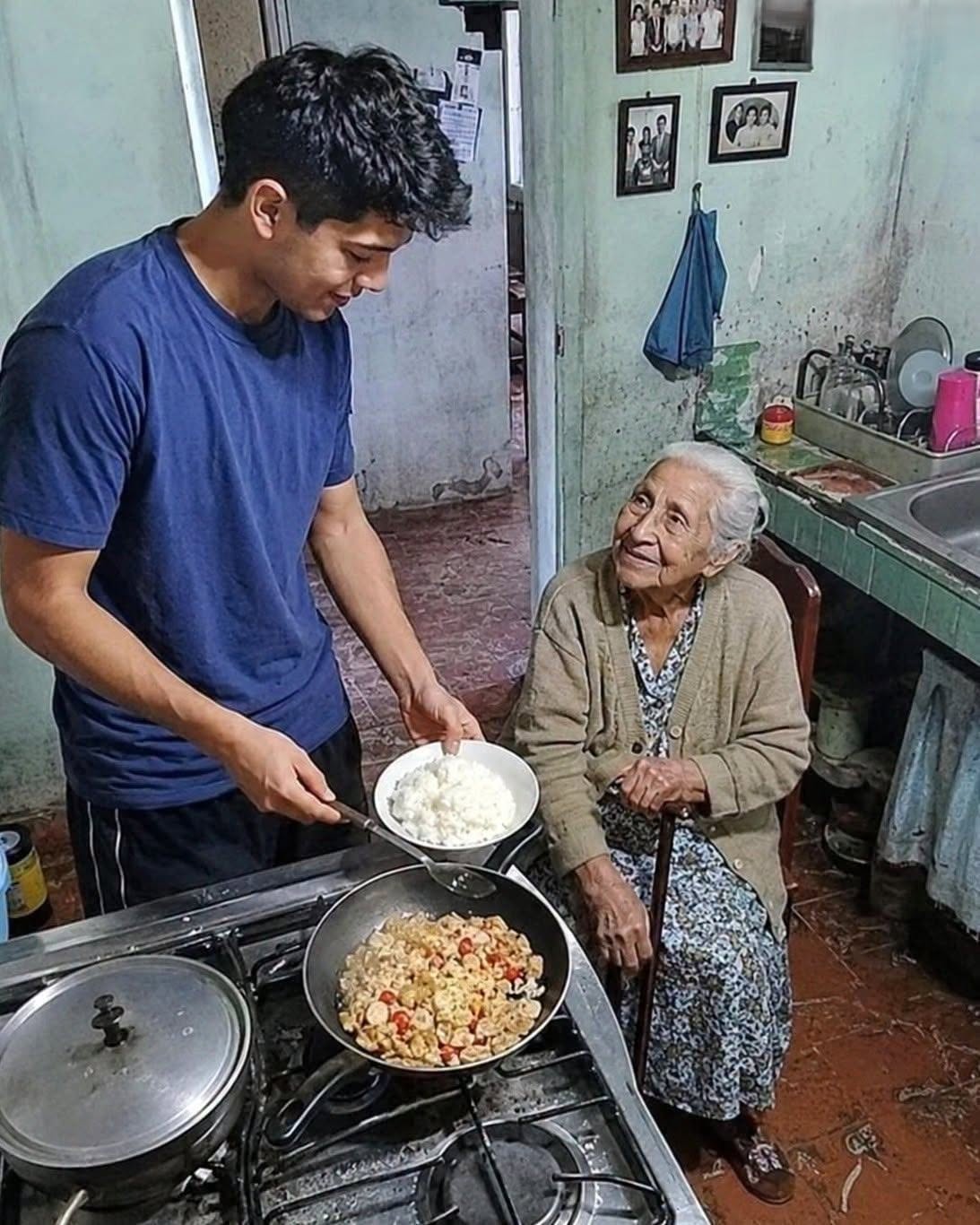
It starts with the most basic things, the kind of food you know from home and from living close to the edge. Rice with garlic. Chicken broth with carrots and potatoes. Scrambled eggs with onions and toast. Nothing glamorous, just food with enough warmth in it to convince a room life still lives there. Mrs. Mercer takes the first spoonful of the broth and closes her eyes.
“Well,” she says after a moment, “that tastes like someone was raised properly.”
It is the first thing she says that feels like praise.
From then on, the boundaries dissolve.
You still clean, but now you also stop at the pharmacy if she needs a refill and her knees are too swollen to manage the bus. You pick up groceries when the weather turns sharp. Once, in late January, she calls you from a number you do not recognize because she has made it halfway to the corner and suddenly feels dizzy. You leave campus, find her sitting on a milk crate near the alley entrance with one gloved hand pressed to her chest, and take her to urgent care in a rideshare you cannot really afford.
At the clinic, while you wait under fluorescent lights that make everyone look already half-gone, she says, “You should be in class.”
You shrug. “I’ll catch up.”
“People say that before they don’t.”
You do not answer because you are too tired to lie and too respectful to be rude.
After a while, she says, “You remind me of my youngest.”
That gets your attention. Until then, her past has mostly remained behind glass, visible but not available. There are photos, yes, and one Christmas card on the mantel signed Love, Thomas and Gail, but she never volunteers stories, and you never pry.
Continued on next page//