

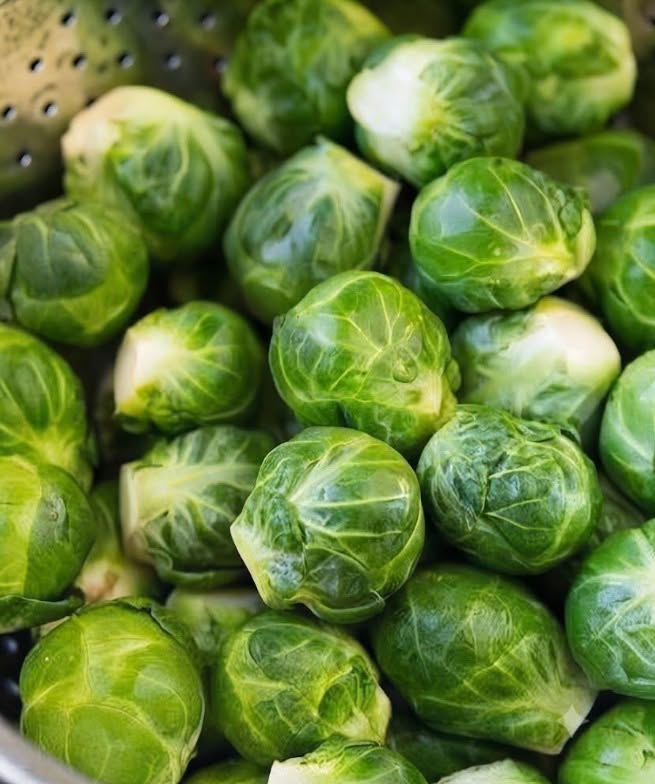
Yes. Brussels sprouts are a nutrient-dense cruciferous vegetable and provide fiber, vitamin C, vitamin K, folate, and carotenoids, among other nutrients.
They also contain glucosinolates and other plant compounds that have been extensively studied.
However, it’s important not to turn that information into exaggerated health claims. Brussels sprouts aren’t a cure for disease, and no single vegetable can replace an overall balanced diet.
They’re simply a nutritious vegetable that can contribute to a diet rich in a variety of plant foods.
Can Brussels Sprouts Cause Gas?
They can.
Like other cruciferous vegetables, Brussels sprouts contain certain fibers and carbohydrates that can cause gas or bloating in some people, particularly when eaten in larger quantities or when someone isn’t accustomed to eating much fiber.
If Brussels sprouts tend to bother your stomach, try starting with a smaller serving and experiment with different cooking methods.
What About Eating Them Raw?
Yes, Brussels sprouts can be eaten raw.
Thinly slicing or shredding them makes them particularly suitable for salads and slaws.
Raw sprouts have a crisp texture and stronger flavor, while cooking softens them and changes their taste.
If you find raw Brussels sprouts difficult to digest, lightly cooking them may make them more enjoyable.
The Secret Is Not to Overcook Them
This may be the biggest lesson of all.
Brussels sprouts shouldn’t have to be gray, mushy, or overwhelmingly sulfurous.
The goal is tender inside, browned and crisp outside.
Roasting, sautéing, steaming, and other relatively quick cooking methods can produce much better results than leaving them boiling until they’re completely soft.
Frequently Asked Questions
Why do Brussels sprouts taste bitter?
Their natural glucosinolates contribute to their characteristic bitter and sulfurous flavors. Some people are also naturally more sensitive to bitterness than others.
Why did Brussels sprouts taste so bad when I was a child?
They may have been overcooked. Prolonged cooking, particularly boiling, can produce the strong odor, bitterness, and mushy texture many people associate with old-fashioned Brussels sprouts.
What’s the best way to cook Brussels sprouts?
Roasting is one of the easiest ways to achieve browned, crisp edges and a tender center. Sautéing and steaming can also work well.
Should I cut Brussels sprouts in half before roasting?
Halving larger sprouts increases the exposed surface area and gives you more opportunity for browning.
What goes well with Brussels sprouts?
Try Parmesan, lemon, balsamic vinegar, garlic, bacon, herbs, nuts, or a small amount of maple syrup.
So, Does Anyone Actually Eat Brussels Sprouts?
Absolutely.
In fact, Brussels sprouts have gone from one of the most mocked vegetables to a popular side dish precisely because cooks discovered that they don’t have to taste the way many of us remember them.
If your only experience with Brussels sprouts involved a pot of overcooked vegetables, you may want to give them another chance.
Roast them hot. Give them room on the pan. Let the edges brown. Add a little salt, lemon, Parmesan, or balsamic.
You might discover that the vegetable you thought you hated was never really the problem.
Maybe it just needed a better recipe.