

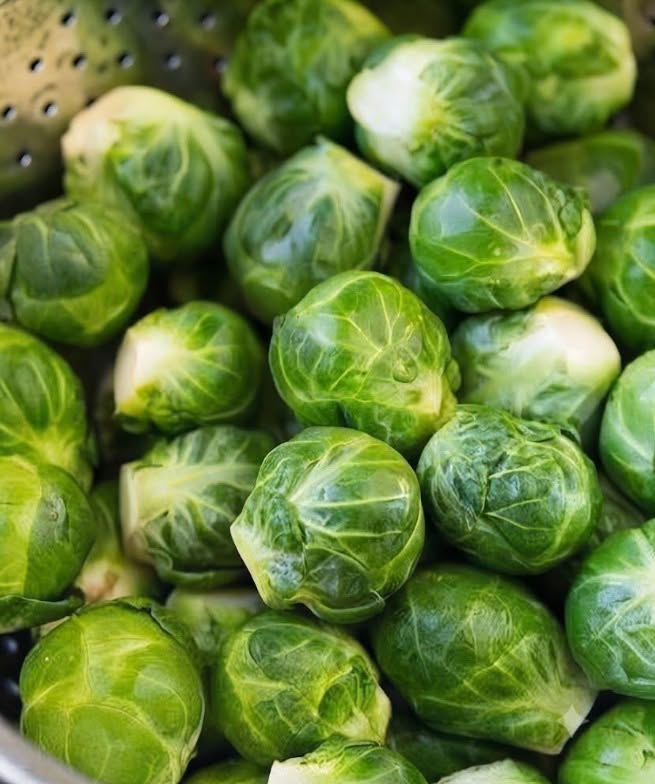
If you’re convinced that you don’t like Brussels sprouts, give roasted sprouts one more chance.
What You’ll Need
- Fresh Brussels sprouts
- Olive oil
- Salt
- Black pepper
- Fresh lemon juice
That’s really all you need for a basic version.
Step 1: Choose Fresh Sprouts
Look for Brussels sprouts that are bright green with tightly packed leaves.
Avoid specimens with extensive yellowing, wilting, or darkened leaves.
Smaller sprouts can also be appealing because they tend to cook relatively quickly.
Step 2: Trim and Halve Them
Rinse the sprouts thoroughly.
Trim away the tough stem ends and remove any damaged outer leaves.
Cut the sprouts in half from top to bottom.
The cut surface is going to become beautifully browned in the oven.
Step 3: Add Oil and Seasoning
Place the halved sprouts in a bowl.
Toss them with a little olive oil, salt, and black pepper.
You want enough oil to lightly coat the vegetables without leaving them greasy.
Step 4: Give Them Room
Spread the sprouts in a single layer on a baking sheet, preferably with the cut sides facing downward.
Don’t pack them tightly together.
Crowding encourages steaming rather than browning, which means you lose some of the crispy texture that makes roasted Brussels sprouts so appealing. High-heat roasting and avoiding overcrowding are key recommendations from culinary sources focused on reducing bitterness.
Step 5: Roast Until Browned
Roast at around 400°F (200°C) until the sprouts are tender and nicely browned.
A basic Nutrition.gov recipe recommends roughly 20–30 minutes, with the sprouts stirred once during cooking.
Cooking time will vary depending on the size of the sprouts and your oven.
Step 6: Finish With Something Bright
Once they’re out of the oven, add a small squeeze of fresh lemon juice.
That touch of acidity can brighten the flavor and balance the vegetable’s natural bitterness.
Want Them Even More Flavorful?
Once you’ve mastered basic roasted Brussels sprouts, you can take them in almost any direction.
Parmesan Brussels Sprouts
Sprinkle freshly grated Parmesan over the hot sprouts.
The salty cheese pairs beautifully with their caramelized edges.
Balsamic Brussels Sprouts
Add a small drizzle of balsamic vinegar or balsamic glaze after roasting.
The acidity and slight sweetness complement the browned leaves.
Garlic and Herb Brussels Sprouts
Toss the cooked sprouts with minced garlic and fresh herbs such as thyme, parsley, oregano, or sage.
Bacon Brussels Sprouts
Cooked bacon adds smoky, salty flavor and a crunchy texture.
Sweet and Savory Brussels Sprouts
A small amount of maple syrup or another sweet ingredient can balance the bitterness, especially when combined with something salty or acidic.
Are Brussels Sprouts Actually Good for You?
Continued on next page//