

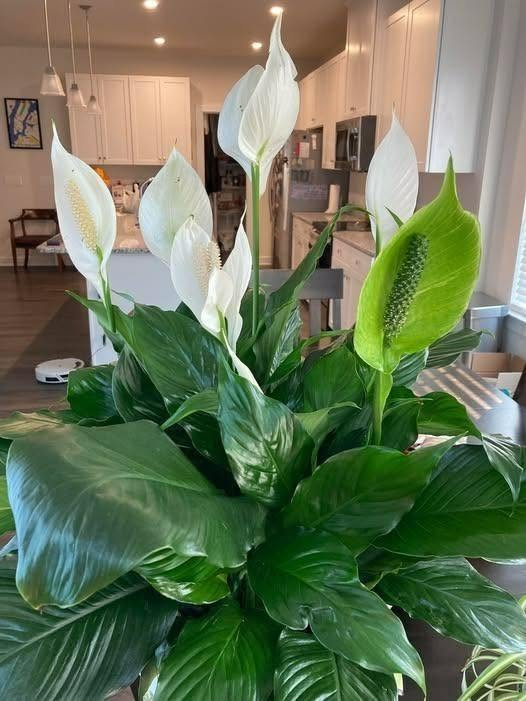
Peace lilies are dramatic about water. They'll droop dramatically when thirsty, then perk up within hours of watering. That's fine for survival, but consistent moisture is better for blooming.
The problem: Letting your peace lily wilt repeatedly stresses the plant. Stressed plants focus on survival, not reproduction.
The solution: Water when the top inch of soil feels dry to the touch. Don't wait for the plant to droop. Use room-temperature water (cold water shocks the roots).
Signs of overwatering: Yellow leaves, brown leaf tips, mushy stems, fungus gnats, or a musty smell from the soil. Overwatering is more dangerous than underwatering (it causes root rot).
The Goldilocks zone: Consistently moist but not soggy.
Pro tip: Use distilled or filtered water if your tap water is hard or chlorinated. Peace lilies are sensitive to chemicals, which can cause brown leaf tips.
Expert Tip #3: Boost Humidity (These Are Tropical Plants)
Peace lilies are native to humid rainforests. Average household humidity (30-40%) is often too low for flowering.
The problem: Low humidity causes brown leaf tips and reduces the plant's overall vigor. A stressed plant won't bloom.
The solution: Increase humidity around your peace lily.
Easy methods:
-
-
Mist the leaves daily (morning is best, so water doesn't sit overnight).
-
-
-
Use a humidity tray: Place a tray of pebbles filled with water under the pot (the pot should sit on the pebbles, not in the water).
-
-
-
Group plants together: Plants release moisture through transpiration. Grouping creates a microclimate.
-
-
-
Use a humidifier: Especially in winter when indoor air is driest.
-
-
Place it in a bathroom (if there's enough light) – showers create natural humidity.
Pro tip: If leaf tips are already brown, trim them at an angle (following the natural leaf shape). This improves appearance and may reduce further browning.
Expert Tip #4: Feed It (But Not Too Much)
Peace lilies are not heavy feeders, but they need nutrients to produce flowers.
The problem: No fertilizer means no blooms. Too much fertilizer (especially high-nitrogen) produces lush green leaves but no flowers.
The solution: Use a balanced, water-soluble fertilizer (like 20-20-20 or 10-10-10) diluted to half strength.
Schedule: Feed every 4-6 weeks during spring and summer (growing season). Do not fertilize in fall and winter (the plant is resting).
Flower-boosting tip: Look for fertilizer with a higher middle number (phosphorus), which promotes blooming. For example, 10-20-10.
Warning signs of over-fertilizing: Brown leaf tips, white crust on soil surface, or salt buildup around the rim of the pot. If you see these, flush the soil with water and reduce fertilizer.
Pro tip: Always water before fertilizing (never apply fertilizer to dry soil – it can burn roots).
Expert Tip #5: Give It a Rest (Mimic Seasons)
Continued on next page//
To see the complete cooking instructions, go to the next page or click the Open (>) button and don't forget to SHARE it with your friends on Facebook.