
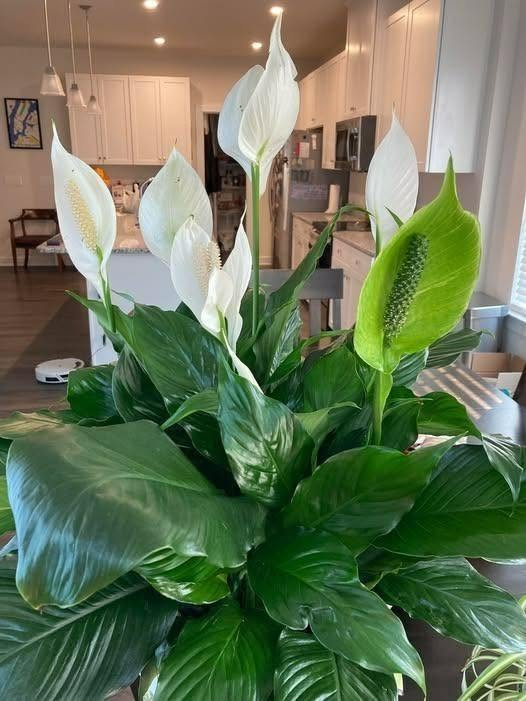
Peace lilies naturally bloom in spring and summer. They need a rest period in fall and winter to build energy for the next flowering cycle.
The problem: If your home is the same temperature and light level year-round, your peace lily may never get the signal to bloom.
The solution: Mimic the seasons.
-
Fall/Winter (rest period): Reduce watering (let the soil dry slightly more between waterings). Stop fertilizing. Move it to a slightly cooler spot (60-65°F / 15-18°C). It's okay if growth slows – that's the point.
-
Late winter/early spring (wake-up period): Gradually increase watering. Move it to a brighter spot. Resume fertilizing. This mimics the natural transition from dry/cool season to wet/warm season, triggering the plant to bloom.
Pro tip: About 6-8 weeks before you want flowers, start the "wake-up" routine. Many peace lilies will produce blooms within 2-3 months.
Expert Tip #6: Repot When Necessary (But Not Too Often)
Peace lilies actually bloom best when they're slightly root-bound. If you repot too often (or into a pot that's too large), the plant will focus on growing roots instead of flowers.
The problem: A peace lily in a giant pot will put all its energy into filling the pot with roots. You'll get lush leaves but no flowers.
The solution: Repot only when the roots are visibly crowded (growing out of the drainage holes or circling the top of the soil). When you repot, choose a pot only 1-2 inches larger in diameter.
Signs it's time to repot:
-
Roots emerging from drainage holes
-
Water runs straight through without soaking in
-
The plant wilts frequently (roots can't take up enough water)
-
It's been 2-3 years since the last repot
Best time to repot: Spring, just before the growing season.
Pro tip: When repotting, gently loosen the root ball and remove any dead or rotting roots. Use fresh, well-draining potting mix (regular potting soil mixed with perlite or orchid bark).
Expert Tip #7: Remove Spent Blooms (Redirect Energy)
Once a peace lily flower fades, it will turn green and eventually brown. Leaving it on the plant wastes energy that could go toward new blooms.
The problem: The plant is still sending nutrients to a dying flower.
The solution: Cut off spent blooms at the base of the stem (as close to the soil line as possible). Use clean, sharp scissors or pruning shears.
How to identify spent blooms: The white spathe will turn green, then brown, and eventually shrivel. Cut it off when it starts looking tired.
Pro tip: Also remove any yellow or damaged leaves. This directs energy toward healthy growth and blooming.
Bonus Tip: Patience (Flowers Take Time)
Continued on next page//
To see the complete cooking instructions, go to the next page or click the Open (>) button and don't forget to SHARE it with your friends on Facebook.