

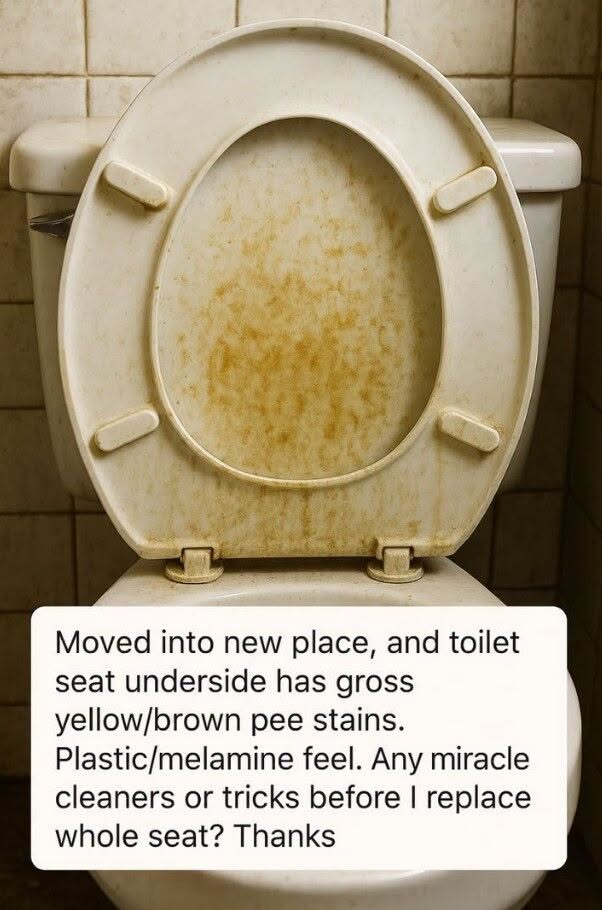
Moving into a new home is an exciting experience, but sometimes it comes with a few unpleasant surprises. One issue many people encounter is discovering stubborn stains left behind by previous occupants—especially in the bathroom. Among the most common problems are yellow or brown stains on the underside of a toilet seat. While these stains can look unpleasant and even unhygienic, they are actually very common and often easier to deal with than you might think.
Plastic and melamine toilet seats are particularly prone to discoloration because their surfaces can develop microscopic pores or scratches where residue collects over time. When urine dries on the surface, it can leave behind uric acid crystals that bond to the material. Hard-water minerals like calcium and magnesium can also combine with soap residue and moisture to create tough stains that are difficult to remove.
Before you decide to replace the entire toilet seat, it’s worth trying a few effective cleaning techniques. Many stains can be removed using simple household ingredients or inexpensive cleaning tools. With the right method and a little patience, you may be able to restore the seat’s appearance and save yourself the cost of buying a new one.
This guide walks through several cleaning approaches—from basic methods to stronger stain-lifting treatments—so you can determine what works best for your situation.
Why Toilet Seats Develop Yellow or Brown Stains
Understanding why stains appear can help you remove them more effectively and prevent them from returning.
1. Urine Residue
Over time, urine can leave behind uric acid crystals on the surface of a toilet seat. When these crystals dry and accumulate, they can create yellow or brown discoloration that becomes harder to remove if it’s not cleaned regularly.
2. Hard Water Deposits
Bathrooms with hard water often develop mineral buildup from calcium and magnesium. These minerals can react with soap scum and other residues, leading to stubborn stains on plastic surfaces.
3. Material Aging
Plastic seats can gradually discolor due to oxidation or aging. In some cases, this yellowing isn’t caused by dirt but by the material itself breaking down over time.
Knowing the cause of the stain helps determine whether cleaning will fix the issue or whether replacing the seat is the better option.
Step 1: Start with Basic Cleaning
Before using strong chemicals, try the simplest approach first.
What you need
- Dish soap
- Hot water
- A non-scratch sponge or soft scrub pad
How to do it
- Mix a few drops of dish soap into a bowl of warm water.
- Dip your sponge or scrub pad into the mixture.
- Gently scrub the stained area, especially the underside of the seat.
- Rinse thoroughly with clean water.
This method can remove surface grime and lighter stains without damaging the plastic.
Step 2: Use Baking Soda for Mild Abrasion
Continued on next page//
To see the complete cooking instructions, go to the next page or click the Open (>) button and don't forget to SHARE it with your friends on Facebook.
My Nose Keeps Running Indoors During Winter — But I’m Not Sick. What’s Causing It?

Difference Between Green Onions, Scallions, Spring Onions and Chives

Airport passengers have been warned against attaching ribbons to their luggage

How To Clean a Fan Without Taking It Apart: The 60-Second Bag Trick That Actually Works

What’s behind 3 a.m. wake-ups in older people — and should you worry?