

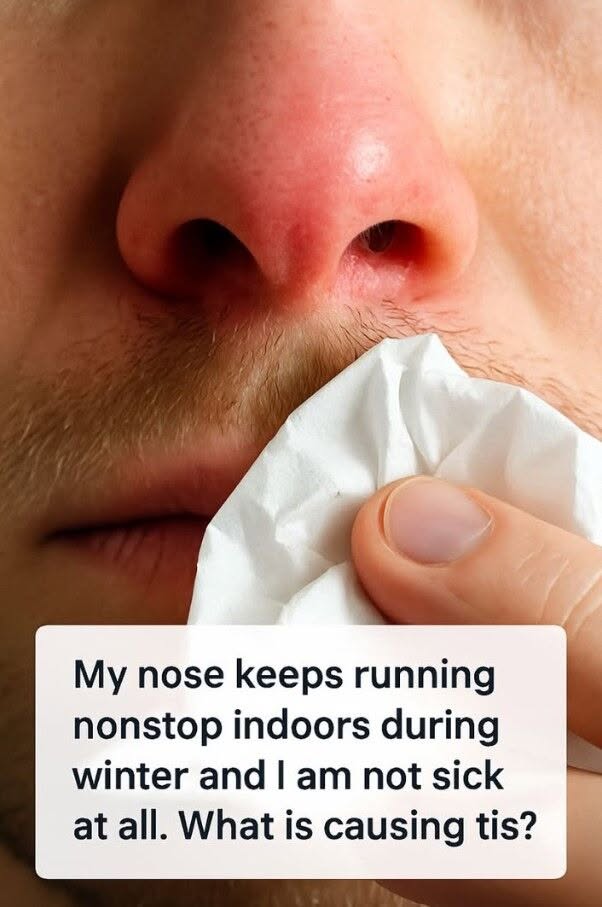
Many people associate a runny nose with catching a cold or having seasonal allergies. But what happens when your nose keeps running even though you feel perfectly healthy? For some individuals, this frustrating symptom appears during the winter months—especially when they are indoors.
It may seem confusing at first. You’re not coughing, you don’t have a fever, and you feel fine otherwise. Yet your nose continues to drip, sometimes constantly. While it might feel like something is wrong, this situation is actually quite common.
During winter, several environmental and biological factors can trigger nasal irritation and increased mucus production. These changes can cause your nose to run even when there is no infection present.
Understanding why this happens can help you manage the symptoms and avoid unnecessary worry. In many cases, the cause is simply your body’s natural response to dry air, temperature changes, or indoor environmental conditions.
How Your Nose Protects Your Body
Your nose plays a vital role in protecting your respiratory system. Every time you breathe in, the nose helps warm, filter, and humidify the air before it reaches your lungs.
When cold or dry air enters the nose, the body responds by producing extra mucus to keep the nasal passages moist and protected. This mucus traps dust, bacteria, and other particles so they can be expelled before reaching deeper parts of the respiratory system.
In winter, the air tends to be colder and drier. Because of this, the nose often produces more mucus than usual, which can lead to a persistent runny nose.
The Impact of Cold and Dry Air
One of the most common reasons for a runny nose in winter is exposure to cold, dry air.
Cold air contains much less moisture than warm air. When you breathe it in, your nasal passages try to compensate by producing extra mucus to add moisture and protect the lining of the nose.
This reaction is completely normal. Medical experts explain that the nose produces more mucus because cold air irritates the nasal lining, causing glands in the nose to release additional fluid.
As a result, you may notice clear, watery mucus dripping from your nose even though you’re not sick.
Why It Happens Even Indoors
You might expect the symptoms to disappear once you go inside, but that’s not always the case. In fact, indoor environments during winter can sometimes make the problem worse.
Heating systems used in homes and offices often dry out indoor air, which can irritate the nasal passages. When the lining inside the nose becomes dry, the body produces more mucus in an attempt to restore moisture.
Additionally, heating systems can circulate dust and other particles in the air. These irritants may trigger nasal sensitivity and cause the nose to run.
Because of these conditions, it’s possible to experience a runny nose indoors even if you’re not exposed to cold outdoor temperatures.
A Condition Called Nonallergic Rhinitis
Continued on next page//
To see the complete cooking instructions, go to the next page or click the Open (>) button and don't forget to SHARE it with your friends on Facebook.