

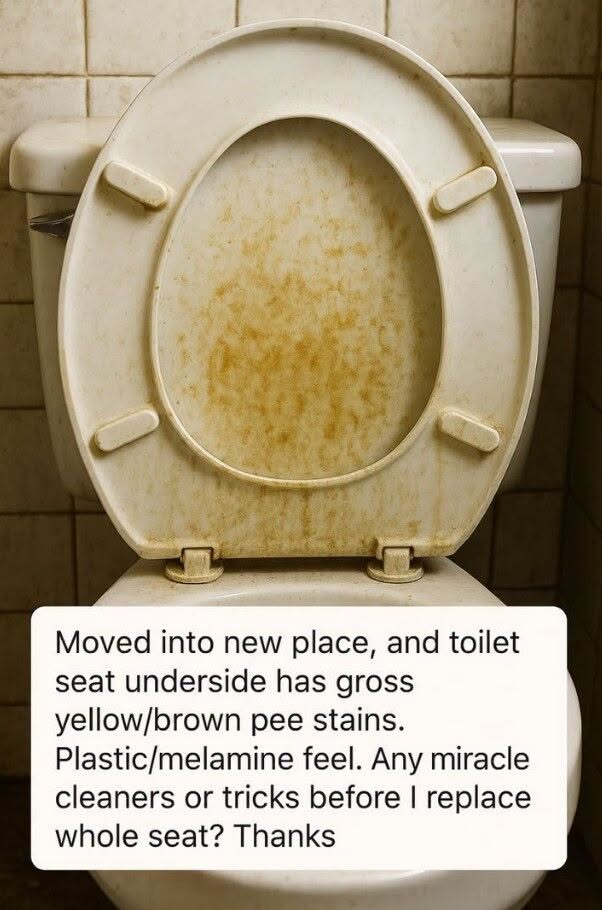
Once you’ve cleaned or replaced your toilet seat, a few simple habits can help prevent stains from returning.
Clean regularly
Wipe the seat with a mild cleaner at least once a week to prevent buildup.
Dry the seat
After cleaning, dry the surface to prevent moisture and bacteria from lingering.
Address splashes immediately
Cleaning spills quickly prevents stains from forming.
Consider a protective lid cover
This can reduce direct contact with liquids and make routine cleaning easier.
Conclusion :
Finding stubborn yellow or brown stains on a toilet seat can be frustrating, especially when you’ve just moved into a new home. However, these stains are often caused by common factors such as urine residue, mineral deposits, or aging plastic—and many of them can be removed with simple cleaning methods.
Starting with basic soap and water, then moving on to baking soda, vinegar, or hydrogen peroxide can often restore the seat’s appearance. Specialized tools like melamine cleaning pads or enzyme cleaners can also help tackle tougher stains.
If the discoloration is deeply embedded or the seat is damaged, replacing it may be the simplest and most hygienic solution. Fortunately, toilet seats are affordable and easy to install.
With regular cleaning and a few preventive habits, you can keep your bathroom looking fresh and maintain a clean, comfortable space in your home.