

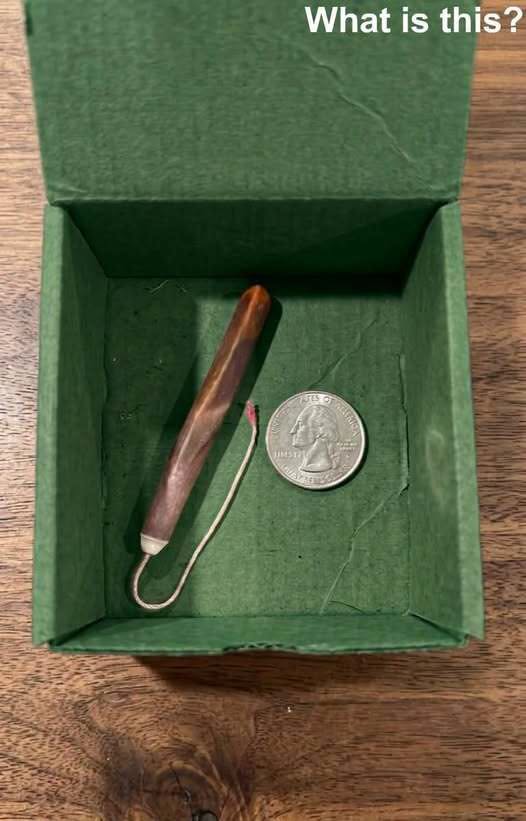
Despite its dramatic name, a sewing stiletto isn’t a weapon at all.
It is a practical hand tool that has been used by skilled sewists and tailors for generations.
The pointed metal tip allows users to perform several delicate tasks while sewing.
Among its many uses are:
- Guiding fabric safely beneath a sewing machine needle.
- Holding small pieces of material in precise position.
- Opening seams without damaging surrounding fabric.
- Turning collars and corners neatly after stitching.
- Working with delicate textiles that require careful handling.
Its design is simple, yet remarkably effective.
Even today, many experienced sewing enthusiasts continue to use sewing stilettos because of the control they provide during detailed work.
Suddenly, Everything Fit Together
Once I understood what the tool actually was, my perspective changed completely.
The object no longer felt mysterious.
Instead, it became another reminder of how skilled my grandmother truly was.
When I was young, I had focused on the finished products.
I noticed the dresses she made.
The curtains she hemmed.
The quilts she carefully stitched together.
What I never appreciated were the countless tiny tools and techniques that made those creations possible.
The sewing stiletto represented those invisible details.
It reminded me that beautiful craftsmanship often depends on patience rather than shortcuts.
The Invisible Work Behind Every Stitch
Many handmade items appear effortless once completed.
A finished shirt looks simple.
A repaired seam seems almost invisible.
A perfectly fitted dress appears natural.
Yet every successful project consists of hundreds—or even thousands—of careful decisions made along the way.
Fabric must be measured accurately.
Patterns require precise alignment.
Seams need consistent spacing.
Corners must be turned carefully.
Tiny adjustments happen constantly throughout the process.
The sewing stiletto helped make many of those tasks easier.
Although it rarely attracted attention, it quietly supported every stage of creation.
In many ways, it symbolized the unseen effort behind every handmade piece.
Why Vintage Sewing Tools Matter
Today’s sewing equipment includes many modern conveniences.
Electronic machines automate numerous functions.
Specialized attachments simplify difficult techniques.
New materials make certain tasks easier than ever before.
Even so, vintage hand tools remain valued by many experienced sewists.
Their popularity reflects several important qualities:
- Durable craftsmanship built to last decades.
- Simple designs that remain effective over time.
- Comfortable handling developed through generations of practical use.
- Reliable performance without requiring complicated technology.
Many antique sewing tools continue functioning perfectly after fifty or even one hundred years.
Their longevity speaks to the quality with which they were originally made.
More Than a Hobby
For many women of earlier generations, sewing represented far more than a pastime.
It was an essential household skill.
Creating clothing at home often saved significant money.
Garments were repaired instead of discarded.
Children’s clothes were adjusted as they grew.
Blankets received careful repairs rather than replacements.
Curtains, tablecloths, aprons, and countless household items passed through skilled hands that understood how to extend their usefulness.
Hours of careful labor often went unnoticed because successful repairs blended seamlessly into everyday life.
People simply expected things to last.
Behind that durability stood countless individuals like my grandmother.
Appreciating What We Once Overlooked
Looking back, I realize how many things I took for granted.
As children, we rarely think about who replaces missing buttons or repairs torn sleeves.
We don’t notice careful stitching hidden inside hems.
We simply wear comfortable clothes without considering the work involved.
Only later do we recognize the patience required to maintain those everyday comforts.
Finding the sewing stiletto reminded me of those overlooked contributions.
It represented years of quiet dedication that rarely received recognition.
Passing Down More Than Objects
Continued on next page//