
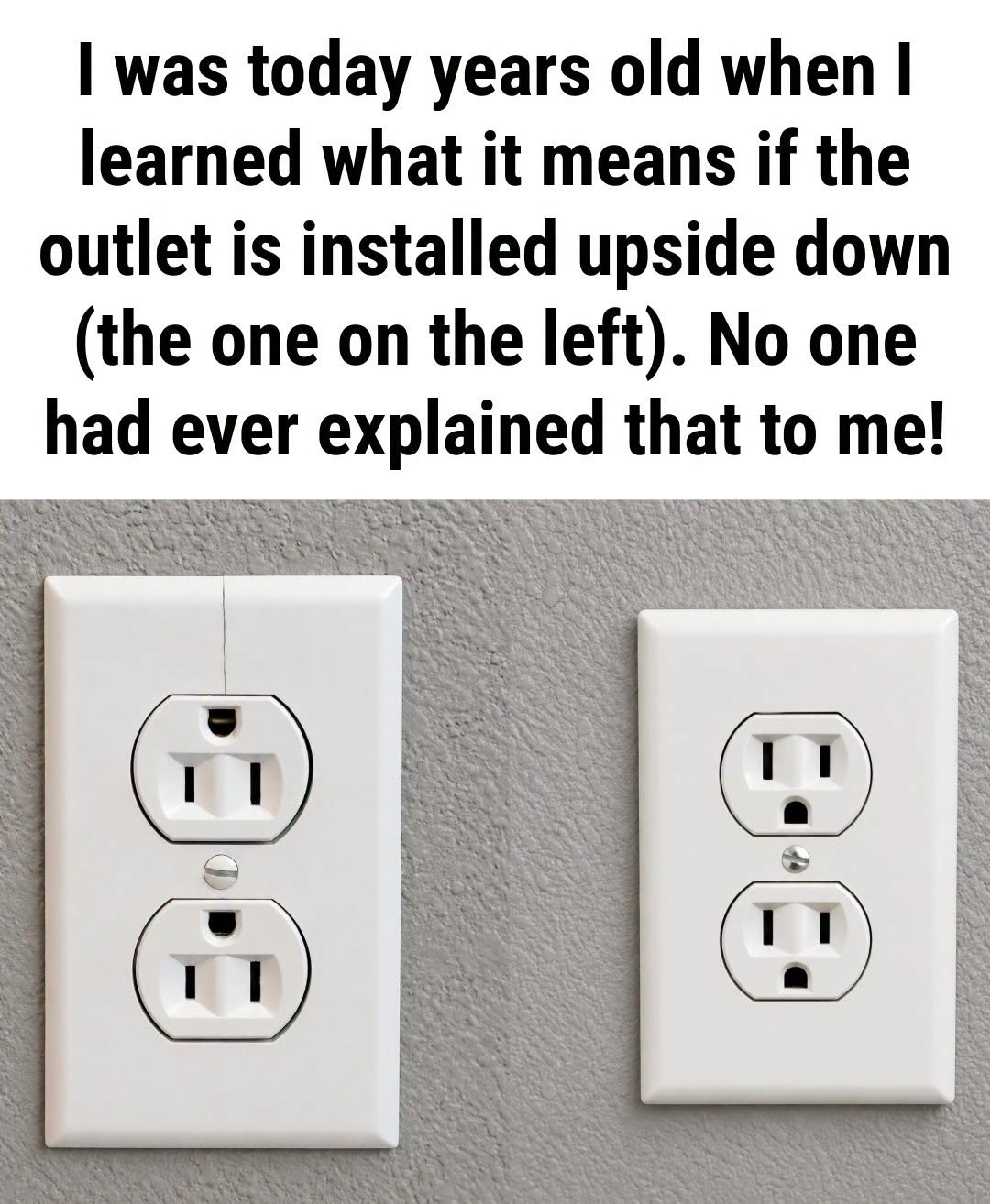
If you’ve just moved into a new home, or if you’ve lived in your house for years and never noticed the flipped outlet, it’s time to do a quick, fuss-free test to see how it’s wired.
The 2-Minute Lamp Test:
- Plug a simple lamp (or a phone charger with a light on it) into the top half of the upside-down outlet.
- Walk over to the wall switches in that room and flip them one by one.
- If the lamp turns on and off with a specific switch, you’ve found your switched half!
- Move the lamp to the bottom half of the outlet and repeat the test. If it stays on regardless of the wall switch, you have a perfectly functioning split receptacle.
A Gentle Safety Note: If you plug something in and it doesn't work at all, don't panic! It simply means that half of the outlet is currently switched "off." Just flip the wall switches in the room until the power flows.
A Nostalgic Bonus: 3-Ingredient "Old-Fashioned" Wood Polish
Since we are talking about the beautiful, cozy corners of our homes where our favorite lamps live, I want to share a wonderful, resourceful way to care for the wooden end tables and nightstands that hold them.
When you live in a home with character, taking care of the wood furniture is a quiet, meditative act of love. You don't need expensive, chemical-heavy sprays to make your wood glow. Our grandmothers used simple pantry staples to nourish the wood and make it shine.
Ingredients:
- ½ cup Extra Virgin Olive Oil (to deeply moisturize and nourish the dry wood)
- ¼ cup White Vinegar or Fresh Lemon Juice (to gently cut through old wax buildup and grime)
- 5-10 drops of Sweet Orange or Lemon Essential Oil (for a bright, uplifting, nostalgic scent)
Instructions:
- Pour the olive oil and vinegar (or lemon juice) into a small glass jar or bowl.
- Add the essential oil and whisk briskly with a fork until the mixture is well blended. (It will separate quickly, which is perfectly normal!).
- Dip a soft, clean, lint-free cotton cloth (an old t-shirt works beautifully) into the mixture.
- Rub the polish into your wooden furniture using gentle, circular motions, following the grain of the wood.
- Take a second, dry cloth and buff the wood to a beautiful, warm shine.
When you flip that wall switch and your lamp illuminates the room, the wood of your table will catch the light beautifully, smelling faintly of fresh citrus and home.
Frequently Asked Questions
Q: Is it against the electrical code to install an outlet upside down?
A: No! The National Electrical Code (NEC) does not mandate which way an outlet must be oriented (ground hole up or ground hole down). Flipping it is simply a widely accepted "best practice" and visual cue used by electricians to help homeowners and future buyers identify switched outlets.
A: No! The National Electrical Code (NEC) does not mandate which way an outlet must be oriented (ground hole up or ground hole down). Flipping it is simply a widely accepted "best practice" and visual cue used by electricians to help homeowners and future buyers identify switched outlets.
Q: Can I turn my upside-down outlet right-side up myself?
A: If you are simply swapping out an old, yellowed cover plate for a fresh white one, that is a very easy and safe DIY project (just make sure to turn off the breaker first!). However, if you want to rewire the outlet so it is no longer controlled by the switch, you should hire a licensed electrician. Working inside the electrical box requires specialized knowledge to ensure your home remains safe from fire hazards.
A: If you are simply swapping out an old, yellowed cover plate for a fresh white one, that is a very easy and safe DIY project (just make sure to turn off the breaker first!). However, if you want to rewire the outlet so it is no longer controlled by the switch, you should hire a licensed electrician. Working inside the electrical box requires specialized knowledge to ensure your home remains safe from fire hazards.
Q: What if my upside-down outlet isn't controlled by any switch in the room?
A: Sometimes, in older homes, a switched outlet might be controlled by a switch that is located in an unexpected place (like near the front door, or in the hallway). Other times, a previous owner may have replaced the outlet themselves and simply installed it upside down by mistake. If the "lamp test" doesn't reveal a switch, it's likely just a cosmetic quirk!
A: Sometimes, in older homes, a switched outlet might be controlled by a switch that is located in an unexpected place (like near the front door, or in the hallway). Other times, a previous owner may have replaced the outlet themselves and simply installed it upside down by mistake. If the "lamp test" doesn't reveal a switch, it's likely just a cosmetic quirk!
Q: Why is the ground hole sometimes on top and sometimes on the bottom?
A: There is actually a great safety debate about this! Some electricians prefer the ground hole on top (upside down) because if a metal object (like a fork or a coin) falls onto a partially plugged-in cord, it will hit the ground prong first, rather than bridging the "hot" and "neutral" prongs and causing a spark. Both orientations are perfectly legal and safe.
A: There is actually a great safety debate about this! Some electricians prefer the ground hole on top (upside down) because if a metal object (like a fork or a coin) falls onto a partially plugged-in cord, it will hit the ground prong first, rather than bridging the "hot" and "neutral" prongs and causing a spark. Both orientations are perfectly legal and safe.
Continued on next page//
To see the complete cooking instructions, go to the next page or click the Open (>) button and don't forget to SHARE it with your friends on Facebook.

Don't Toss Those Eggshells: 17 Ways to Reuse Them (Your Plants, Drains, and Skin Will Thank You)

Why drink hot lemon water? Discover these 6 reasons!

Classic Homemade Dried Beef Recipe Inspired by Traditional Methods (Step-by-Step Guide)

What Is That Weird Toothed Part on Kitchen Scissors For? (And 4 Brilliant Hacks You’ve Been Missing)

Beets and Your Body: What Doctors Say Really Happens When You Make This Root Vegetable a Regular Part of Your Diet