

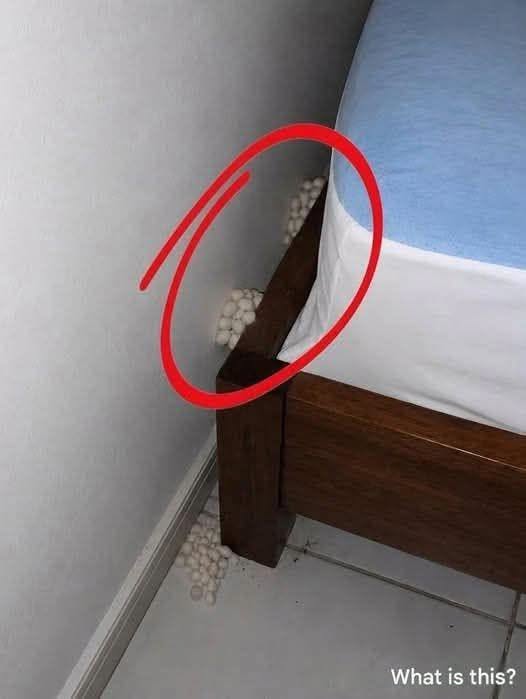
On June 7, 2026, I walked through my front door carrying the familiar weight of work, already imagining the comfort of sinking into bed and forgetting about the stresses of the day. But the moment I stepped into my bedroom, something unexpected stopped me in my tracks.
Near the base of
At first glance, they looked completely out of place.
The strange collection stood out sharply against the dark carpet, almost as though someone had carefully arranged them there. I froze for a moment, staring at the mysterious objects while my mind raced through every possible explanation.
What were they?
Had something fallen from a plant?
Were they some kind of insect eggs?
Had an animal somehow gotten into the house?
The more I looked, the more questions I had.
my bed, partially hidden by the soft shadows of the room, sat a small cluster of pale, smooth objects.
The Investigation: Getting Up Close
I didn't want to panic, but my imagination was running wild. I grabbed a tissue, knelt down, and gently picked up one of the tiny white objects.
It wasn't squishy like an insect egg. It wasn't brittle like dried plant matter.
It was perfectly round, smooth, and surprisingly hard—like a tiny, solid pearl or a miniature styrofoam ball. It was about the size of a mustard seed.
I looked up and traced the area where they had clustered. They weren't just randomly scattered on the carpet; they were spilling out from the drainage holes of the large, lush potted Ficus tree sitting in the corner of my bedroom.
I gently tilted the heavy pot. There, resting on the surface of the damp potting soil, were dozens more of these tiny white pearls.
My heart rate finally began to slow. They weren't bugs. They weren't a sign of a pest infestation. But what on earth were they?
I took the sample inside, pulled out my magnifying glass (and my phone), and went down a fascinating rabbit hole of botanical science.
The Reveal: The Magic of "Mycelial Pearls"
The truth, when I finally found it, left me completely amazed.
Those tiny, smooth, white objects were mycelial pearls, scientifically known as sclerotia (singular: sclerotium). They are produced by certain types of harmless, naturally occurring saprophytic fungi that live in potting soil.
Continued on next page//
To see the complete cooking instructions, go to the next page or click the Open (>) button and don't forget to SHARE it with your friends on Facebook.
Don't Toss Those Eggshells: 17 Ways to Reuse Them (Your Plants, Drains, and Skin Will Thank You)

Why drink hot lemon water? Discover these 6 reasons!

Classic Homemade Dried Beef Recipe Inspired by Traditional Methods (Step-by-Step Guide)

What Is That Weird Toothed Part on Kitchen Scissors For? (And 4 Brilliant Hacks You’ve Been Missing)

Beets and Your Body: What Doctors Say Really Happens When You Make This Root Vegetable a Regular Part of Your Diet