
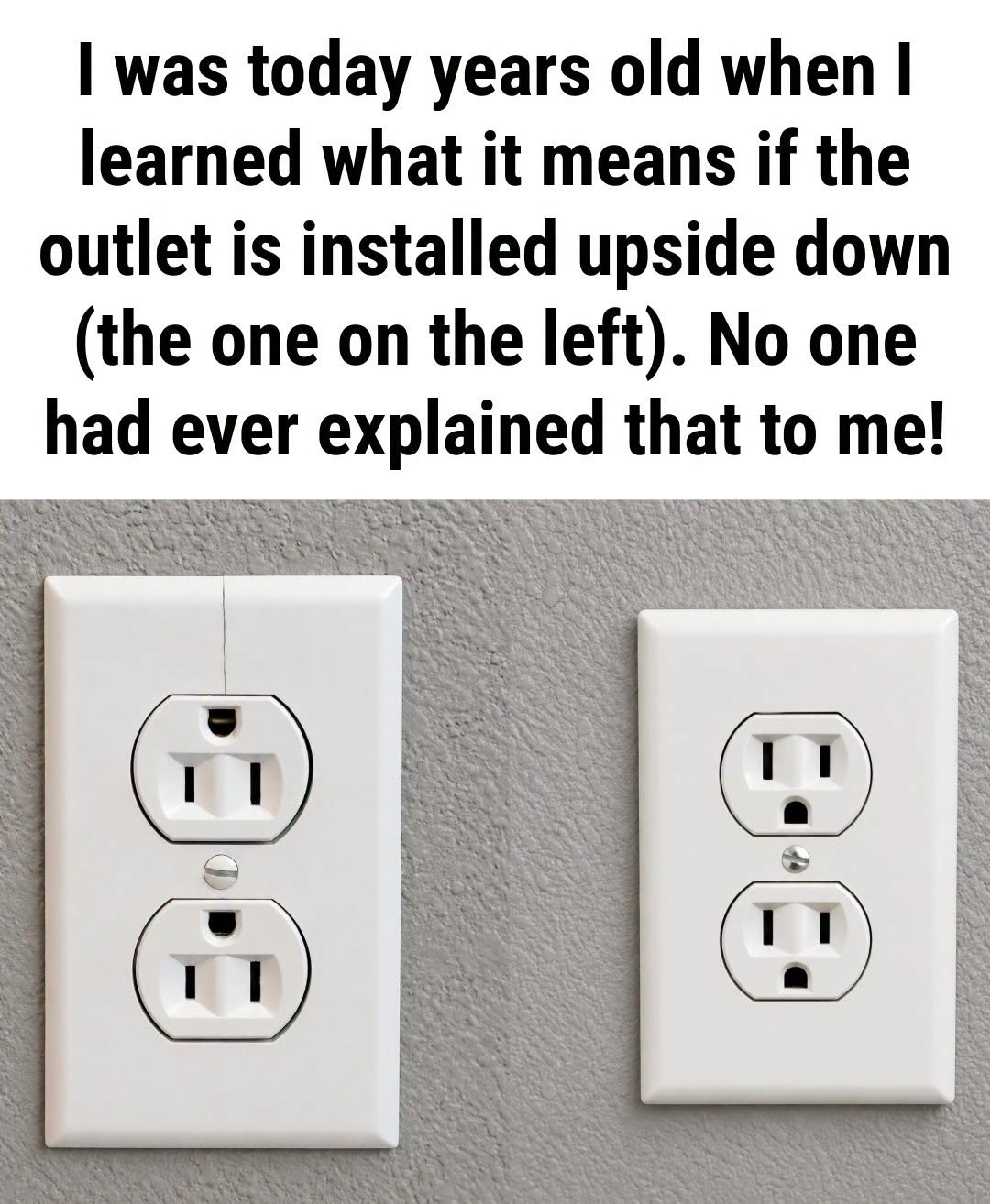
Have you ever been vacuuming the living room or plugging in a favorite reading lamp, glanced down at the baseboard, and noticed an electrical outlet installed completely upside down?
Most of us are used to seeing the grounding hole (the little round or U-shaped slot) at the bottom of the outlet. So, when we encounter one that is flipped, with the ground hole facing the ceiling, it’s entirely natural to assume that the electrician made a mistake, or that a previous homeowner did a sloppy DIY job.
However, before you call someone to "fix" it, you should know a wonderful little secret of home design: many times, that flipped outlet is completely intentional. In fact, it is a clever, old-fashioned trick that serves a very specific and helpful purpose in your home.
Let’s explore the fascinating reason behind the upside-down outlet, how it makes your daily life a little easier, and how to embrace the charming, resourceful quirks of the homes we love.
The Secret of the Flipped Outlet: A Visual Cue
In many homes, an upside-down outlet serves as a brilliant, built-in visual cue. It tells you at a single glance that this particular receptacle is being controlled by a wall switch.
It doesn’t mean that every flipped outlet is automatically switch-controlled, nor does it mean a standard-facing outlet can't be switched. But in the building trade, flipping the orientation is a widely adopted convention used to indicate a "switched receptacle." You will most commonly come across this setup in bedrooms, living rooms, or older, historic homes that were built before overhead ceiling lights became the standard.
Why Did Builders Do This?
Think about the charming older homes built in the early to mid-20th century. Many of these beautiful houses were not originally designed with built-in overhead lighting in the living rooms or bedrooms. Instead of retrofitting the ceilings with expensive, messy wiring for a central fixture, the builder chose a much simpler, resourceful solution: the switched receptacle.
By wiring a standard wall switch to a specific outlet, they allowed the homeowner to plug in a beautiful table lamp or a tall floor lamp. When you walk into the dark room and flip the wall switch, your lamp turns on instantly, operating exactly like an overhead room light.
The "Split Receptacle": The Best of Both Worlds
Here is where the upside-down outlet becomes even more clever. In most modern switched outlets, the electrician doesn't just wire the whole thing to the switch. They create what is known as a split receptacle.
How It Works:
Typically, only one half of the outlet (usually the top half, which is closest to the switch when flipped) is controlled by the wall switch. The other half (the bottom) remains "always on," receiving constant power directly from the breaker panel.
|
The Top Half (Switched)
|
The Bottom Half (Always On)
|
|---|---|
|
What it does: Turns on and off when you flip the wall switch.
|
What it does: Provides constant, uninterrupted power.
|
|
What to plug in: Your favorite reading lamp, a floor lamp, or decorative lighting.
|
What to plug in: Your phone charger, a digital clock, a CPAP machine, or a vacuum.
|
This brilliant design means you never have to unplug your lamp to vacuum the room, and your phone will continue charging even when you turn off the lights for the night!
How to Test Your Upside-Down Outlet
Continued on next page//
To see the complete cooking instructions, go to the next page or click the Open (>) button and don't forget to SHARE it with your friends on Facebook.

Don't Toss Those Eggshells: 17 Ways to Reuse Them (Your Plants, Drains, and Skin Will Thank You)

Why drink hot lemon water? Discover these 6 reasons!

Classic Homemade Dried Beef Recipe Inspired by Traditional Methods (Step-by-Step Guide)

What Is That Weird Toothed Part on Kitchen Scissors For? (And 4 Brilliant Hacks You’ve Been Missing)

Beets and Your Body: What Doctors Say Really Happens When You Make This Root Vegetable a Regular Part of Your Diet