
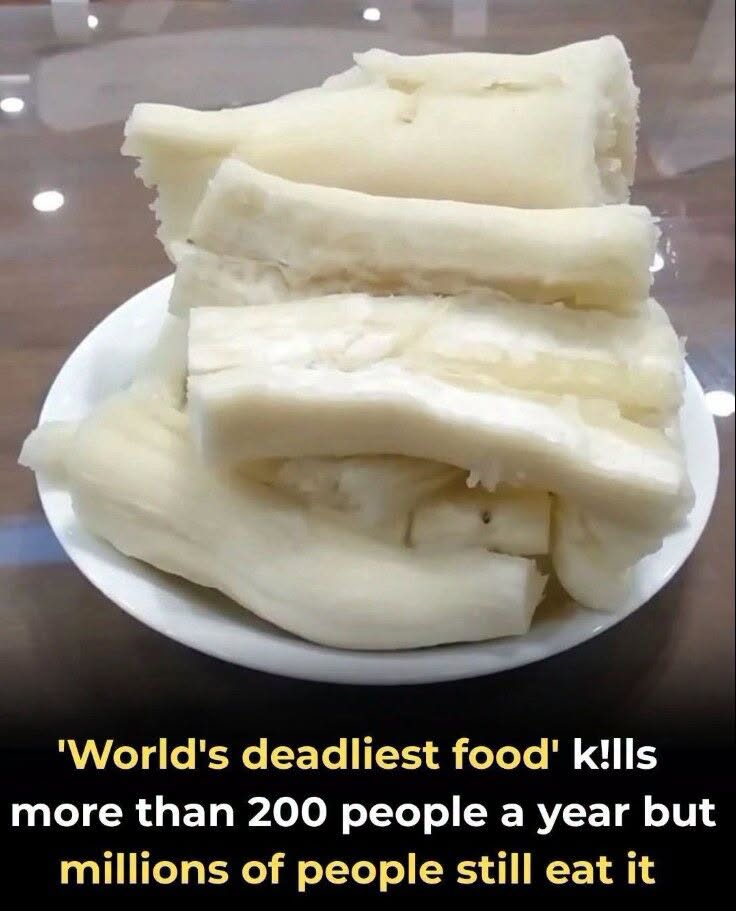
There are two primary types of cassava:
Sweet Cassava
Sweet cassava contains relatively low levels of cyanogenic compounds. It still requires cooking before eating, but the preparation process is generally simpler and safer.
Bitter Cassava
Bitter cassava contains much higher concentrations of cyanide-producing compounds. It requires extensive processing before it becomes safe for consumption.
Traditional preparation often includes:
- Peeling
- Grating
- Soaking
- Fermenting
- Pressing
- Drying
- Thorough cooking
These steps dramatically reduce cyanide levels and make the food safe.
Why Do So Many People Continue Eating It?
Despite its reputation, cassava remains one of the world’s most important food crops for several reasons.
1. Exceptional Food Security
Cassava survives droughts, poor soil, high temperatures, and unpredictable weather. In many rural communities, it serves as a dependable backup crop when other harvests fail.
2. Affordable Nutrition
Cassava provides inexpensive calories for families who may have limited access to other staple foods.
3. Long Shelf Life in the Ground
Unlike many crops that must be harvested immediately, cassava roots can often remain underground for months until needed.
4. Incredible Versatility
Cassava is transformed into dozens of foods, including:
- Flour
- Tapioca
- Chips
- Bread
- Cakes
- Dumplings
- Porridge
- Snacks
Traditional Knowledge Saves Lives
Communities that have prepared cassava for generations understand exactly how to remove its toxins.
These traditional methods have been passed down through families for centuries and remain remarkably effective.
Problems are far more likely to occur when:
- People are unfamiliar with safe preparation techniques.
- Food shortages encourage shortcuts.
- Natural disasters interrupt normal processing methods.
- Bitter cassava varieties are prepared incorrectly.
Health Risks Beyond Immediate Poisoning
Repeated consumption of poorly processed cassava may contribute to long-term health problems.
Chronic exposure to low levels of cyanide has been associated with:
- Thyroid disorders
- Neurological conditions
- Nutritional deficiencies
- Growth problems in children
- Increased health risks in populations with protein-poor diets
These complications are uncommon where cassava is prepared properly and diets are balanced with other nutritious foods.
Is Tapioca Safe?
Many people are surprised to learn that tapioca pearls and tapioca flour also come from cassava.
Fortunately, commercial tapioca products undergo extensive processing that removes harmful compounds before reaching grocery stores.
When purchased from reputable manufacturers, tapioca is considered safe for normal consumption.
Can You Grow Cassava at Home?
Cassava can be grown in warm climates, but anyone growing it should understand that the raw root is not ready to eat immediately after harvest.
Proper preparation is essential before cooking or consuming home-grown cassava.
Gardeners should also identify whether they are growing sweet or bitter varieties, as preparation requirements differ significantly.
How Is Cassava Safely Prepared?
Continued on next page//
To see the complete cooking instructions, go to the next page or click the Open (>) button and don't forget to SHARE it with your friends on Facebook.