
Safe preparation generally includes one or more of the following methods:
- Thorough peeling
- Grating or slicing
- Soaking in water
- Fermenting
- Pressing out excess liquid
- Drying
- Boiling or cooking completely
These techniques allow naturally occurring cyanide compounds to break down or escape before the food is eaten.
Is Cassava Worth the Risk?
When prepared correctly, experts consider cassava a safe and valuable staple food. Millions of meals containing cassava are enjoyed every day without incident.
The danger arises almost exclusively when the root is consumed raw or inadequately processed.
Its nutritional importance, affordability, and ability to thrive where many crops cannot explain why cassava continues to feed hundreds of millions of people across the globe.
Conclusion :
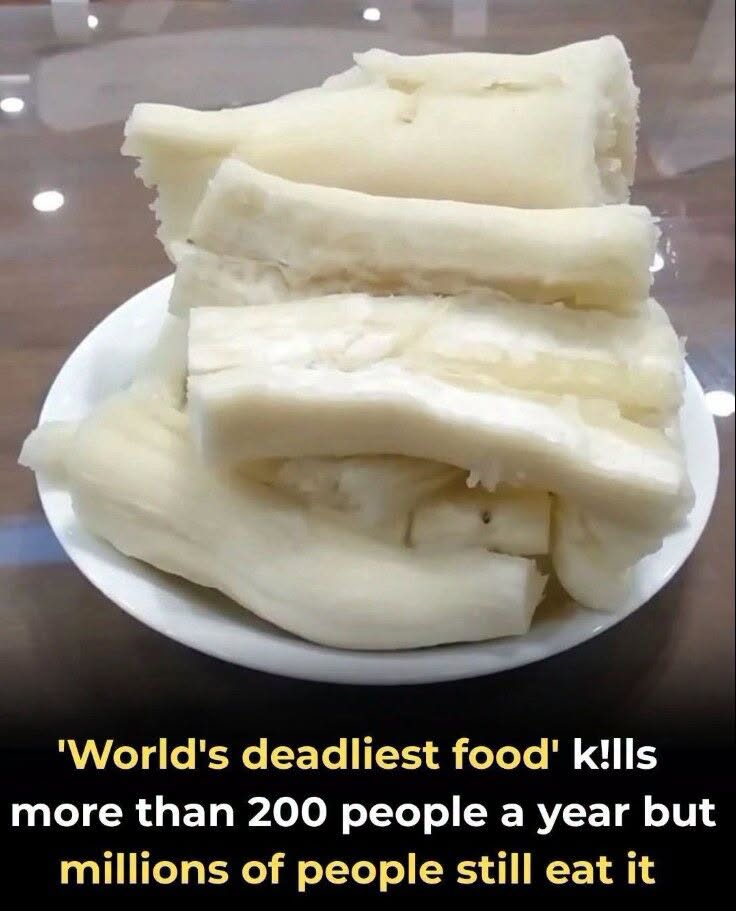
Cassava serves as a powerful reminder that even common foods can require careful preparation before they become safe to eat. Although its natural cyanide-producing compounds have earned it the nickname of the “world’s deadliest food,” that title tells only part of the story. For countless communities, cassava is not a dangerous curiosity—it is a reliable, affordable, and essential source of nourishment that has sustained families for generations.
The key difference lies in proper preparation. Traditional methods such as peeling, soaking, fermenting, drying, and thorough cooking effectively reduce harmful compounds to safe levels, allowing millions of people to enjoy cassava every day without problems. Most cases of poisoning occur when these important steps are skipped or performed incorrectly.
Rather than viewing cassava as a food to fear, it is more accurate to see it as a crop that demands respect and knowledge. Like many natural foods, its safety depends on understanding how to handle it correctly. With proper preparation and awareness, cassava remains one of the world’s most valuable staple crops, providing food security and nutrition to nearly half a billion people while continuing to play a vital role in cultures around the globe.
To see the complete cooking instructions, go to the next page or click the Open (>) button and don't forget to SHARE it with your friends on Facebook.