
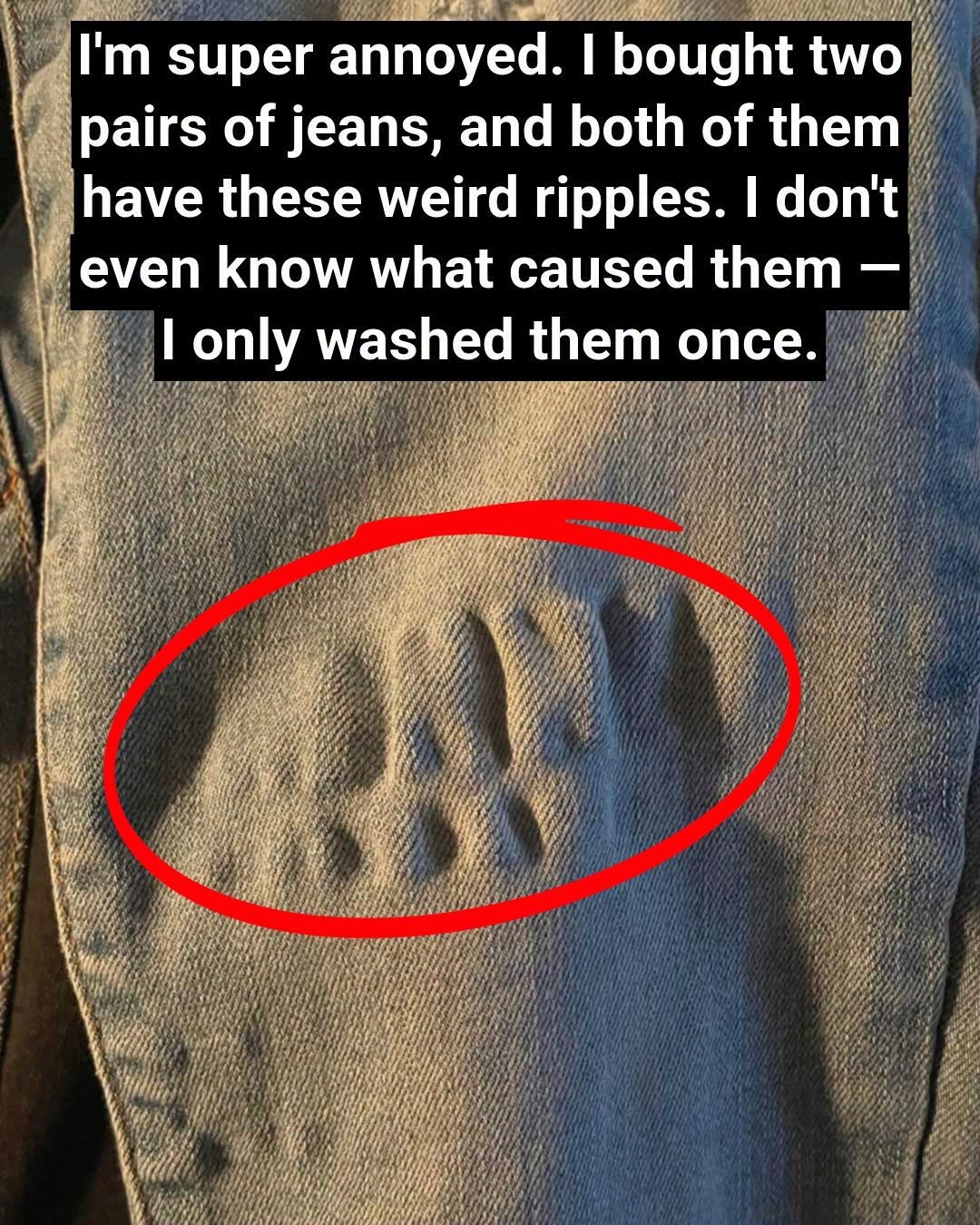
Let me tell you about the first time I noticed weird ripples in my jeans.
I was in my late twenties, and I had just washed my favorite, most comfortable pair of jeans. I pulled them out of the dryer, ready to fold them, and they were covered in strange, wavy ripples and deep, stubborn creases. I was disappointed. I didn't know what caused them, and I worried I had ruined a beloved staple of my wardrobe.
I did some research, and I learned that it is a very common problem. In fact, it is a natural quirk of the fabric itself. If you have ever pulled a pair of jeans from the laundry only to find them looking like a topographical map, please know that you are not alone, and your jeans are not ruined. Let’s gently explore the science behind these ripples, what causes them, and the simple, resourceful ways you can prevent and fix them.
The Science Behind the Ripples
Denim is a unique fabric, and its reaction to water and heat is entirely predictable once you understand how it works. The ripples are simply the result of the fabric shrinking and warping unevenly. Here is why that happens:
- Cotton Shrinkage: Traditional jeans are made primarily of cotton. Cotton fibers are like tiny sponges; they swell when they absorb water and contract tightly when exposed to heat.
- The Twill Weave: Denim is woven in a diagonal pattern (twill). This sturdy weave is what makes jeans so durable, but it also means that when the fabric is twisted or bunched, the diagonal threads can shift and lock into a wavy pattern.
- Agitation and Tension: The vigorous spinning and tumbling of a washing machine can cause the heavy, wet fabric to twist and bunch up on itself.
- Heat Setting: When that bunched, wet fabric is hit with high heat in the dryer, the cotton fibers shrink and "set" into those twisted, wavy shapes permanently.
The Common Causes of Denim Ripples
Continued on next page//
To see the complete cooking instructions, go to the next page or click the Open (>) button and don't forget to SHARE it with your friends on Facebook.