

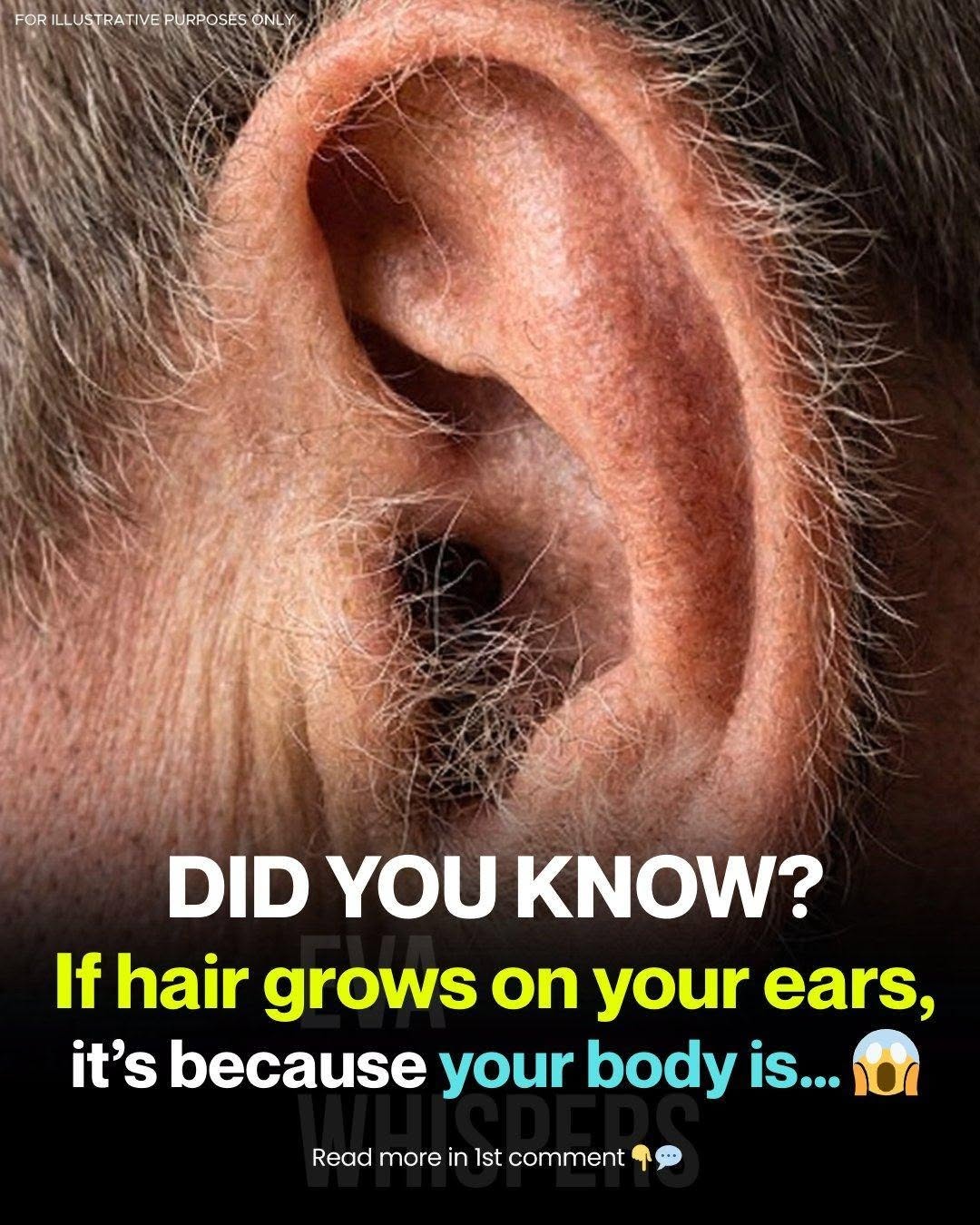
- Cosmetic choice only: Trimming ear hair is safe and common.
- Do: Use rounded-tip scissors or a dedicated nose/ear hair trimmer.
- Don’t: Pluck deeply or use wax—ear skin is thin and prone to infection.
Never insert sharp objects into the ear canal—you risk damaging your eardrum.
When to See a Doctor
Ear hair alone? Not a concern. But consult a healthcare provider if you also notice:
- Sudden, rapid hair growth in multiple areas
- Irregular periods, acne, or weight gain (in women)
- Fatigue, mood changes, or unexplained symptoms
- Pain, redness, or discharge near ear hair follicles (sign of infection)
The Bottom Line
Ear hair is almost always just a harmless quirk of aging—not a warning sign. It doesn’t mean you’re at higher risk for heart disease, diabetes, or other conditions (despite old wives’ tales).
That said, your body does speak through changes—so pay attention to patterns, not single signs. If ear hair appears alongside other unusual symptoms, it’s worth a conversation with your doctor.
“Aging isn’t something to fix—it’s something to understand.”
So trim if you’d like, ignore if you don’t—and rest easy knowing that a few extra hairs in your ears are just part of your story.