

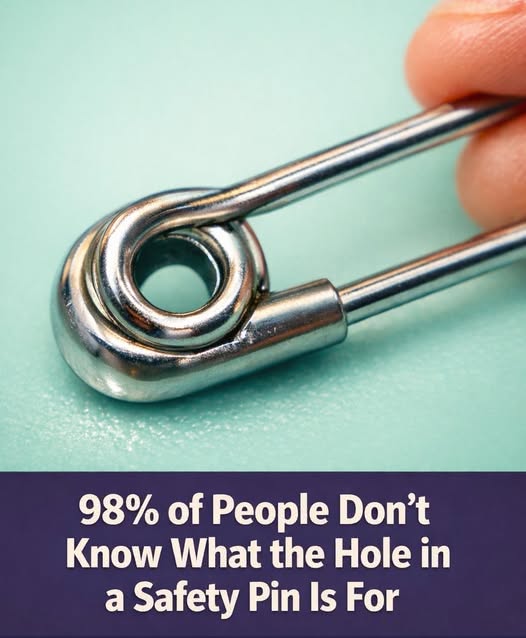
Now, let’s get a little nerdy. Don’t worry, I’ll keep it simple, but bear with me—this will help you understand just how clever the design of the safety pin is. The manufacturing process behind safety pins involves machines that shape the metal wire into its distinctive form. During this shaping process, the hole serves as an anchor point. Without it, it would be incredibly difficult to form the tight, consistent coil that gives the safety pin its strength and flexibility.
That little hole acts as a guiding point during the assembly, keeping the wire steady as it’s twisted into the spring shape. If you’ve ever worked with springs or coils, you know how important it is to keep everything aligned and tensioned correctly. This small but crucial detail allows the spring to maintain its integrity, providing the perfect amount of tension to keep the pin functional for years. The hole essentially ensures that the safety pin will keep its “springy” nature intact, even through repeated use.
What’s fascinating is that this type of anchor point is common in many other spring-based mechanisms. So even though the safety pin may seem simple at first glance, it shares design principles with much more complex tools and machines. And all of this is possible because of that tiny hole.
Did You Think It Was Just for Decoration?
If you’ve never thought twice about that little hole, you’re not alone. Most of us (myself included) never stopped to wonder why the safety pin has this small feature. It doesn’t look functional at first. It’s small, discrete, and easy to overlook. Given the minimalist design of the safety pin, it’s easy to assume that every part of it is purely for aesthetic purposes, right? After all, there’s no big, flashy label that says, “This hole is for tension control.” We simply rip open a pack of safety pins and start pinning things together.
But once you learn the true purpose of that hole, you’ll realize just how much thought and engineering went into the design of the safety pin. It’s a perfect example of “low-key genius” design. The hole is not just there because it’s cute or quirky; it’s a key element of the spring mechanism that helps keep the pin functioning properly over time.
Can You Use the Hole for Something Else?
Surprisingly, yes! While the hole’s primary purpose is to help maintain the spring tension and guide the manufacturing process, it can also be used in a variety of creative ways. Some people have discovered that the hole can be used to attach safety pins to other objects, such as by threading a ribbon or thin wire through it. This allows you to prevent the pin from slipping or moving around, which is particularly useful when the pin is being used for decorative purposes or in a more intricate craft project.
In sewing or embroidery projects, the hole can be used to secure the pin in place. Some people even loop thread through the hole to help anchor the pin more securely to the fabric they’re working with. This may not have been the original purpose of the hole, but it’s a clever way to repurpose the feature for additional functionality.
While the hole wasn’t necessarily intended for these purposes, it’s a neat bonus feature for anyone who enjoys getting crafty or working with textiles. It’s one of those small design details that, once you notice it, you can’t help but see its potential for a variety of uses.
Fun Fact: The Safety Pin Was a Happy Accident
Continued on next page//
To see the complete cooking instructions, go to the next page or click the Open (>) button and don't forget to SHARE it with your friends on Facebook.