

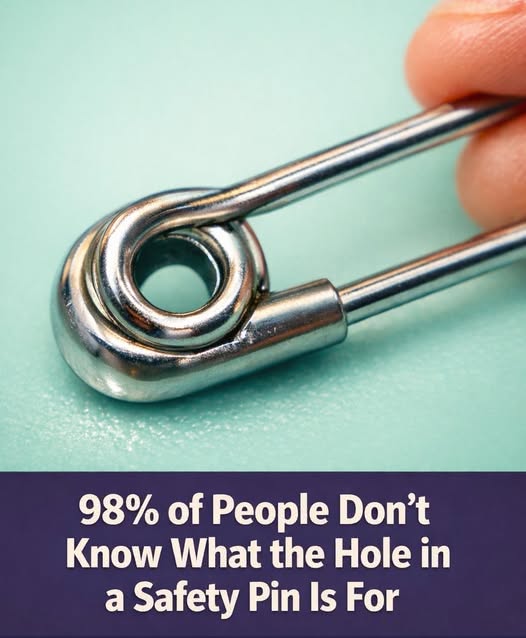
The safety pin’s history is pretty fascinating. It wasn’t invented by some grand visionary; it was actually created by an inventor named Walter Hunt in 1849. He came up with the idea in just three hours as a way to pay off a $15 debt. Yes, really. He even patented the design, but he sold the patent rights for just $400. Looking back, I’m sure he might have regretted that decision as the safety pin became one of the most widely used everyday items in history.
What’s interesting is that Hunt didn’t even consider that the tiny hole in the coil would become such an iconic and essential part of the design. He didn’t realize that people would be looking at it 150 years later, asking, “What’s this hole for?” But here we are, marveling at the brilliant, simple design of a tool that has stood the test of time.
The Ingenious Simplicity of Everyday Engineering
Safety pins are a prime example of everyday engineering at its best. They’re cheap, simple, and incredibly useful. Whether it’s for fixing a wardrobe malfunction, providing first aid, or creating a DIY project, safety pins are versatile tools that have become indispensable in our daily lives. The small details—like the hole in the coil—are what make them so effective.
It’s not just safety pins that have hidden features we never notice. Think about the hole in the handle of your pot (yep, it’s for your spoon), or the little groove at the bottom of plastic bottles (that’s for pressure control). Everyday objects are full of these small, clever design features that we often overlook. But once you start noticing them, it’s hard not to appreciate how much thought goes into the design of everyday items.
The Hole in the Safety Pin: A Small but Mighty Feature
To recap, here’s everything you need to know about that tiny hole in a safety pin:
-
It’s an essential part of the spring mechanism, helping to maintain tension and flexibility over time.
-
It acts as an anchor point during the manufacturing process, ensuring that the pin is made with precision and consistency.
-
While it wasn’t originally intended for anything beyond function, the hole can also be repurposed for creative DIY uses, like attaching the pin to other objects or anchoring it in place during sewing projects.
-
And finally, it’s just another example of the genius of simple, well-thought-out design that we often take for granted.
So next time you use a safety pin—whether you’re fixing a zipper, securing a hem, or simply attaching it to your favorite jacket—remember that tiny hole and give it a little mental thank-you. It’s doing more than you realized. And who knows, maybe you’ll be able to impress your friends with your newfound knowledge of safety pin design the next time you’re hanging out. It’s the kind of random trivia that’s perfect for a pop quiz at your next dinner party.
To see the complete cooking instructions, go to the next page or click the Open (>) button and don't forget to SHARE it with your friends on Facebook.