
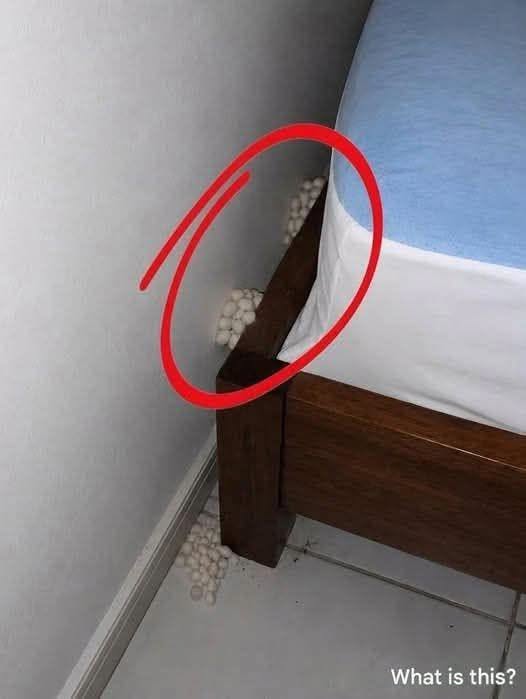
Q: Are these white pearls toxic to my cat or dog?
A: The mycelial pearls (sclerotia) themselves are generally non-toxic. However, it's always best to discourage pets from eating soil or fungi, as the damp soil could contain other bacteria, or the pet could ingest a different, potentially toxic type of mushroom.
A: The mycelial pearls (sclerotia) themselves are generally non-toxic. However, it's always best to discourage pets from eating soil or fungi, as the damp soil could contain other bacteria, or the pet could ingest a different, potentially toxic type of mushroom.
Q: Could they be insect eggs?
A: It's a very common fear! However, insect eggs (like those of gnats or ants) are usually softer, slightly oval, and often clustered in a gelatinous mass. Mycelial pearls are hard, perfectly round, and feel like tiny seeds or plastic beads. If you squeeze one with a fingernail and it's hard, it's fungus, not bugs.
A: It's a very common fear! However, insect eggs (like those of gnats or ants) are usually softer, slightly oval, and often clustered in a gelatinous mass. Mycelial pearls are hard, perfectly round, and feel like tiny seeds or plastic beads. If you squeeze one with a fingernail and it's hard, it's fungus, not bugs.
Q: Will these fungi kill my houseplant?
A: The saprophytic fungi that produce these pearls feed on dead organic matter in the soil, not the living plant roots. However, the overly wet environment that allows the fungi to thrive is the same environment that causes root rot. The fungus is a symptom of the problem, not the cause.
A: The saprophytic fungi that produce these pearls feed on dead organic matter in the soil, not the living plant roots. However, the overly wet environment that allows the fungi to thrive is the same environment that causes root rot. The fungus is a symptom of the problem, not the cause.
Q: How do I get rid of them permanently?
A: You can't (and shouldn't) sterilize your soil completely. A healthy soil microbiome is a good thing! To keep the pearls from returning, simply adjust your watering habits. Let the top few inches of soil dry out between waterings, and ensure your pot has excellent drainage.
A: You can't (and shouldn't) sterilize your soil completely. A healthy soil microbiome is a good thing! To keep the pearls from returning, simply adjust your watering habits. Let the top few inches of soil dry out between waterings, and ensure your pot has excellent drainage.
Q: Are they the same as "mold" on the soil surface?
A: They are related! The fuzzy white or green growth you sometimes see on top of soil is active, growing mycelium. The hard white pearls are just that same mycelium compacted into a dense, dormant survival state.
A: They are related! The fuzzy white or green growth you sometimes see on top of soil is active, growing mycelium. The hard white pearls are just that same mycelium compacted into a dense, dormant survival state.
A Compassionate Closing Thought
If you're reading this because you just found some mysterious white objects in your home and felt a spike of anxiety—or because you're simply fascinated by the hidden worlds we live alongside—please know:
Curiosity is a beautiful instinct. When we encounter the unknown, our first instinct is often fear. But if we pause, look closer, and ask questions, the unknown often reveals itself to be something wonderful.
Nature is always with us. We build walls, we lay carpet, we bring potted trees into our bedrooms—but we cannot entirely separate ourselves from the natural world. Life, in all its microscopic, bizarre, and beautiful forms, is always happening right alongside us.
Mistakes are just feedback. Finding those pearls was a reminder that I was overwatering my plant. Nature has a gentle way of telling us when we need to adjust our care. It’s not a failure; it’s a conversation.
There is magic in the mundane. That exhausting Tuesday evening turned into a moment of profound wonder. The world is full of tiny, hidden miracles, if only we are willing to kneel down and look closely.
Nature is always with us. We build walls, we lay carpet, we bring potted trees into our bedrooms—but we cannot entirely separate ourselves from the natural world. Life, in all its microscopic, bizarre, and beautiful forms, is always happening right alongside us.
Mistakes are just feedback. Finding those pearls was a reminder that I was overwatering my plant. Nature has a gentle way of telling us when we need to adjust our care. It’s not a failure; it’s a conversation.
There is magic in the mundane. That exhausting Tuesday evening turned into a moment of profound wonder. The world is full of tiny, hidden miracles, if only we are willing to kneel down and look closely.
Those tiny white pearls weren't a sign that my home was invaded.
They were a reminder that life is resilient.
That soil is alive.
And that even in the quiet, shadowy corners of our bedrooms, the earth is still doing its quiet, miraculous work.
That soil is alive.
And that even in the quiet, shadowy corners of our bedrooms, the earth is still doing its quiet, miraculous work.
So, the next time you find something strange on your floor, take a breath.
Grab a tissue.
Look a little closer.
Grab a tissue.
Look a little closer.
You might just be amazed by what you find.
Have you ever found mysterious "white pearls" or strange fungi in your houseplant soil? How do you balance keeping your plants happy without overwatering them? Share your gardening mysteries and green-thumb tips respectfully in the comments below.