

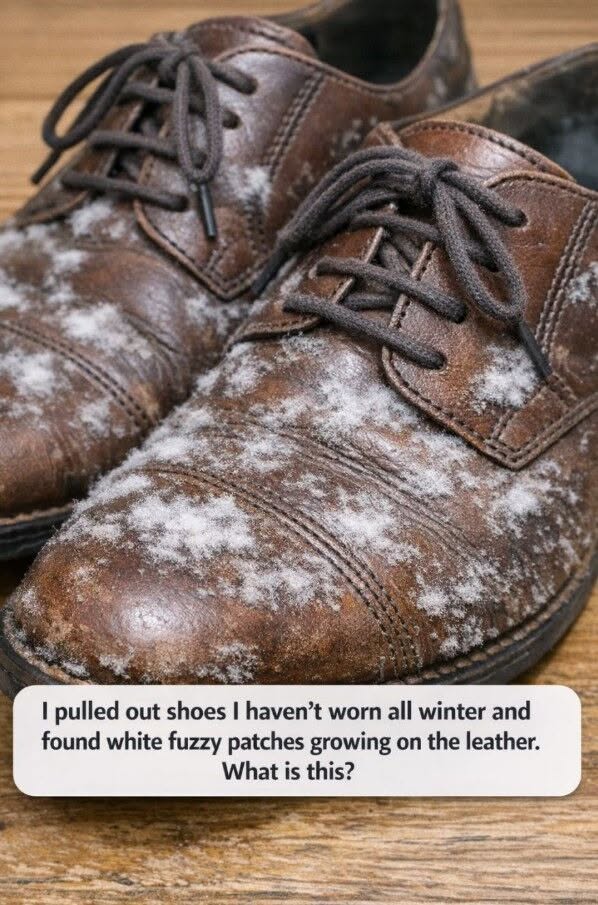
It’s always a surprise to rediscover shoes after months in storage — especially when they look different than you remember. Finding white, fuzzy patches on leather can be unsettling, but in most cases, it’s not a sign that your shoes are ruined. Instead, those fuzzy spots are usually a type of harmless growth that happens when leather has been stored in a cool, dark, or slightly damp place.
This article explains what those white fuzzy patches are, why they form, how to safely clean them off, and steps you can take to protect your leather goods in the future.
What Those White Fuzzy Patches Likely Are
The most common cause of white, fuzzy patches on leather that has been tucked away for months is surface mold or mildew. This happens when:
- The leather was stored in a cool or slightly humid area
- There wasn’t much airflow around the shoes
- Organic material on the surface (like dust or oils) provided food for spores
- Condensation or moisture from temperature changes occurred
Leather itself isn’t the mold — it’s just the surface material where mold spores can grow. Leather is organic and can absorb moisture, which makes it susceptible in the right conditions.
How to Tell If It’s Mold (and Not Something Else)
Here are a few things that help you identify what you’re seeing:
Texture
- White mold often looks fuzzy or powdery, like tiny threads, webbing, or powder on the surface.
- Dust, salt residue, or dried sweat lines can look white too, but they’re usually chalky rather than fuzzy.
Smell
- Mold can sometimes give off a musty or earthy odor.
- If there’s no smell at all and the patches wipe off cleanly, it may just be dust or residue.
Location
- Mold likes dark, enclosed spaces — shoe boxes, closets, basements.
- If the shoes were in a damp spot or stacked without airflow, molds are more likely to form.
Is This Harmful? Do I Need to Throw My Shoes Away?
Continued on next page//
To see the complete cooking instructions, go to the next page or click the Open (>) button and don't forget to SHARE it with your friends on Facebook.