
The short answer: Not usually.
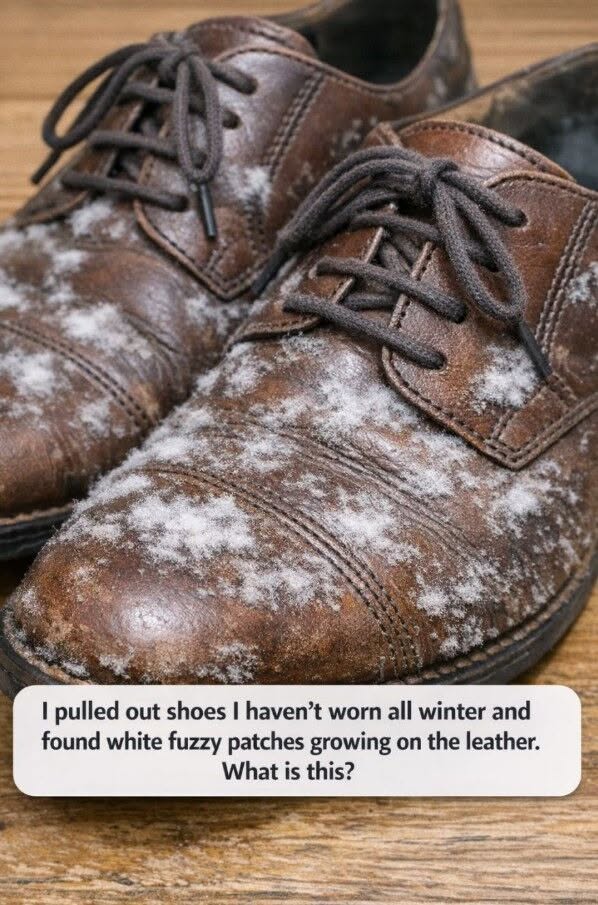
Surface mold on leather doesn’t mean your shoes are ruined, and most of the time it can be cleaned off safely.
However, if the leather looks severely discolored, cracked, or feels fuzzy even after cleaning, it might need more extensive care.
Mold that has deeply penetrated leather isn’t necessarily dangerous to touch, but it can trigger mild allergic reactions in sensitive people — especially if you breathe in mold spores during cleaning. So it’s important to clean carefully in a well-ventilated space.
How to Safely Clean Mold or Fuzzy Patches Off Leather Shoes
Follow these steps to gently and effectively remove mold or fuzz from leather:
1. Work in a Ventilated Area
Open a window or work outside if possible. This reduces exposure to any spores that might become airborne.
2. Brush Off the Surface
Use a soft dry cloth, a soft-bristled brush, or a clean toothbrush to gently brush away the visible white patches. Don’t scrub hard — you’re trying to remove surface spores without damaging the leather.
3. Wipe With a Mild Cleaner
Mix a small amount of gentle dish soap with water (a few drops in a cup of warm water). Dampen a clean cloth with this solution and wipe the affected areas. Avoid soaking the leather — just lightly wipe.
4. Dry Immediately
After cleaning, use a dry cloth to gently blot and absorb moisture. Let the shoes air dry in a cool, well-ventilated spot away from direct sunlight or heat.
5. Leather Conditioner
Once the shoes are fully dry, apply a leather conditioner. This helps restore oils and keep the leather supple after cleaning. Leather can dry out from moisture and mold cleaning, so conditioning is important.
Prevention: How to Store Leather Shoes So Mold Doesn’t Come Back
Keeping leather goods mold-free is all about airflow and dryness.
Store in a Dry Place
Avoid basements, garages, or closets that get damp. Choose a room with good airflow.
Use Shoe Trees or Stuffed Paper
Inserting shoe trees or crumpled paper helps leather maintain shape and discourages moisture buildup.
Avoid Plastic Bags or Sealed Containers
Leather needs to breathe. Storing shoes in plastic can trap moisture and encourage mold.
Add Silica Gel Packs
Small silica gel packets (the little drying packets you find in shoeboxes) help absorb moisture. Place a few near stored shoes.
Clean Before Storing
Make sure shoes are clean and dry before putting them away. Organic residue (dirt, sweat, oils) can feed mold spores.
When It Might Be More Than Mold
Continued on next page//
To see the complete cooking instructions, go to the next page or click the Open (>) button and don't forget to SHARE it with your friends on Facebook.