
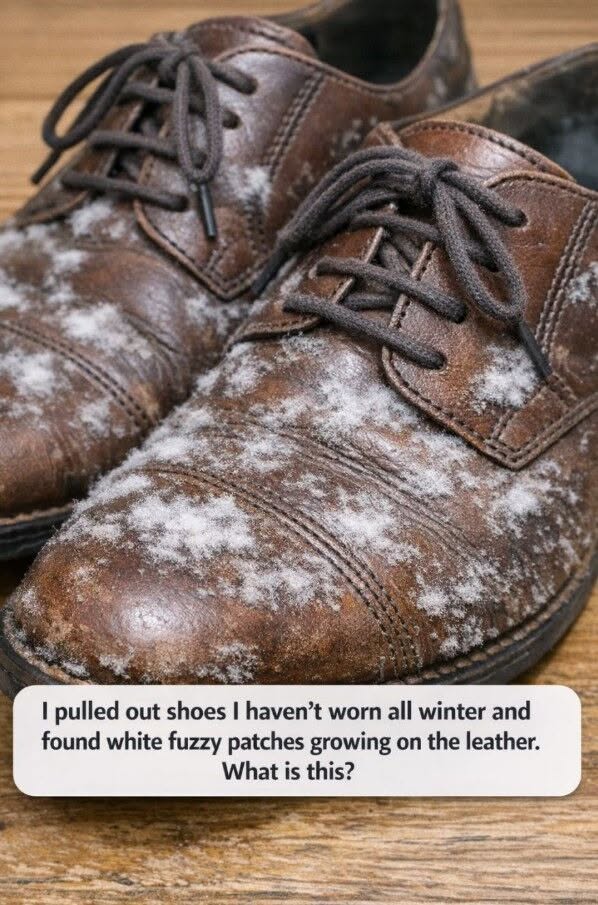
Rarely, what looks like mold could be:
- Salt or mineral residue — especially if shoes got wet before storage
- Leather blooming — a natural white film that sometimes forms when oils rise to the surface
- Wear-related discoloration — old scuffs that look fuzzy but are actually dried leather fibers
To test the difference: dab a small area with a damp cloth. If it wipes off and disappears, it was likely surface residual or mild bloom. If it’s truly mold, brushing and cleaning will remove the fuzzy texture.
Tips for Leather Care Beyond Mold Removal
Healthy leather care goes a long way in preventing problems:
- Clean shoes regularly
- Condition periodically
- Use protective sprays for water and stains
- Rotate footwear so no pair stays unused in dark storage too long
These habits keep leather in good shape and less likely to develop surface issues later.
Conclusion :
Finding white, fuzzy patches on leather shoes after months in storage can be surprising, but it’s usually a sign of surface mold or mildew, not a permanent problem. Mold thrives in slightly damp, poorly ventilated spaces where leather absorbs moisture and stays unused.
The good news is that you can generally clean it off safely with gentle brushing, a mild soap solution, and careful drying. Once cleaned, conditioning the leather helps restore its natural oils and keeps it supple. Preventing mold in the future comes down to storing shoes in dry, well-ventilated areas, avoiding plastic enclosures, and using moisture absorbers like silica gel.
With proper care and a consistent storage routine, your leather shoes can stay looking and feeling good for years — and surprise rediscoveries like this don’t have to be stressful.
To see the complete cooking instructions, go to the next page or click the Open (>) button and don't forget to SHARE it with your friends on Facebook.